• WSJ on Dogs vs Cats

    I came across this article in the Wall Street Journal last weekend and forgot I hadn't posted it. The link may or may not work because the WSJ is a subscription site, so I'm including the text below. Note I had a post back in 2009 on the same subject, with the same findings, from an article in New Scientist.
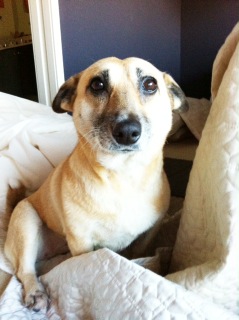
    Now, my problem with these "dogs vs. cats" IQ studies is that, just as with the human species, you can have smart dogs and dumb dogs, and smart cats and dumb cats. In the 30 or so dogs we have here, we see a wide range in "cognitive prowess." Our little blind Goldie, who we lost last year, could open zippers and backpacks with her teeth and bi-fold closet doors with her paws. The only thing that prevents Widget from sneaking off at night in one of our trucks and driving to McDonalds is her lack of thumbs and her impossibly short legs. We have other dogs who may have plenty of attitude but not a whole lot of aptitude.
    And, let's face it, certainly some dog breeds seem to be a bit more agile mentally than others. (Sensibly, I won't be naming any!) So it occurs to me that the results of these studies could vary wildly depending on which individual animals are included in the testing.
    That said, here's the WSJ piece:

    Why Dogs Are Smarter Than Cats

    A not-so-smart best friend? Experiments in language and cognition show Fido's (sporadic) brilliance

    By Brian Hare and Vanessa Woods 

    With half as many neurons in their cerebral cortex as cats—and half the attitude, some would say—dogs are often taken to be the less intelligent domestic partner. While dogs drink out of the toilet, slavishly follow their master and need a chaperone to relieve themselves, cats hunt self-sufficiently and survey their empire with a regal gaze.

    But cats beware. Research in recent years has finally revealed the genius of dogs.

     Like other language-trained animals—dolphins, parrots, bonobos—dogs can learn to respond to hundreds of spoken signals associated with different objects. What sets dogs apart is how they learn these words.

    If you show a child a red block and a green block, and then ask for the chromium block, not the red block, most children will give you the green block, despite not knowing that the word "chromium" can refer to a shade of green. Children infer the name of the object. They know that you can't be referring to the red block.

    In 2004, Juliane Kaminski from Britain's University of Portsmouth and her colleagues published the results of a similar experiment with a dog called Rico who knew the names of hundreds of objects.

    Dr. Kaminski showed Rico an object that he had never seen before, along with seven other toys that he knew by name. Then she asked Rico to fetch a toy using a word that was new to him, like "Sigfried." Just like human tots with the word "chromium," Rico was immediately able to infer that "Sigfried" referred to the new toy. Since the report on Rico, several other dogs have also been shown to make inferences this way. Dogs are the only animals that have demonstrated this humanlike ability.

    Based on the ability of cats to hold a grudge, you might think that they have better memories than dogs. Not so. Several years ago, Sylvain Fiset of Canada's University of Moncton and colleagues reported experiments in which a dog or cat watched while a researcher hid a reward in one of four boxes. After a delay, they were allowed to search for the treat. Cats started guessing after only one minute. But even after four minutes, dogs hadn't forgotten where they saw the food.

    Still, dog owners should not be too smug. In 2010, Krista Macpherson and William Roberts of the University of Western Ontario published a study that tested navigational memory, in which dogs had to search for food in a maze with eight arms radiating out from a central position. The researchers then looked at rats previously given the same test. They beat dogs by a wide margin.

    Even the dog's closest relative, the wolf, beat its cousin when food was placed on the opposite side of a fence, as shown in a 1982 study by Harry and Martha Frank of the University of Michigan. In 2001, Peter Pongrácz and colleagues from Eötvös Loránd University in Hungary published a study with an important qualification to this earlier finding: When the experimenters showed dogs a human rounding the fence first, the dogs could solve the problem immediately.

    This is the secret to the genius of dogs: It's when dogs join forces with us that they become special.

    Nowhere is this clearer than when dogs are reading our gestures. Every dog owner has helped her dog find a lost ball or treat by pointing in the right direction. No other animal—not even our closest relatives, bonobos and chimpanzees—can interpret our gestures as flexibly as dogs.

    So are dogs smarter than cats? In a sense, but only if we cling to a linear scale of intelligence that places sea sponges at the bottom and humans at the top. Species are designed by nature to be good at different things.

    And what might the genius of cats be? Possibly, that they just can't be bothered playing our silly games or giving us the satisfaction of discovering the extent of their intelligence.

    —Dr. Hare is the director of the Duke Canine Cognition Center, and Ms. Woods is a research scientist at Duke University. This essay is adapted from their new book, "The Genius of Dogs," published by Dutton.

    —–

  • Louie after eye surgery

    When blind Louie first came to us, we had written in his welcoming blog post that the folks at Altanta Beagle Rescue had taken him to "an ophthalmologist in Atlanta, who determined Louie was blind from a combination of PRA (progressive retinal atrophy) and cataracts. Though completely blind, his eyes are comfortable and need no further medical attention."
    Well, that was then. As so often happens with eye diseases, time marches on … and so does disease. We just hate eye diseases. In our experience, it's rare to have a dog go blind from one simple thing — say, something non-painful like PRA — and not have anything else develop over the rest of his or her life. We've had some, but it definitely seems more common to have a cascade of diseases occur over many years. Eye diseases just like to have company.
    In Louie's case, we recently noticed his eyes had started appearing uncomfortable, and so we used our Tono-Pen diagnostic device to check Louie's eye pressures. Sure enough, he had developed glaucoma, which is a very painful condition. The only way to provide permanent relief from the pain is to remove the eyes, or enucleate them. Longtime blog readers know this is a surgery we have had to do dozens of times over the years.
    So yesterday morning I drove Louie to our veterinary clinic in Whitefield for surgery, and Alayne picked him up yesterday evening. I took the photo of Louie in the dog room this morning. He may not look that great right now, but he will soon be feeling so much better.

    New Shelter Challenge Contest — Please Vote for the Farm!

    The latest Shelter Challenge started Monday, January 7 and ends on April 28. Grand prize in this round is $10,000, $3,000 for second place and $1,000 for third place, plus $1,000 for weekly winners and $1,000 for state winners. There are also other categories … please see the Shelter Challenge website for details.

    *** You will find us listed as Rolling Dog Farm.  The state is NH for New Hampshire. ***

    Please remember, you can vote every day … consider bookmarking the voting page to make it easy.

    We just won $1,000 as a weekly winner in the last contest, and thousands more in the previous contests. The Shelter Challenge really does bring in a lot of money for the animals here!

    You can vote in the Shelter Challenge here.  

    Thank you for your votes!  

  • Tractor on ice

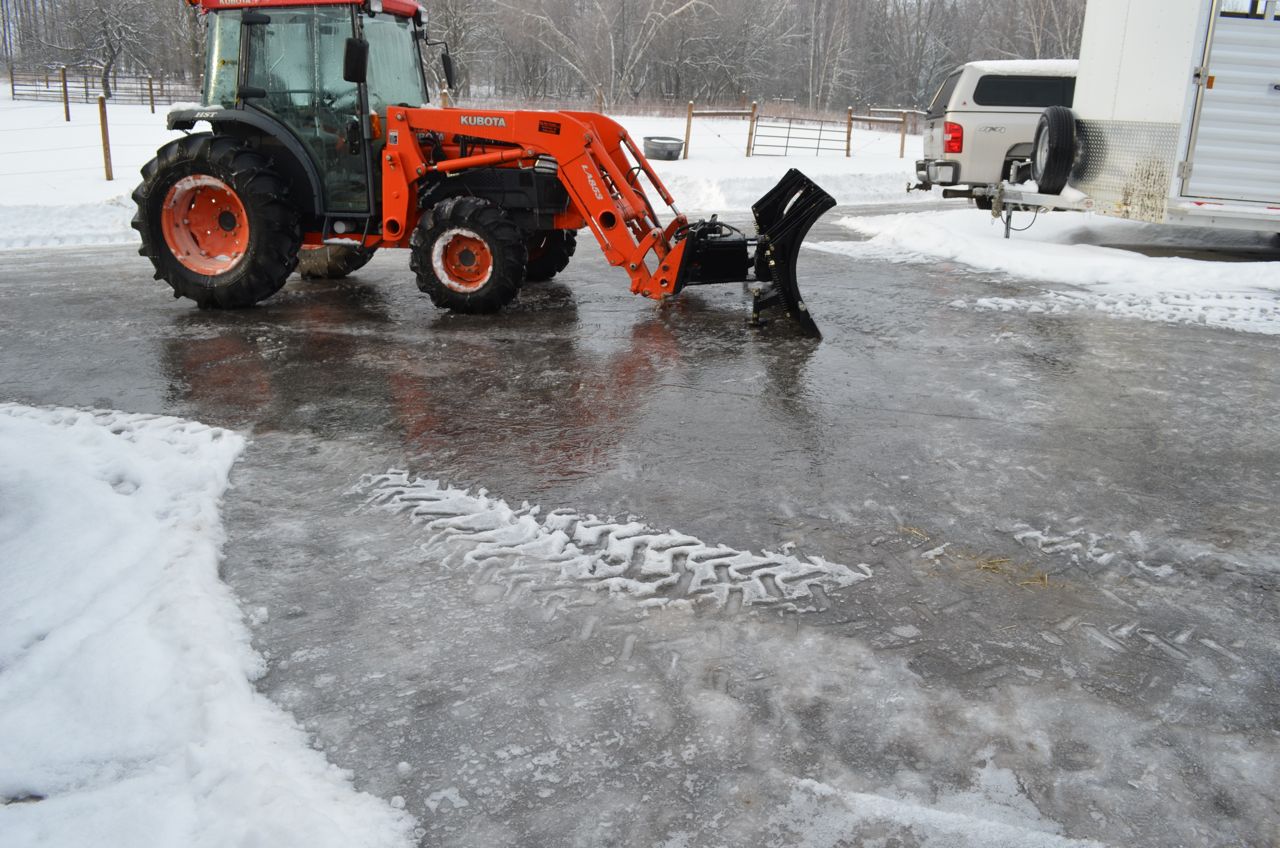
    We woke up one morning last week to a coating of ice on everything from a freezing rain just before dawn. I went out to the big barn, just 40 feet or so from the house, but found myself sliding down the iced-over pavement back towards the house. Time for … ash!
    Yes, for conditions like this, we do what the old-timers did — sprinkle wood ashes for traction. Safe, chemical free and well, completely free — our wood boiler produces plenty of ashes all winter long — we've found ashes are indispensible when ice becomes treacherous.  
    We do wear cleats, too, for navigating outside while doing chores, but if you just want to get between buildings, or bring dogs in from the yards, you don't want to have to put cleats on every time you step in and out of the house. (Those cleats are just a little hard on the floors!)
    So we keep buckets of ash by the doors for spreading pathways as necessary.  After taking that photo above, I clawed my way back the house, picked up the ash bucket, and started spreading my way to the barn. Here's what it looked like:

    Ash path to barn

    The freezing rain heralded a warm-up in the weather, generating a rapid snowmelt over the last two days of the past week, and then … another freeze-up. So while the pavement is now bare and dry, the last few inches of snow is now covered in ice, especially where there had been any foot traffic (dog or human), so we are cleated for chores and spreading ash liberally where needed!

    New Shelter Challenge Contest — Please Vote for the Farm!

    The latest Shelter Challenge started Monday, January 7 and ends on April 28. Grand prize in this round is $10,000, $3,000 for second place and $1,000 for third place, plus $1,000 for weekly winners and $1,000 for state winners. There are also other categories … please see the Shelter Challenge website for details.

    *** You will find us listed as Rolling Dog Farm.  The state is NH for New Hampshire. ***

    Please remember, you can vote every day … consider bookmarking the voting page to make it easy.

    We just won $1,000 as a weekly winner in the last contest, and thousands more in the previous contests. The Shelter Challenge really does bring in a lot of money for the animals here!

    You can vote in the Shelter Challenge here.  

    Thank you for your votes!  

  • Aaron kissing Steve 2

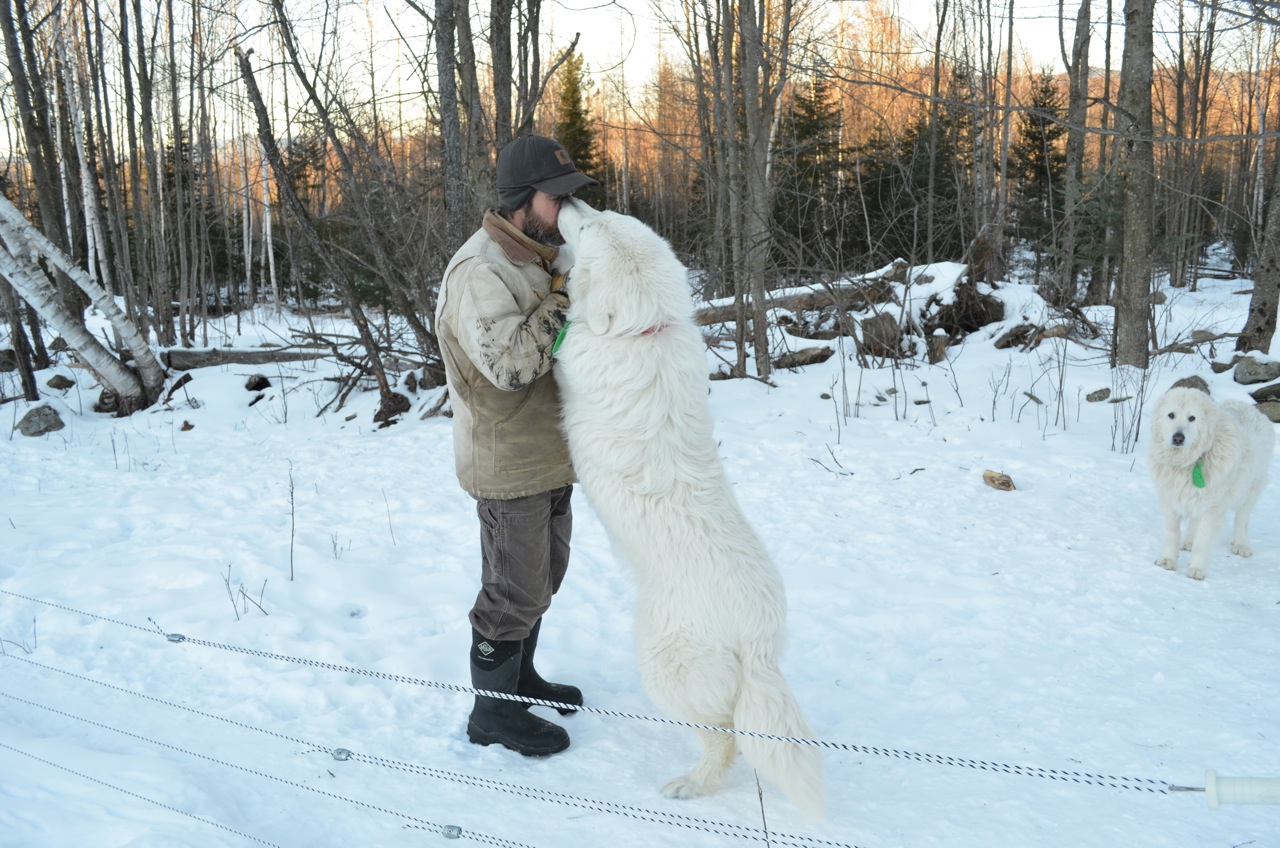
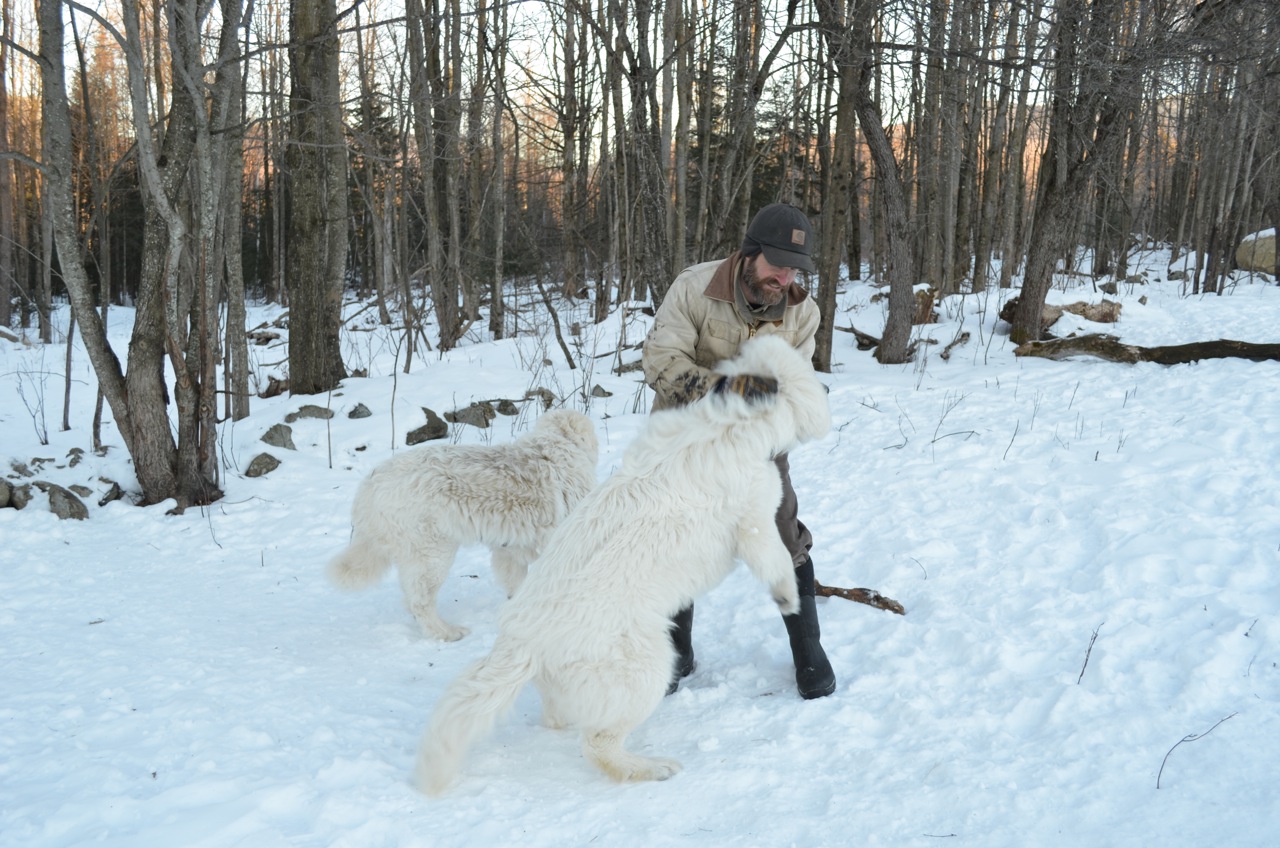
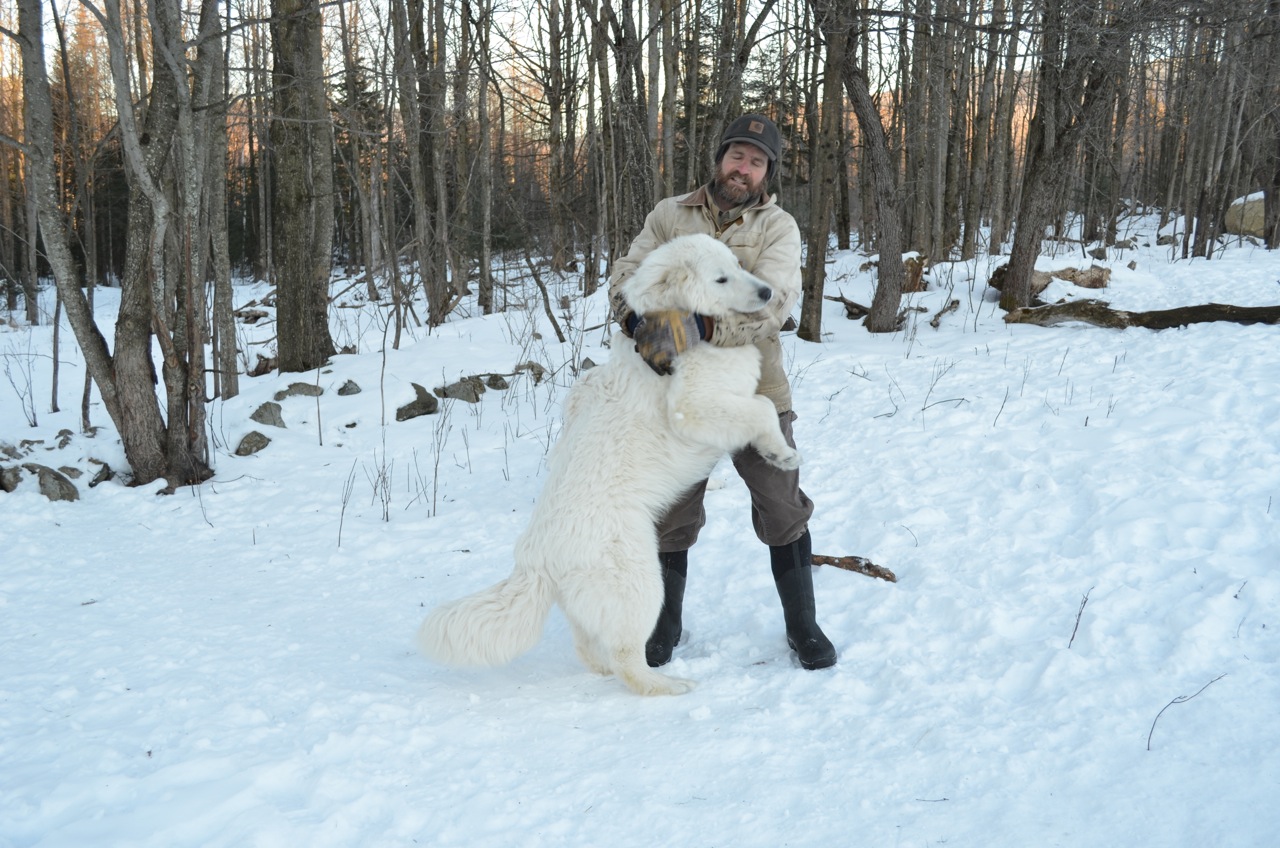
    Yes, that very large dog giving me a smooch is Aaron, our second Maremma livestock guardian dog. And he is, at 8 months of age, still very much a puppy! In early December, when we last weighed him, he clocked in at 104 pounds, and he's grown quite a bit since then. Over on the right is our original Maremma, Gina, who I wrote about last June. In that blog post I spelled her name "Gena," but since then I've decided — for no reason I can recall — to spell it Gina instead. (She says, "Hey, I don't care how you spell it as long as it sounds the same to me.")

    We got Aaron last August when he was almost 3 months old, and he looked like a polar bear cub. Cutest thing I've ever seen. Because Gina was already pretty well advanced in years when she came to us (she's 9 now), the plan all along was to have her "train" the next generation of Maremmas for us. Although there are two excellent books on livestock guardian dogs — see this and this — the best way for an LGD puppy to "learn the trade" is by pairing him or her with an experienced dog. They are born with the instincts, because they've been bred for this duty for centuries. But to hone those innate skills, there's nothing more effective than having an adult to show the youngsters the ropes. 

    Even at just a few months of age, it was clear Aaron was going to be a great livestock guardian dog. We'd take the goats out to the browse paddock in the woods first and turn them loose, then go back and get Gina and Aaron and take them down to the paddock. We'd watch this big, white fluffy puppy go bounding through the woods, racing up to each group of goats, observing for a few seconds, and then running off to check out the next group. We swear it's like he was counting noses to make sure all the goats were accounted for at the beginning of his shift.

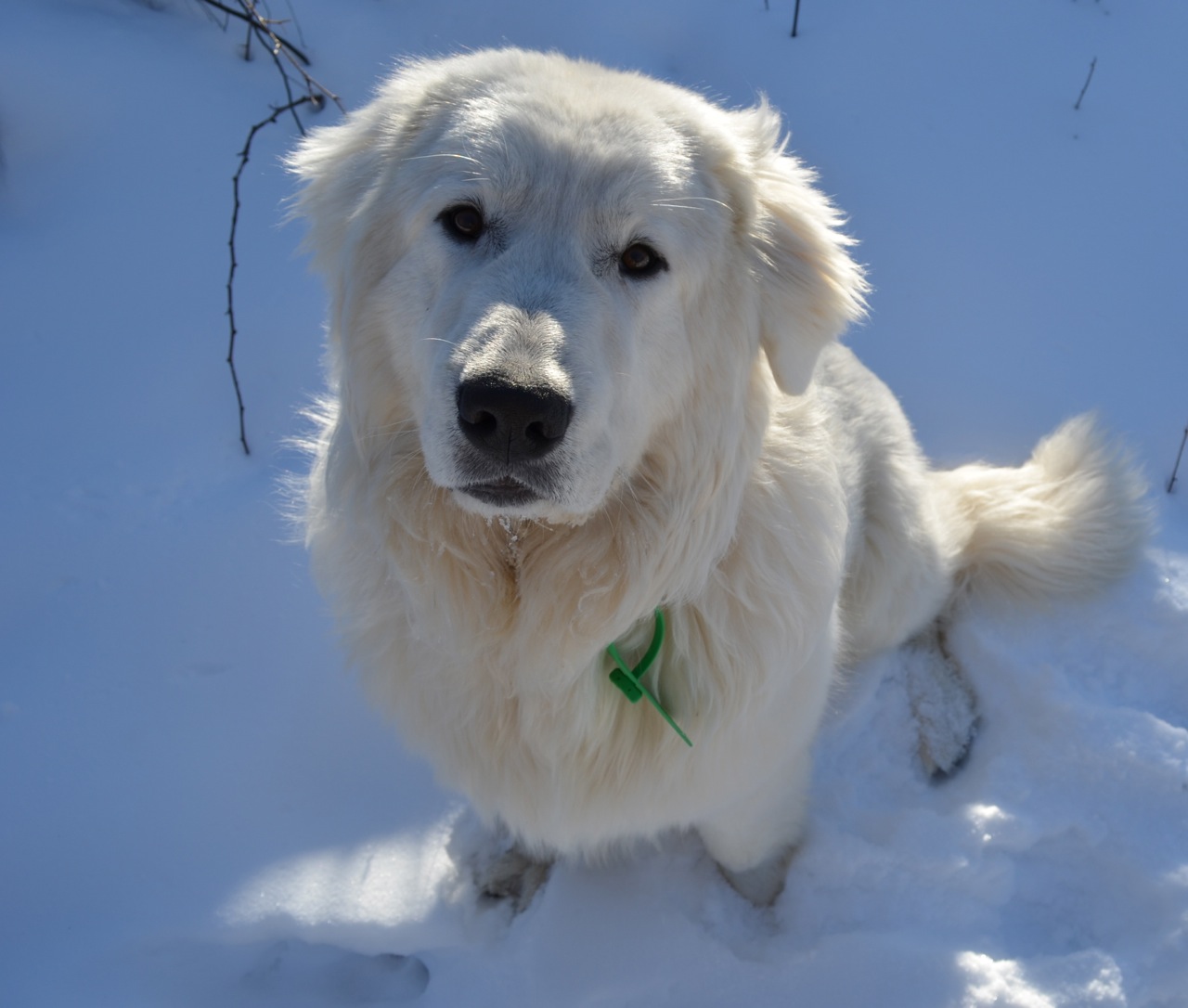
    Both Gina and Aaron are incredibly sweet, sensitive and affectionate dogs. Aaron is a pure lovebug and a real kisser. They are very wary — but not aggressive — with strangers who approach the goat pens or browse paddocks, but with Alayne and me, they just want to be loved up. Here's a close-up of Aaron:

    Aaron looking up at camera

    Because of his age and puppyness, Aaron wants to roughhouse and wrestle, but his Aunt Gina is long past that stage and will not put up with such foolishness. So Aaron turns to me for some tough-guy stuff, as this next sequence of photos we took on Sunday will show. (Click on photos for larger image.)

    In the first shot, you can see we've already been at it and he's circling around to come at me … while I'm clapping my hands, which is the signal we've worked out to tell him it's okay to jump on me:

    Aaron playing with Steve 1

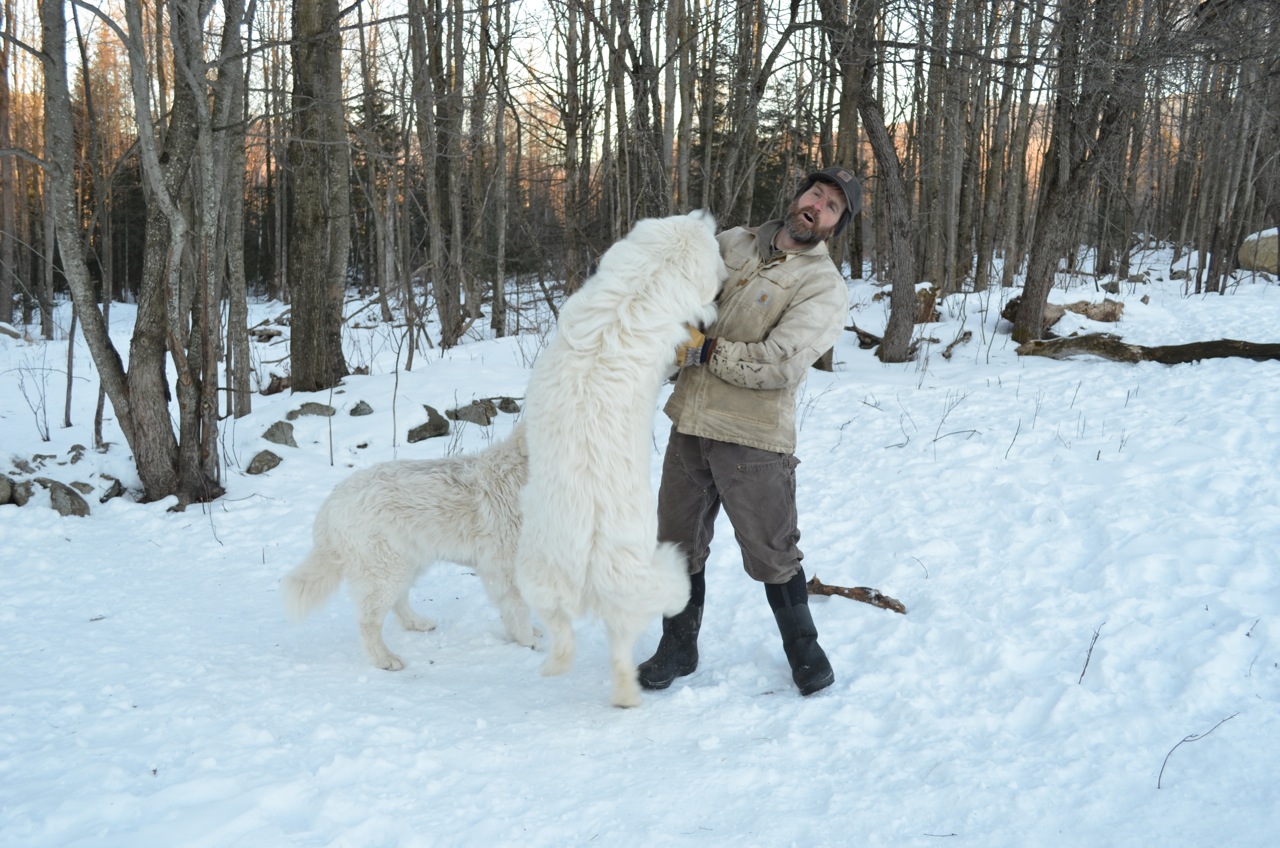
    Even so, he's so quick he catches me off-guard, as you can see from my expression (I had to laugh when I saw this shot on the computer):

    Aaron playing with Steve 2

    I grab the big lug and start trying to wrestle him to the ground:

    Aaron playing with Steve 3

    Of course, getting your arms around a dog this big is easier said than done:

    Aaron playing with Steve 4

    The rules say you can't do this, but he decides right then and there that this is as good a time as any to sneak a kiss in:

    Aaron playing with Steve 5

    That's cheating!

    I go back to trying to get a bear hug on the polar bear:

    Aaron playing with Steve 6

    And declare myself the victor, even if he doesn't agree:

    Aaron playing with Steve 7

    You can see that Gina has quietly shuffled off, preferring not to be a party to the nonsense. "Boys will be boys," she huffs.

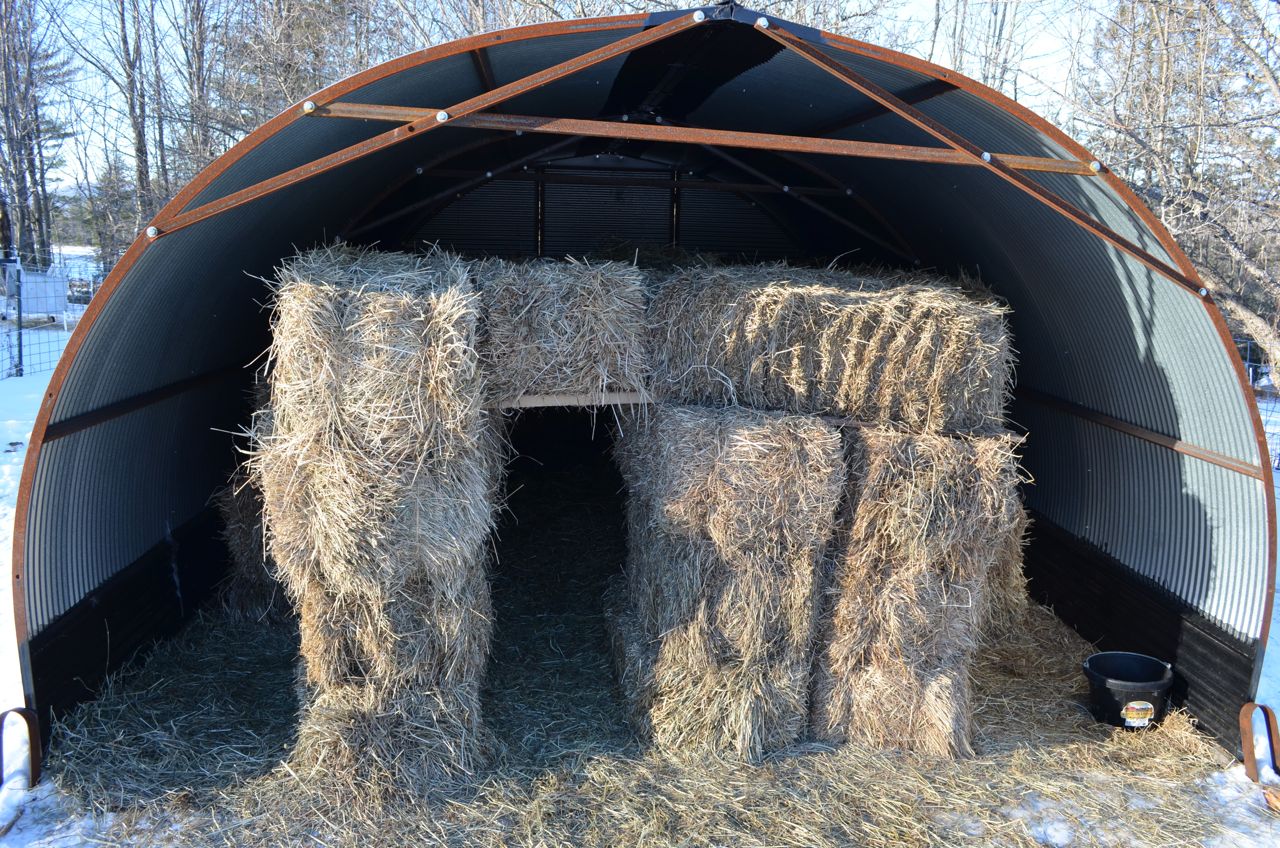
    We house Gina and Aaron in a large fenced pen adjacent to the goat pen. When we first got Gina she stayed with the goats, which is standard practice for livestock guardian dogs, but we discovered that some of the dominant goats were head-butting her. The livestock guardian dogs have been bred to be submissive to livestock, and Gina simply wouldn't protect or defend herself, let alone give one of the offending goats a nip. This happened only in confinement in the pen, and not out on the browse paddocks, so we set Gina up with her own quarters. Here is where Gina and now Aaron live:

    Maremma dog house

    That's a 12' wide by 14' deep Quonset hut — very cheap, portable livestock housing that will last for decades. We constructed a hay bale "house" inside (think "straw bale house" and you get the idea). The walls and roof are made of hay bales, and the floor is made of several pallets covered with rubber stall mats, and filled with several bales of loose hay for an extra soft and comfy bed that's about a foot thick. We created a narrow "tunnel" in the front for access into the deep interior of the house, which keeps out any wind, snow or rain from getting inside:

    Maremma dog house inside

    You can tell that a certain puppy has been chewing on the two bales on the lower left. But, it's an easy fix — pull them out, feed to the goats next door, and put in two new bales.

    The double-envelope design of the hay bale house inside the Quonset hut makes it surprisingly warm.

    These two Maremmas are as adapted to living outdoors as wolves and coyotes. When we took these photos on Sunday, it was about 9 degrees above zero — and they'd been out there all day and couldn't have been happier. We've taken them their breakfast on subzero mornings and found them sitting outside their dog house on the snow. We take them out to the browse paddocks every morning because they want to be out in the woods. The goats stay in — there's nothing for them to eat out there this time of year except tree bark, and if we let them, they'd kill the trees over time, and they'd much rather stay in their pen with their shelter in cold weather anyway.

    But the Maremmas go crazy if we don't take them out. The exceptions are if it's raining, sleeting, or snowing hard — in which case we want them to stay in and have shelter, even if they think they'd rather be out in the woods. If it's below zero but otherwise calm and clear weather, we'll put them out for a couple of hours before bringing them back in early. It's like they get cabin fever!

    Here's our beautiful Gina:

    Gina standing looking at camera

    And another shot of Aaron:

    Aaron standing in woods

    And finally, here's a photo Alayne took of the three of us on Sunday:

    Gina and Aaron with Steve 2

    More kissing! I was trying to get all three of us to look at the camera but they had other ideas.

    Bear in mind that Gina is a big girl in her own right — she weighs 94 pounds herself — so you can see how much bigger Aaron is than she is at this point. And I don't think he's done growing!

    New Shelter Challenge Contest — Please Vote for the Farm!

    The latest Shelter Challenge started Monday, January 7 and ends on April 28. Grand prize in this round is $10,000, $3,000 for second place and $1,000 for third place, plus $1,000 for weekly winners and $1,000 for state winners. There are also other categories … please see the Shelter Challenge website for details.

    *** You will find us listed as Rolling Dog Farm.  The state is NH for New Hampshire. ***

    Please remember, you can vote every day … consider bookmarking the voting page to make it easy.

    We just won $1,000 as a weekly winner in the last contest, and thousands more in the previous contests. The Shelter Challenge really does bring in a lot of money for the animals here!

    You can vote in the Shelter Challenge here.  

    Thank you for your votes!  

  • Scamp after grooming

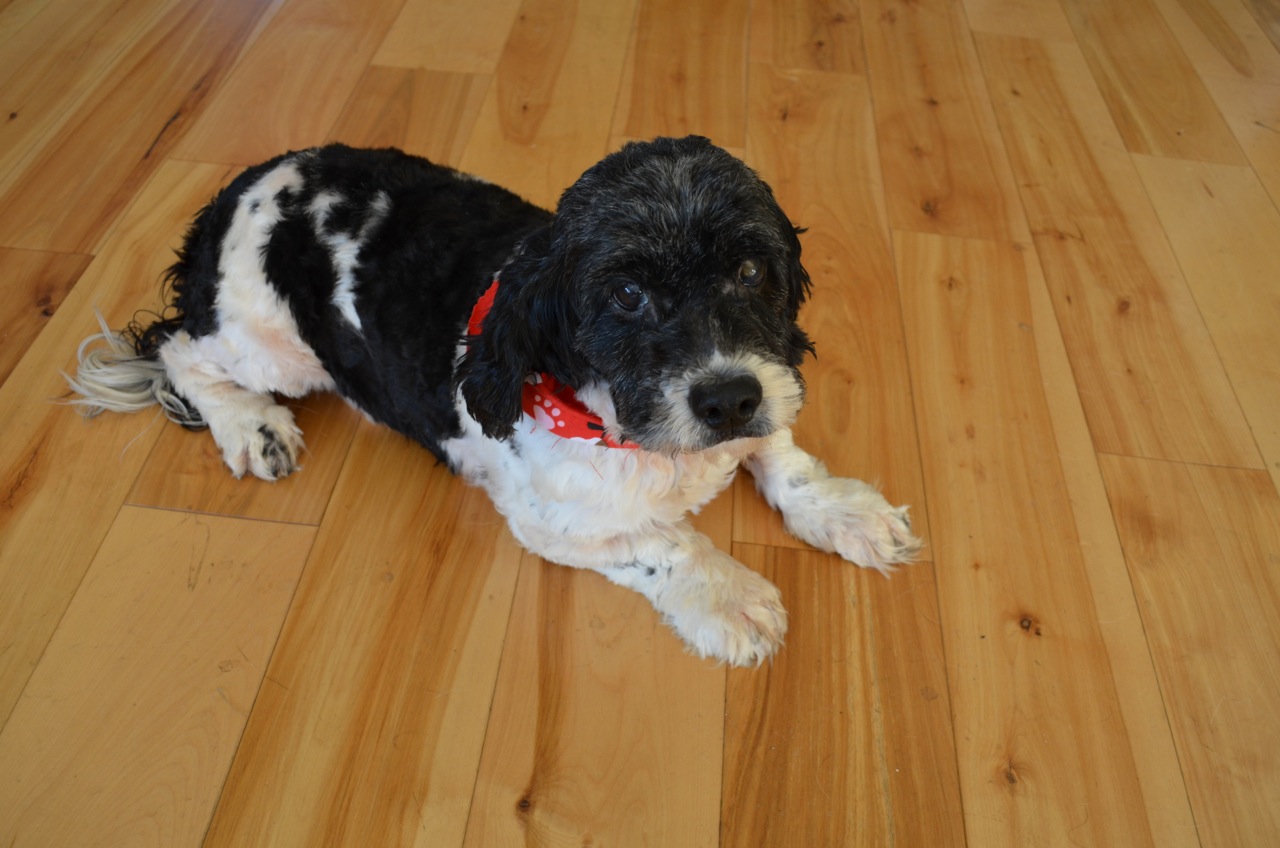
    Our terrific groomer, Lori Fillion, came out as scheduled on Friday to groom all ye little ones, including new arrival Scamp. What a difference some grooming can do! That's a photo above that I took this afternoon of him, still sporting his post-grooming bandana. 

    Here he is with Alayne and Lori on Friday:

    Scamp with Alayne and Lori 1

    Followed up by a kiss:

    Scamp with Alayne and Lori 2

    Lori doubts Scamp was ever groomed before because he wasn't very happy about it, and squirmed so much Alayne had to hold him most of the time Lori was working on him. But the results speak for themselves!

    New Shelter Challenge Contest — Please Vote for the Farm!

    The latest Shelter Challenge started Monday, January 7 and ends on April 28. Grand prize in this round is $10,000, $3,000 for second place and $1,000 for third place, plus $1,000 for weekly winners and $1,000 for state winners. There are also other categories … please see the Shelter Challenge website for details.

    *** You will find us listed as Rolling Dog Farm.  The state is NH for New Hampshire. ***

    Please remember, you can vote every day … consider bookmarking the voting page to make it easy.

    We just won $1,000 as a weekly winner in the last contest, and thousands more in the previous contests. The Shelter Challenge really does bring in a lot of money for the animals here!

    You can vote in the Shelter Challenge here.  

    Thank you for your votes!  

  • Read Between The Lines Logo

    Melinda Jones, who writes a lifestyle blog called Super Much Love, emailed us over the holidays to say she was coming out with a line of innovative and beautifully designed note cards, Read Between The Lines, and would like to donate a portion of each sale to the Rolling Dog Farm.

    It seems Melinda's three-legged adopted dog, Celia, had something to do with this idea:

    Celia Jones 2012

    Isn't she a doll?

    Well, the note cards are now available for purchase online — please go check them out! Melinda recently sent us a package of them, and I think you'll be as impressed as we were with the quality, the design and the clever ideas behind them.

    Here's also a media story about the line of note cards.

    Thank you, Melinda and Celia!

  • Chickens eating squash

    And now for something entirely different!

    This isn't a post about a new recipe I just found, although there are some very tasty chicken and squash recipes out there. No, this is about what we feed our chickens. 

    I've mentioned before that one of the many reasons for the move to the New Hampshire farm was so we could become more self-sufficient. This is why we're producing food for the dogs, starting to grow hay for the horses and other livestock, and growing some food for ourselves. This has been a process of learning how to do all these things, and we are a long way from being where we want to be … though we are definitely getting there.

    Raising our own chickens is one step in that direction. If the objective is to be responsible for providing our own food in the form of meat and eggs, and knowing the birds were raised humanely and without antibiotics, growth hormones and other icky things, then having chickens meets all those goals. However, if the objective is also self-sufficiency, then having to buy your chicken feed from someone in a 50-lb bag sets you pretty far back from that goal. You may not be buying your chicken at the grocery store any longer, but you're still very dependent on someone else farther up the food chain (so to speak).

    Now, nearly every modern book on raising chickens, as well as every county extension office, will tell poultrykeepers to head to the local farm and ranch store and buy the commercially produced, specially formulated "balanced" feeds designed for either the laying flock or the broiler flock. This is, of course, highly processed food — nothing fresh about it. Set out the standard grit, oyster shell, and fresh water, open the bag of commercial feed and pour into a feeder, and you're done. (One recently published book, Harvey Usery's The Small-Scale Poultry Flock, does actually encourage people to make their own poultry feed, though quite a few of the inputs are still purchased.)

    The problem with commercial feeds is not only the expense, but you also don't know what went into the feed in the first place (GMO grains, drenched in pesticides and herbicides, etc.). And if you want to use only organic feed, it's far more expensive. Indeed, the cost of all animal feed has been rising dramatically in recent years, due to growing worldwide demand for grain, to competing uses like ethanol, and to reduced harvests from drought.

    An article in the January 2013 issue of the Stockman Grass Farmer pointed out that the cost of producing chicken (on an industrial scale) has doubled since 2006, due in large part to the cost of corn going up 250% since that same year. And that's for the giant agribusiness companies like Tyson Foods, who can buy grain cheaper than anyone else because of their size.

    For all these reasons, we've been working on this issue for the past couple of years and experimenting with growing alternative feeds that we can produce ourselves for chickens. Yes, you can feed lots of greens and veggies from the garden during the summer, and you can put your chickens on pasture (like Joel Salatin does) where they can eat nutritious plants like clover, but the trick is providing sufficient protein and carbohydrate feed right through a long northern winter, too. 

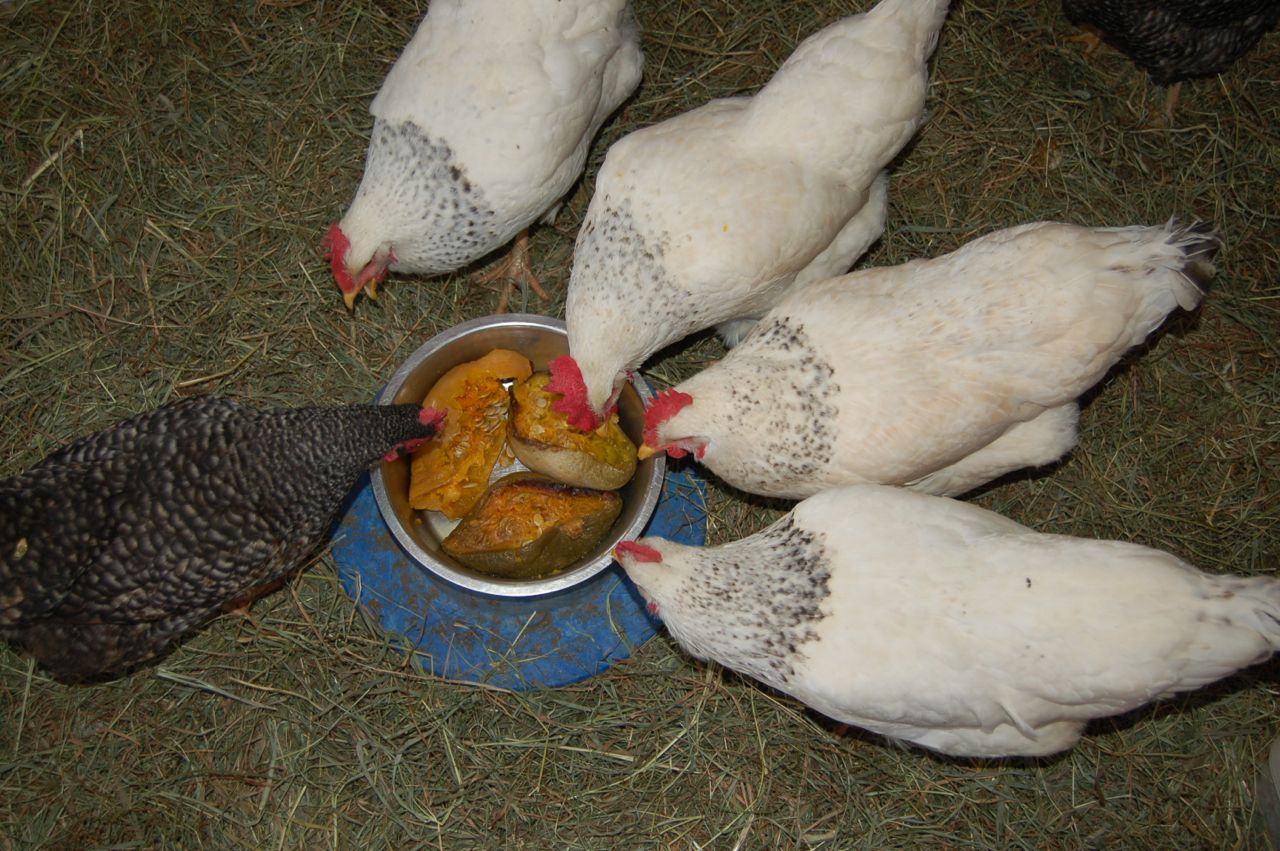
    One of those foods we now provide our laying flock is winter squash. They can eat the squash raw, but they prefer it cooked — and since squash is one of our own staples for dinner, we bake a lot of squash in the oven at the same time we bake some for ourselves. The squash seeds are high in protein, so we just leave them in the squash we bake for the chickens. They go crazy when we set out the squash in the coop. The white birds in the photo above are Delawares, and the black speckled one is a Barred Rock. 

    Rather than just rely on modern texts on how to raise chickens, we went back to the old sources — the agricultural "how-to" books from the century before everyone went to their local Tractor Supply to buy their animal feed. We wanted to know how the old-timers raised their flocks. One of our favorites is "The Dollar Hen" by Milo Hastings, published in 1909.

    What we found is that they always raised chickens outdoors — for access to sunshine and insects, grubs, and worms, as well as the grass and clover — and they fed them a variety of grains, greens, and meat or milk for protein. Yes, meat. As Hastings wrote, "Chickens are not by nature vegetarians. They require some meat to thrive. It has been proven in several experiments that young chickens with an allowance of meat foods make much better growth than chickens with a vegetable diet, even when the chemical constituents [i.e., protein, etc.] and the variety of the two rations are practically the same."

    So we also feed our chickens goat milk (yes, we're milking goats — more on that when we start milking again in the spring) and meat, like organs. If you want proof that chickens aren't vegetarians, set out a bowl of meat and a bowl of any other food you can choose, and the chickens will devour the meat first. We've done this. They are omnivores with a strong carnivore tendency. Thus we roll our eyes whenever we see egg cartons in the store labeled "eggs from vegetarian fed chickens". That is not natural.

    Last year our corn crop failed, first to torrential downpours and then to crows pulling up the new shoots and eating the seed corn, so we don't have our own corn to feed this winter. Other than corn, growing other grains in sufficient quantities to feed livestock is difficult if you don't have the specialized equipment to plant, harvest and thresh the grains. This is why we're focusing on crops like winter squash and potatoes — both of which can store well all winter — as two of the main staples we're able to feed our chickens during the winter.

    Basically, our idea is that if we feed our chickens a fresh, natural diet of "real" foods, they will thrive. And yes, they certainly are. Those girls — some of whom are now five years old — are continuing to lay right through the winter.

    We have much more to do in this area, but we're pleased with the progress we've made so far.

    New Shelter Challenge Contest — Please Vote for the Farm!

    The latest Shelter Challenge started Monday, January 7 and ends on April 28. Grand prize in this round is $10,000, $3,000 for second place and $1,000 for third place, plus $1,000 for weekly winners and $1,000 for state winners. There are also other categories … please see the Shelter Challenge website for details.

    *** You will find us listed as Rolling Dog Farm.  The state is NH for New Hampshire. ***

    Please remember, you can vote every day … consider bookmarking the voting page to make it easy.

    We just won $1,000 as a weekly winner in the last contest, and thousands more in the previous contests. The Shelter Challenge really does bring in a lot of money for the animals here!

    You can vote in the Shelter Challenge here.  

    Thank you for your votes!  

  • Scamp 1

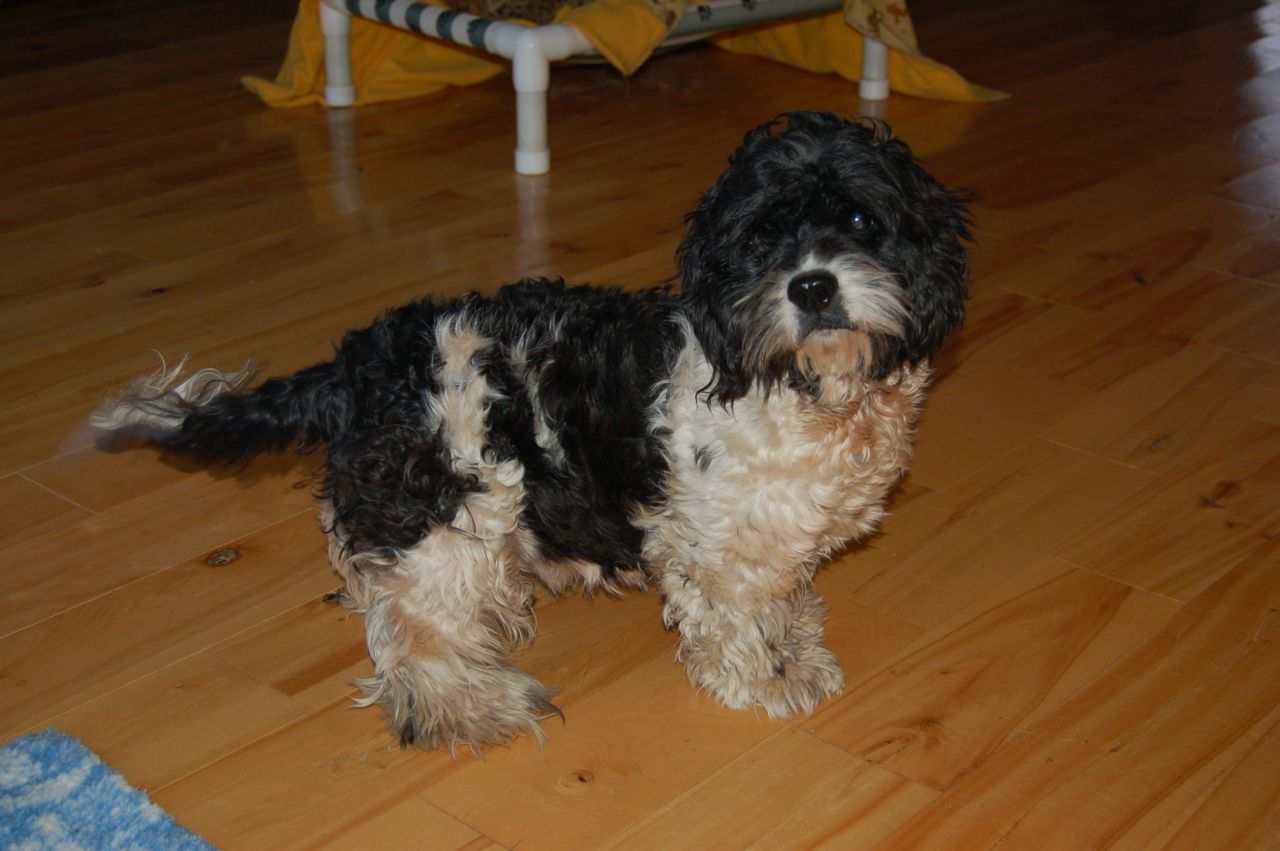
    Bentley wasn't the only dog to arrive last week. Also on the van was this adorable fellow, Scamp, who came from the same rescue group in Louisiana who sent us Bentley. Scamp had been picked up as a stray by the animal control agency in Shreveport, and left unclaimed at the shelter. 

    A very nice lady named Lisa G. was kind enough to foster Scamp for several weeks, too, until our transport could get there. Lisa included a note to us in the paperwork that came with Scamp, and she described him as "the happiest little dog in the world." And that we certainly have to agree with! Scamp had been here all of 10 minutes before we made that observation. He's glad to meet you and anyone else he happens to cross paths with, and he's got a tail that won't stop wagging. He is just as sweet as can be. 

    Lisa wrote that she had planned to get him groomed but "we received some very sick pups and I am running a puppy ICU around the clock. I am very sorry." No problem! Our groomer, Lori Fillon, is coming out this Friday as scheduled, and Scamp will be her first project.

    Scamp is blind in one eye and seems to have only limited vision in his other eye. We've seen him bump into things one moment, and then scoot through an open door or veer around an object the next moment, so we're not sure what is going on. We'll be taking both Bentley and Scamp to our ophthalmologist for eye exams shortly.

    Everyone seems to think he's a Cockapoo, and we bet he is. You might think he also could be a Shih Tzu mix, but his face doesn't have any Shih Tzu-ness (?) to it. So, we're going with Cockapoo. Unless, of course, after Lori gets done grooming him and we find an entirely different dog underneath!

    Here's another view:

    Scamp 2

    Please notice that in both those photos above, the tail is in motion. That boy's a waggin' fool.

    Scamp also wanted to show us he knows exactly how to fit in:

    Scamp rolling

    In fact, he may be the most rolling dog we've ever known — he rolls throughout the day! Scamp asks, "How am I doing so far?"

    New Shelter Challenge Contest — Please Vote for the Farm!

    The latest Shelter Challenge started Monday, January 7 and ends on April 28. Grand prize in this round is $10,000, $3,000 for second place and $1,000 for third place, plus $1,000 for weekly winners and $1,000 for state winners. There are also other categories … please see the Shelter Challenge website for details.

    *** You will find us listed as Rolling Dog Farm.  The state is NH for New Hampshire. ***

    Please remember, you can vote every day … consider bookmarking the voting page to make it easy.

    We just won $1,000 as a weekly winner in the last contest, and thousands more in the previous contests. The Shelter Challenge really does bring in a lot of money for the animals here!

    You can vote in the Shelter Challenge here.  

    Thank you for your votes!  

  • Bently on cot

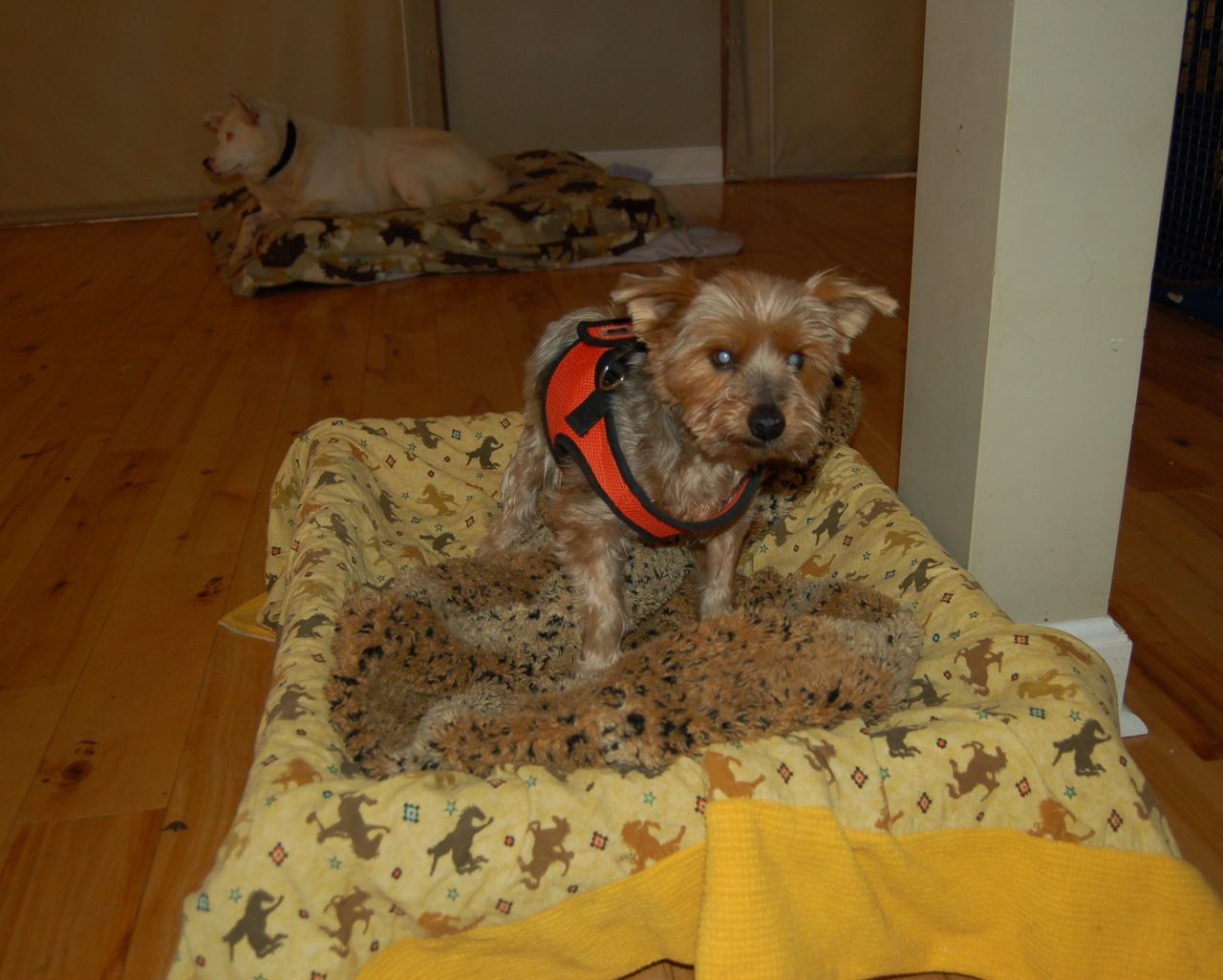
    This little guy arrived a couple of days ago — a very sweet Yorkie named Bentley. In late November he was scheduled to be euthanized in a Longview, Texas shelter when a rescue group in Shreveport, Louisiana, pulled him just before his date. The group, Becky's Bridge, has sent us a number of disabled dogs over the years, and they asked if we could take him.

    A wonderful lady named Stephanie S. then agreed to foster him for several weeks until our pet transport company, TLC Pet Transport, could pick him up. Stephanie quickly realized Bentley needed immediate, and significant, medical care. She took him to her vet for an exam and emailed me to say,

    "Here are the medical issues that my vet said that Bentley has:

    – Periodontal and orthodontic disease including an oronasal fistula

    – Bilateral mature cataract with anterior Uveitis

    – Superficial pyoderma

    – Infectious tracheobronchitis

    He is scheduled for his dental procedure next Tuesday after being on the Azithromycin for 6 days."

    This is not uncommon. We often need to have major medical care provided for the animals we agree to take, even before they arrive here. In Bentley's case, the surgery to close the oronasal fistula (an opening from his mouth into his respiratory tract) and other care came to more than $700, which we paid the vet clinic directly.

    The paperwork from the Longview shelter said Bentley was a "returned adoption," and the reason: "health of animal."

    Stephanie kindly took him back and forth to the vet clinic for his procedures and follow-up exams, gave him all his medications, and showered him with love the whole time.

    The photo does not do him justice, because he is a very cute boy. He's quiet, gets along great with everyone, and is just one mellow fellow. Last night I was sitting in the living room after dinner and holding him in my lap; he turned and rubbed himself all over me, just so happy to be loved.

    In the photo above, that's blind and deaf Spinner in the background. Behind her you'll notice a "wall" of fabric on both sides of the center wall. These are "weather curtains" that we can raise and lower to block off the solarium to the dog room. Although the solarium can bring a lot of warmth into the building when the sun is shining, it also loses a tremendous amount of heat at night and on cold, overcast days. We realized we needed to do something to cut the heat loss dramatically. The company that replaced the 30-year old awning over the solarium this fall recommended weather curtains (typically used for screened porches in the wintertime) that we can manually roll up and roll down with a cord; very simple and effective. We noticed the improvement the very first night we used them. Best of all, they let just enough heat through to keep the salad greens we're growing in the solarium from freezing!

    New Shelter Challenge Contest — Please Vote for the Farm!

    The latest Shelter Challenge started Monday, January 7 and ends on April 28. Grand prize in this round is $10,000, $3,000 for second place and $1,000 for third place, plus $1,000 for weekly winners and $1,000 for state winners. There are also other categories … please see the Shelter Challenge website for details.

    *** You will find us listed as Rolling Dog Farm.  The state is NH for New Hampshire. ***

    Please remember, you can vote every day … consider bookmarking the voting page to make it easy.

    We just won $1,000 as a weekly winner in the last contest, and thousands more in the previous contests. The Shelter Challenge really does bring in a lot of money for the animals here!

    You can vote in the Shelter Challenge here.  

    Thank you for your votes!  

  • Soba 1

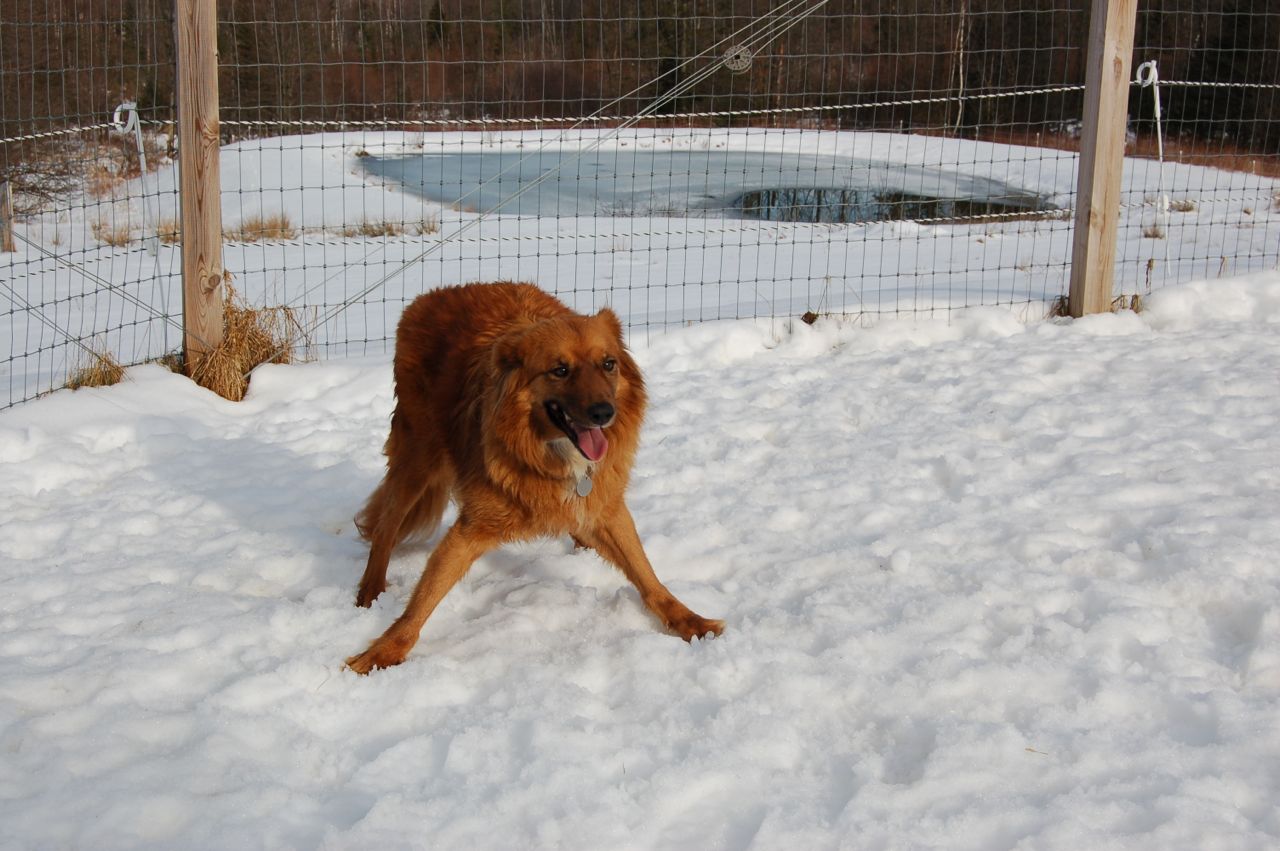
    Here's someone you haven't seen in a while … our wobbling, dancing girl Soba. I took these photos on Sunday afternoon. Soba is the one who was born with cerebellar hypoplasia, which means her cerebellum — the part of the brain that helps with motor skills and balance — wasn't fully developed. Soba came to us many years ago from a shelter in Iowa, along with her sister Noodle, who we subsequently lost to another medical condition. 

    Cerebellar hypoplasia can happen if the mother contracts a virus while pregnant, and it can affect the entire litter in different degrees. In Soba's case, one brother in the litter was almost completely paralyzed, one was unaffected at all, and the three puppies in the middle of the spectrum — including Soba and Noodle — had varying degrees of it. Noodle was hunched over and could only walk in short bursts, then tumble over.

    Soba, on the other hand, though distinctly compromised in her coordination, rarely falls over and prefers to get around under her own power. We tried wheelchairs with Soba and Noodle a long time ago but found that Noodle's body was too bent to use one effectively, while Soba chafed at being confined to the wheelchair and wanted to be free to wobble and dance around.

    The funny thing is that Soba, the most physically challenged of our animals these days, still considers herself the watchdog of the pack. (She says, "Hey, at least I can see, unlike those other guys!") So she'll be quick to start barking as soon as anyone shows up in the driveway above the dog yards.

    Whoever is visiting will look down at the barking dog, who is wobbling and looking like she's going to tip over at any moment, and ask, "What's wrong with that dog?"

    "Nothing," we say. "She's just been drinking again."

    (Yes, then we go on and explain.)

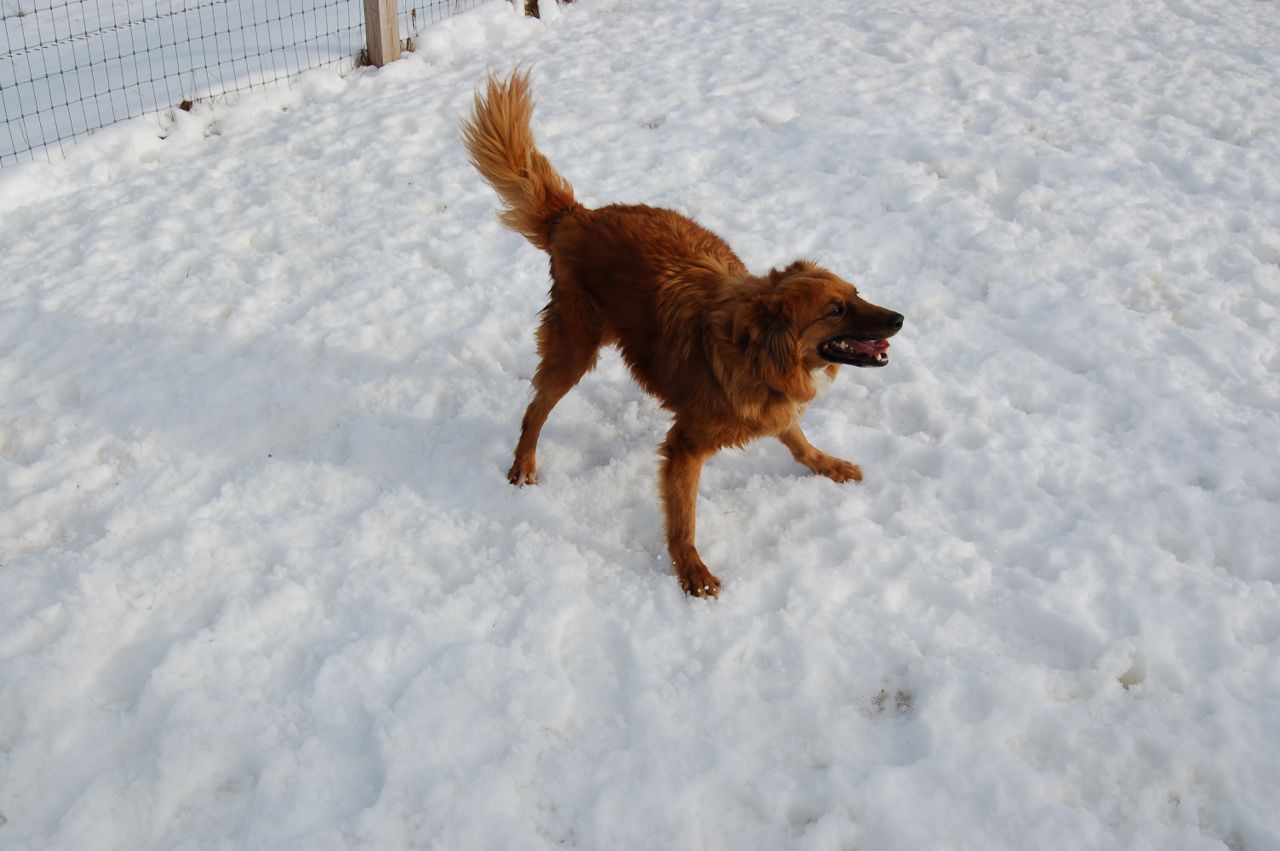
    In the photo at top, you can see the wide stance of her front and back legs. As a puppy, cerebellar hypoplasia dogs learn to make these kinds of adjustments to increase their stability. They also use their tails a lot more for balance, so their tails are frequently in motion. Here's another view of Soba:

    Soba 2

    She doesn't stay that way for long, but it's the classic stance for a dog with cerebellar hypoplasia.

    ———

    New Shelter Challenge Contest — Please Vote for the Farm!

    The latest Shelter Challenge started Monday, January 7 and ends on April 28. Grand prize in this round is $10,000, $3,000 for second place and $1,000 for third place, plus $1,000 for weekly winners and $1,000 for state winners. There are also other categories … please see the Shelter Challenge website for details.

    *** You will find us listed as Rolling Dog Farm.  The state is NH for New Hampshire. ***

    Please remember, you can vote every day … consider bookmarking the voting page to make it easy.

    We just won $1,000 as a weekly winner in the last contest, and thousands more in the previous contests. The Shelter Challenge really does bring in a lot of money for the animals here!

    You can vote in the Shelter Challenge here.  

    Thank you for your votes!