• Willie with Tanya 1

    Willie the blind Beagle needed to have his eyes removed because they had become painful, and we took him to our local vet clinic for the surgery last week. But on the physical exam before the procedure, our vet Dr. Nancy Lefavour detected a very pronounced heart murmur. She thought it might be as high as a Grade 5, and considered him too risky for surgery. She asked us to see if our veterinary ophthalomologist, Dr. Sarah Hoy, was comfortable doing an enucleation on him, or if she had other options to recommend.

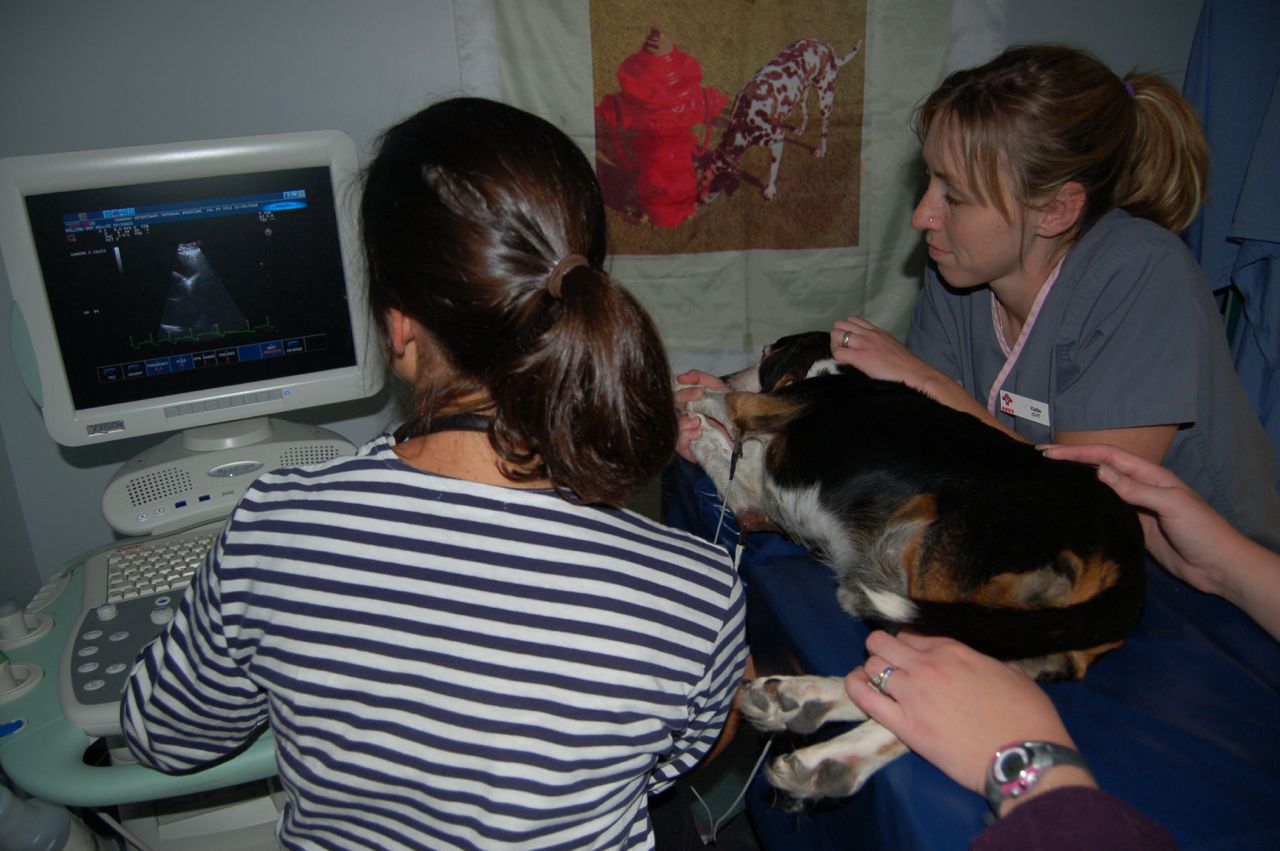
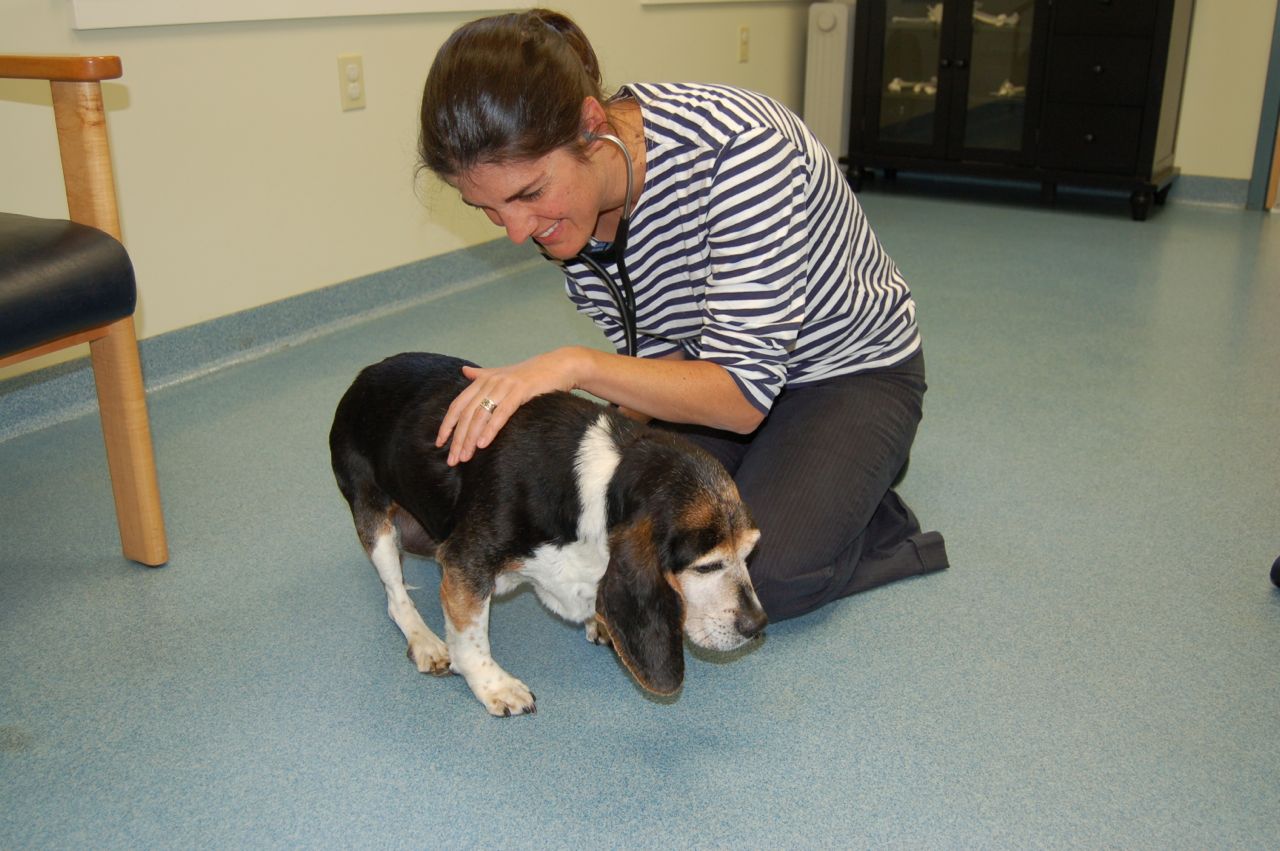
    Consequently, I scheduled two appointments for Willie last Friday in Burlington — with our internal medicine specialist, Dr. Tanya Donovan, in the morning for an echocardiogram of his heart to find out just what kind of condition his heart is in, and then with Dr. Hoy in the afternoon for a consultation. I took the photo above of Tanya doing a physical exam on Willie.

    I had mentioned to Tanya that Willie had a large fatty tumor in his pelvic region, and he'd had this for a few years. But we noticed it seemed to get larger in recent months, and I asked if she could put the ultrasound probe on it while she was doing the echocardiogram just to make sure nothing weird was going on. 

    Here's Willie during the echo:

    Willie with Tanya 2

    The good news was that his heart actually looked pretty good, and Tanya graded his heart murmur closer to a Grade 3/4. She considered him a reasonable risk for surgery.

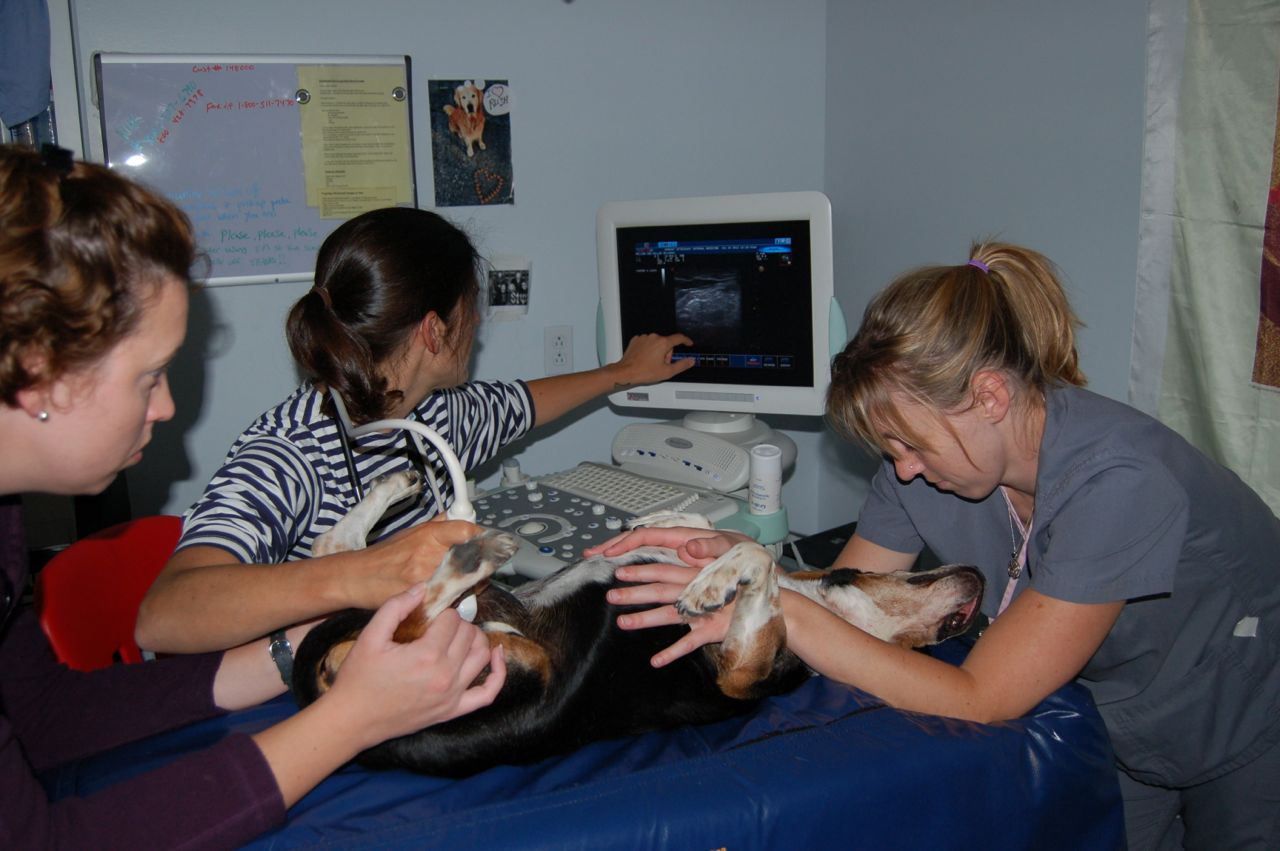
    When the time came to ultrasound the fatty tumor, Tanya was stunned to find some loops of intestine inside it. At first she thought the probe was picking up the intestines inside the abdomen, i.e., scanning through the fatty tumor, but it became clear the intestinal loops she was seeing on the screen were actually inside what we — and numerous vets over the years — had considered a run-of-the-mill fatty tumor. It turns out he had an inguinal hernia — a hole in the abdominal wall that part of his intestines had slipped through.

    Tanya is ultrasounding Willie's fatty tumor in this shot:

    Willie with Tanya 3

    Willie was so stressed out by this that he actually fell asleep and began snoring during the imaging. No, really. He was snoring away when I took that photo.

    Fortunately, his intestines are still working fine, which is one reason we never suspected anything was wrong. At some point, obviously — and presumably this was recently when we noticed the fatty tumor getting larger — he developed the hernia and then the intestinal looped popped out inside it.

    For an interesting quick animation on how inguinal hernias are repaired in people, see this.

    This kind of surgery requires a board-certified veterinary surgeon, so Tanya scheduled Willie to have the procedure performed by her colleague, Dr. Josie Mallinckrodt, who practices at the same clinic. Rather than put Willie through two different surgeries — one for the hernia and one for his eyes — Dr. Mallinckrodt planned to do the enucleation at the same time.

    Yesterday morning I drove Willie to Burlington for the surgery. Dr. Mallinckrodt called last night to say he had come through it in great shape, had recovered from anesthesia, and should be ready to come home on Saturday.

    Shelter Challenge 2012 Logo

    Please Vote for the Farm!

    The latest Shelter Challenge started Monday, July 9 and ends at midnight on September 16. Grand prize in this round is $5,000, plus $1,000 for weekly winners and $1,000 for state winners. There are also other categories … please see the Shelter Challenge website for details.

    *** We are now LISTED UNDER OUR NEW NAME, ROLLING DOG FARM.  State is still NH for New Hampshire. ***

    Please remember, you can vote every day … consider bookmarking the voting page to make it easy.

    We just won $1,000 as a weekly winner in the last contest, and thousands more in the previous contests. The Shelter Challenge really does bring in a lot of money for the animals here!

    You can vote in the Shelter Challenge here.  

    Thank you for your votes!  

  • Turkey flock 1

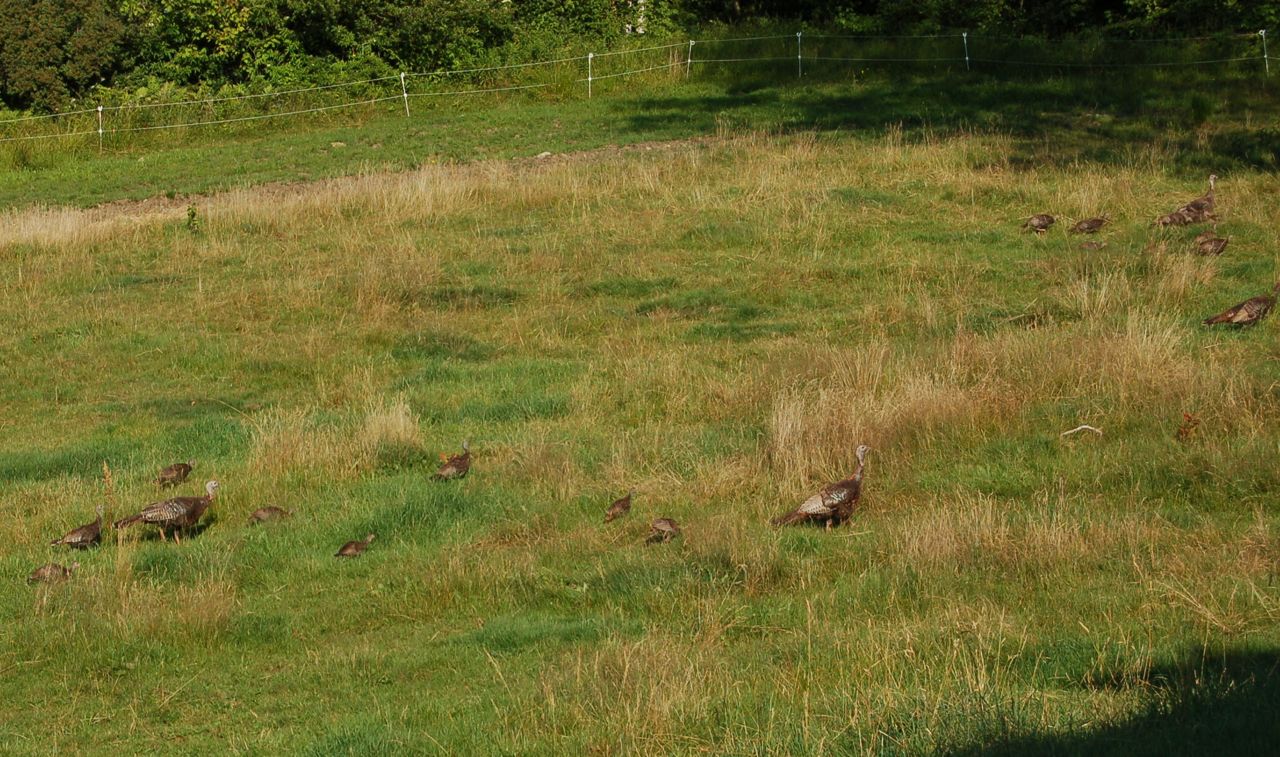
    For the past few weeks we've been enjoying watching an extended family of wild turkeys make themselves at home on the farm. The group includes a number of hens and their youngsters, which have been cruising across the fields, through the orchards and around the pond. (You may need to click on the photo for a larger image to get a better view.) They tend to be very skittish and wary about people, but seem to have grown quite a bit more comfortable being near us and the house, as you can tell from these photos I took from the back deck one evening.

    Here's another view of them the same evening as they headed out around the pond:

    Turkey flock 2

    We've counted up to 18 little ones, though it's hard to get an accurate count because some are so small you can't see them in the grass, and they are constantly moving. But it's quite a sizeable flock. It used to be that if an adult turkey was down by the pond and even heard us open a door up at the house, they'd turn and flee into the woods. Now they just look up and seem to say, "Oh, it's just them again."

    Shelter Challenge 2012 Logo

    Please Vote for the Farm!

    The latest Shelter Challenge started Monday, July 9 and ends at midnight on September 16. Grand prize in this round is $5,000, plus $1,000 for weekly winners and $1,000 for state winners. There are also other categories … please see the Shelter Challenge website for details.

    *** We are now LISTED UNDER OUR NEW NAME, ROLLING DOG FARM.  State is still NH for New Hampshire. ***

    Please remember, you can vote every day … consider bookmarking the voting page to make it easy.

    We just won $1,000 as a weekly winner in the last contest, and thousands more in the previous contests. The Shelter Challenge really does bring in a lot of money for the animals here!

    You can vote in the Shelter Challenge here.  

    Thank you for your votes!  

  • Bridger and girls resting

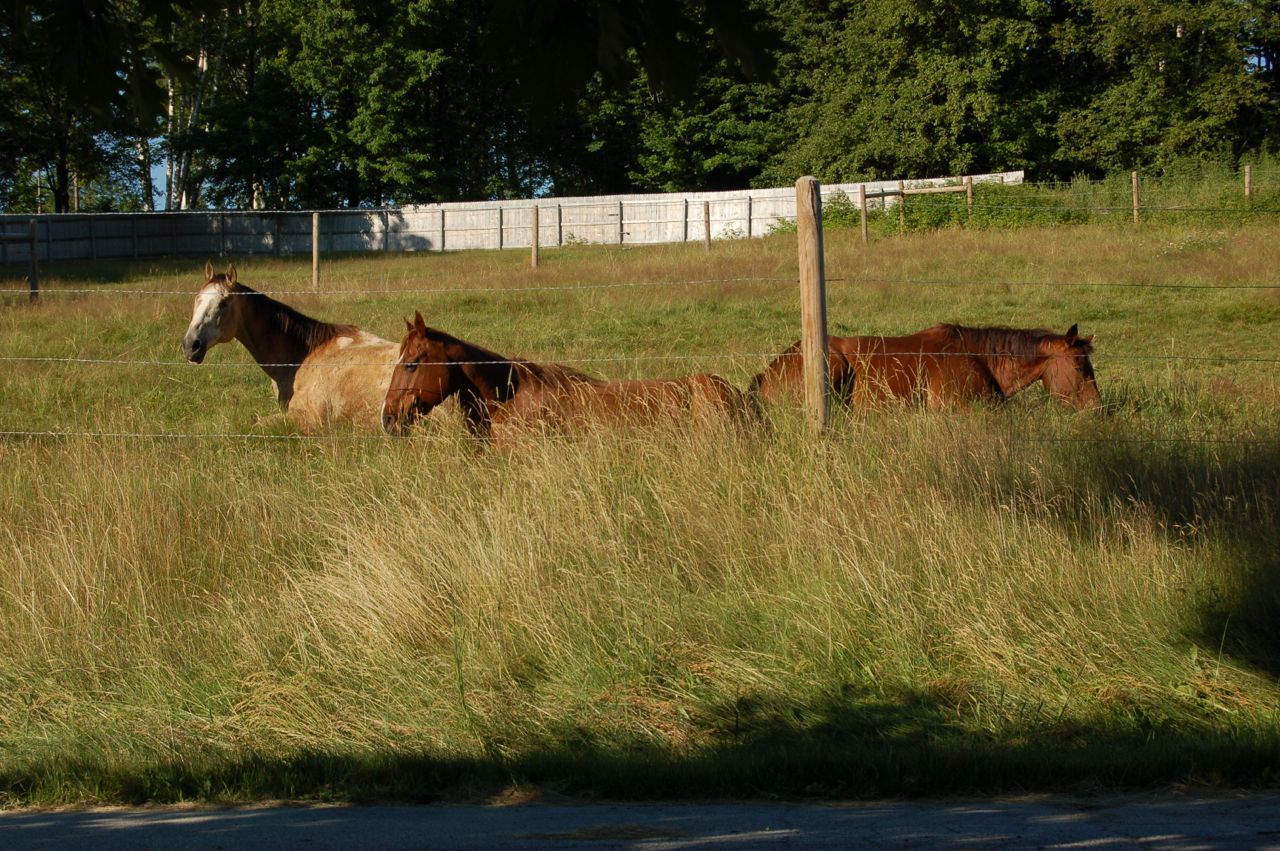
    Alayne took this photo of three of our blind horses resting early on a recent morning. Kate and I had been cleaning the corrals and spreading manure, and it takes us the better part of two days, even with one of us spreading with the tractor and the other spreading with our draft horses, Bill and Bob. So we left all the horses out on pasture overnight, rather than hurriedly putting the corral panels back together the previous evening, bringing the horses in for the night, and then taking the panels all back down again the next morning when we resumed the work. The horses sure didn't mind; they got to graze all they wanted (which is to say, almost nonstop), which is why they were finally all lying down the next morning.

    We don't leave them out on pasture 24/7 because the paddocks are too small and couldn't take the constant grazing pressure. They'd be dirt lots in a couple of weeks. Most horses can get all the nutrition they need in 7 to 8 hours of grazing in any case, but they will eat around the clock. Cows, on the other hand, will only graze for 8 hours in a day; no more, no less. This has actually been scientifically measured in different cattle herds across three continents — in the U.S., in Scotland, and in Australia, according to Andre Voisin in the grazing classic Grass Productivity. So cattle are actually a lot easier on pastures than horses. 

    None of this mattered to the three blind horses, of course. They were just happy to be resting in the early morning sunshine on a beautiful summer day. That's Bridger on the left, Rosie in the middle and Nikki on the right. Traditionally we keep our blind horses in pairs, but this is a threesome that works well in terms of chemistry.

    Shelter Challenge 2012 Logo

    Please Vote for the Farm!

    The latest Shelter Challenge started Monday, July 9 and ends at midnight on September 16. Grand prize in this round is $5,000, plus $1,000 for weekly winners and $1,000 for state winners. There are also other categories … please see the Shelter Challenge website for details.

    *** We are now LISTED UNDER OUR NEW NAME, ROLLING DOG FARM.  State is still NH for New Hampshire. ***

    Please remember, you can vote every day … consider bookmarking the voting page to make it easy.

    We just won $1,000 as a weekly winner in the last contest, and thousands more in the previous contests. The Shelter Challenge really does bring in a lot of money for the animals here!

    You can vote in the Shelter Challenge here.  

    Thank you for your votes!  


  • Field clearing 1

    New England is well known for rocky ground (with New Hampshire called the "Granite State") and historically, farming in this part of the country involved clearing lots of rocks before you could begin tilling. Hence the thousands of stone walls around fields across the region. Over the last 100 years or so, as farms were increasingly abandoned and people moved to towns and cities or to better farmlands in the Midwest, a lot of agricultural land here reverted to forest, or … if it was occasionally bush-hogged (mowed), to weedy pastures. And during those decades, rocks that were once buried gradually worked their way to the surface through frost-heaves and other natural forces. With no farmer still working the fields to pull them out, the once cleared land became rocky again. 

    This was painfully evident when we began trying to till an old pasture about a month ago. My goal was to turn it into a new farm field for a corn crop. We are short of level, dry and well drained land for crops, and this field was all that and more, with great exposure. There had been a few trees on it that were logged before we moved here, but it looked like tilling with the tractor wouldn't be too much of a problem. I've tilled "virgin ground" here before in different parts of the farm and this field looked better than what I had already plowed.

    But every time I put the plow in the ground and started moving forward, I'd get 10 to 20 yards and suddenly the shear pin on the plow would snap and the plow would rotate up and out of the ground. This is a safety feature designed to protect the plow and tractor from damage. Yet I wasn't hitting rocks — indeed, in other fields the plow could actually handle decent sized rocks and not bust a shear pin. In fact, I'd never broken the shear pin before! But on this field, I wouldn't feel a thing in the tractor — I'd just be gliding along and suddenly the plow had popped up in the back. 

    It turned out the problem was tree roots — masses of tree roots just below the surface of the ground. Even though the stumps had been pulled and the land looked relatively clean, one particular type of tree seemed to have left a network of roots snaking through the ground, just under the surface. The plow would make no sound as it encountered the roots, but it couldn't slice through them, so it slowly gathered the roots along the front of the blade as I drove forward until the pressure was too much — and the shear pin would break.

    A rototiller on the tractor couldn't handle it either, which meant calling in our neighbor Jim, who has a small excavator. So Jim went to work pulling up the roots with the teeth on the excavator bucket. As the roots came up … so did the rocks. It seems the roots had actually been holding the rocks in place, keeping many of them from making it to the surface. 

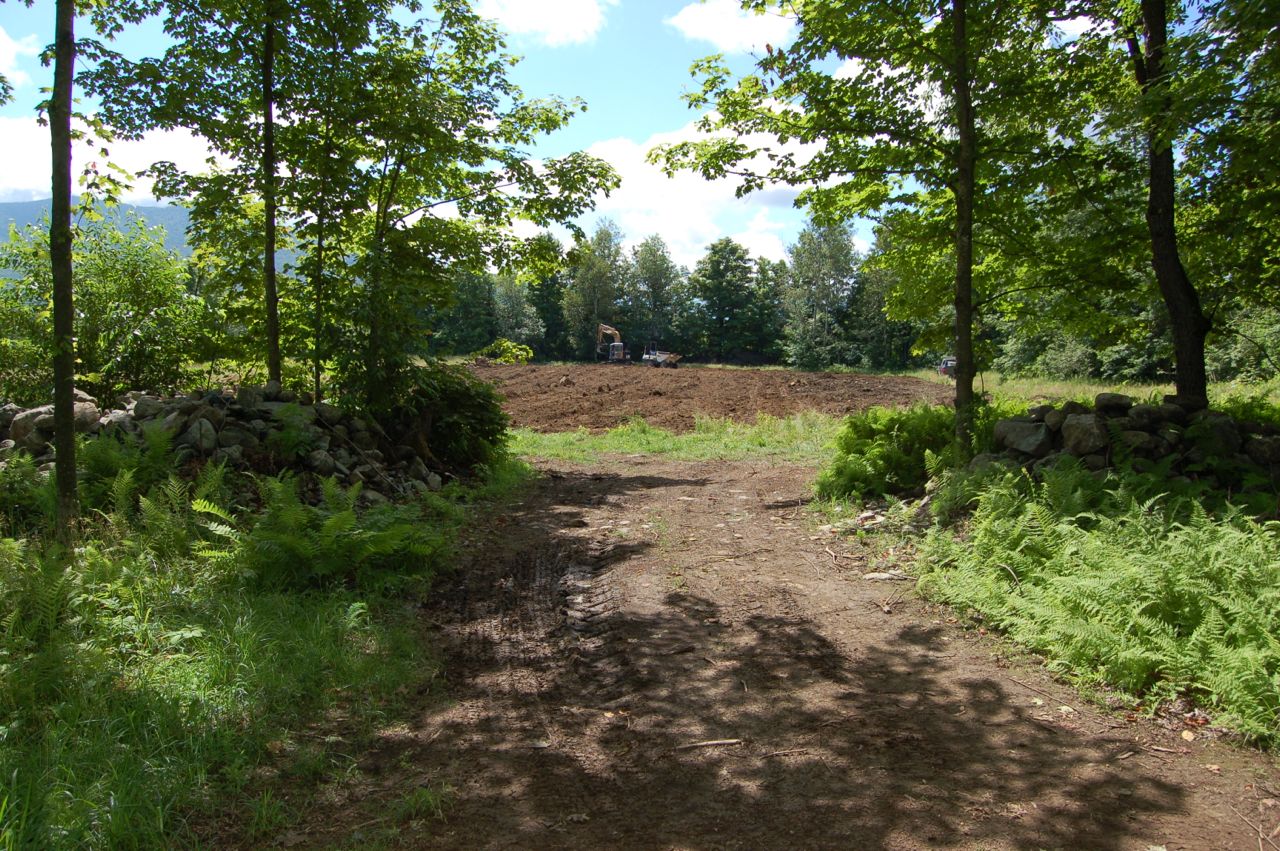
    Thus what started out as a root project became a rock project, too. In the photo above, you can see the new stone wall on the left of the cleared field that Jim was building with the rocks he pulled. (Click on photo for larger image.) I joked that he's probably the first person in at least 50 years to build a new stone wall in New England. It's taken a few weeks to get the major clearing done — that was because of lots of rain delays, since you can't work the ground when the soil is wet.

    Now what's left is for Kate and me to pull the remaining smaller rocks — the ones too small for an excavator bucket — by hand, and then I will use the tractor-mounted rototiller to work the soil into a seedbed. We are probably too late now for a corn crop, so this year I may just plant it to a good clover/timothy mix as a ground cover, get an early hay crop off it next year, then till it in and plant other crops.

    As much work as this has been, it makes me realize how unbelievably fortunate we are to have machines to help us do it. I just marvel at the sheer strength and tenacity of our ancestors, who did all this work by hand and built miles and miles of stone walls with their own physical labor. Here's a photo of the stone wall around this field:

    Stonewall by cleared field

    To give you a sense of how high this is, here's the same stone wall with the opening we made in it to get access to this new field:

    Stone wall opening

    That wall is three to four feet high. We have stone walls like this all across the farm. Our ancestors not only pulled those rocks by hand but loaded them on to sleds (called, appropriately enough, stoneboats) that oxen or horses dragged to the fenceline, then built the walls by hand, too. It's amazing to me what they accomplished. Some of our favorite books about this era are the illustrated ones by Eric Sloane, like Once Upon A Time: The Way America Was and The Seasons of America Past.

    For now, though, we are very grateful to have a neighor with an excavator!

    Shelter Challenge 2012 Logo

    Please Vote for the Farm!

    The latest Shelter Challenge started Monday, July 9 and ends at midnight on September 16. Grand prize in this round is $5,000, plus $1,000 for weekly winners and $1,000 for state winners. There are also other categories … please see the Shelter Challenge website for details.

    *** We are now LISTED UNDER OUR NEW NAME, ROLLING DOG FARM.  State is still NH for New Hampshire. ***

    Please remember, you can vote every day … consider bookmarking the voting page to make it easy.

    We just won $1,000 as a weekly winner in the last contest, and thousands more in the previous contests. The Shelter Challenge really does bring in a lot of money for the animals here!

    You can vote in the Shelter Challenge here.  

    Thank you for your votes!  

  • Widget with Tanya 1

    First, thank you for all your wonderful and heart-warming comments about our recent losses. We really appreciate it. I figured we were overdue for some good news, so here goes!

    Last Friday, when Alayne took Sparky over to see our internal medicine specialist, Dr. Tanya Donovan, she also took Widget and Dexter as well. Dexter was in for a follow-up on his front leg lameness, and Widget was in for her annual geriatric screening.

    Dexter's disc issue is, fortunately, getting better and at this point doesn't require anything more than some anti-inflammatories.

    In the the photo above Dr. Donovan is doing part of her physical exam of Widget while Dexter looks on. (Sparky was also in the room at the time but behind Alayne.) Widget's "dashboard" readings were all superb — her organs looked good on ultrasound, her chest X-ray was nice and clear, her bloodwork was perfect, and her heart condition hasn't changed at all from her last echocardiogram. She'll continue on heart meds but the lack of any deterioration in the past year was such a relief.

    In other words, she's good for another 10,000 miles!

    Shelter Challenge 2012 Logo

    Please Vote for the Farm!

    The latest Shelter Challenge started Monday, July 9 and ends at midnight on September 16. Grand prize in this round is $5,000, plus $1,000 for weekly winners and $1,000 for state winners. There are also other categories … please see the Shelter Challenge website for details.

    *** We are now LISTED UNDER OUR NEW NAME, ROLLING DOG FARM.  State is still NH for New Hampshire. ***

    Please remember, you can vote every day … consider bookmarking the voting page to make it easy.

    We just won $1,000 as a weekly winner in the last contest, and thousands more in the previous contests. The Shelter Challenge really does bring in a lot of money for the animals here!

    You can vote in the Shelter Challenge here.  

    Thank you for your votes!   

  • Sparky 2

    Just a week after losing little Pip, we lost another recent arrival, blind Sparky. 

    I had mentioned in his introductory blog post that we suspected he had hip dysplasia because of the way he walked with his hind legs. Our primary care vet thought at the time that it was from lack of muscle tone, since Sparky had been tied up most of his life and was also emaciated when he came. I mentioned then that Sparky was in constant motion, always cruising the dog yard and rarely resting. We thought that might have something to do with spending his life tied up, too. He was also incontinent, both with pee and poop, though yet again we initially attributed this to simply having been an outside dog, tied up and forced to live in his own waste, so he had become used to going whenever he had the urge. 

    But as the weeks wore on and we finally began getting some weight on him, his hips seemed to deteriorate. At times he seemed fine, but other times he didn't have a normal gait in his hindquarters. 

    Then, in recent days, he suddenly took another turn for the worse — he began dropping his hindquarters to the ground, yet he continued to try and keep moving. Then he began crossing his front legs over as he walked. And if he stopped moving, he'd sink over to the right. That's when we realized this was something far beyond a hip issue, and was neurological. 

    On Friday, Alayne took Sparky to see our internal medicine specialist, Dr. Tanya Donovan, at Burlington Emergency and Veterinary Specialists. That's when we learned Sparky had both a brain tumor and lumbosacral disease. What we thought originally was hip dysplasia was in fact his lumbosacral disease, which that write-up says "is often confused with arthritis of the hips as the signs may appear similar." It also explained his incontinence.

    Tanya said the brain tumor was causing the forelimb involvement, the general weakness in gait, his sinking to the right, as well as his need to be in constant motion. She said it's a perverse but often classic feature of brain tumors to cause an animal to keep moving, even if physically they can barely do so. All the signs we were seeing were consistent with an advanced brain tumor, Tanya said. We could try some medical management, but it would buy us at most a few days. In another week, Tanya told Alayne, we would probably begin seeing Sparky start having seizures.

    We've been through two brain tumors — blind Pepper in 2008 and blind Callie in 2010 — and these never end well. Although radiation therapy gained us an additional 18 months with Callie, for nearly a year of that she wasn't her normal self. The treatment had taken a real toll on her, and the tumor came back anyway.

    With Sparky suffering from both a brain tumor and spinal disease, we decided to let him go and not put him through any more. Tanya euthanized him Friday afternoon while Alayne held his head in her hands.

    Like so many of these dogs who come to us, life had been so unfair to this boy. Here Sparky had a miserable life, finally found his way to a safe and loving place, and dies less than three months later.

    He was such a sweet boy, too. On Friday morning Kate and I had been grooming him before putting him in the truck, and he was licking both her and me as we brushed him. He really had become very affectionate.

    My favorite memory of Sparky was from a couple of weeks ago, when I saw him rolling in the green grass in the dog yard, stretched out on his back, front paws up by his face. He rolled and rolled and rolled. It was the happiest I'd ever seen him. At least we were able to give him that.

    Shelter Challenge 2012 Logo

    Please Vote for the Farm!

    The latest Shelter Challenge started Monday, July 9 and ends at midnight on September 16. Grand prize in this round is $5,000, plus $1,000 for weekly winners and $1,000 for state winners. There are also other categories … please see the Shelter Challenge website for details.

    *** We are now LISTED UNDER OUR NEW NAME, ROLLING DOG FARM.  State is still NH for New Hampshire. ***

    Please remember, you can vote every day … consider bookmarking the voting page to make it easy.

    We just won $1,000 as a weekly winner in the last contest, and thousands more in the previous contests. The Shelter Challenge really does bring in a lot of money for the animals here!

    You can vote in the Shelter Challenge here.  

    Thank you for your votes!   

  • Wilbur with plate

    I took this shot the other day after giving my lunch plate to Wilbur to clean up. Alayne and I had enjoyed egg salad sandwiches for lunch, and I had some left over that I knew he'd love to lick up. Because of the lensectomy we had to do to save the vision in his remaining eye, he is very far-sighted — and often doesn't know when things are right in front of him. So after licking up some of the egg salad, he thought he was done — and didn't realize there was still a bit more on the plate. Hence the look he was giving me. I got back down on the floor and pointed to the egg salad still on the plate. "Oh, there it is!" Pretty soon I had a nice, clean plate. And a happier Wilbur. 

    Sometimes when I hand him a morsel from our meals, he doesn't realize there's food in front of his mouth until he smells it — literally under his nose. Then the little mouth with only six teeth and one long tongue opens, and the morsel is gone.

    Shelter Challenge 2012 Logo

    Please Vote for the Farm!

    The latest Shelter Challenge started Monday, July 9 and ends at midnight on September 16. Grand prize in this round is $5,000, plus $1,000 for weekly winners and $1,000 for state winners. There are also other categories … please see the Shelter Challenge website for details.

    *** We are now LISTED UNDER OUR NEW NAME, ROLLING DOG FARM.  State is still NH for New Hampshire. ***

    Please remember, you can vote every day … consider bookmarking the voting page to make it easy.

    We just won $1,000 as a weekly winner in the last contest, and thousands more in the previous contests. The Shelter Challenge really does bring in a lot of money for the animals here!

    You can vote in the Shelter Challenge here.  

    Thank you for your votes!  

  • Union Leader story screenshot

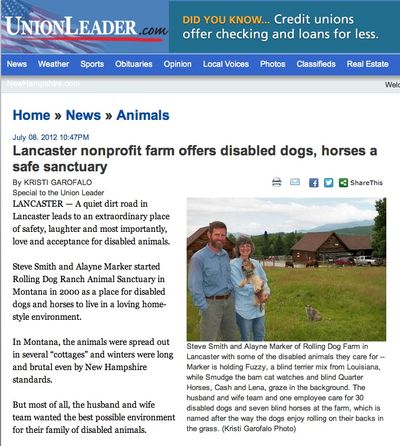
    New Hampshire's major daily newspaper, the Union Leader, carried a very nice feature story on the farm in yesterday's edition. The reporter had come out last Thursday to visit with us and meet the animals. You can read the story here. Please note that sometimes newspapers archive a story soon after publication and the original link no longer works; if this happens, just search for Rolling Dog Farm in their search box and you should find the story.

    Shelter Challenge 2012 Logo

    Please Vote for the Farm!

    The latest Shelter Challenge started Monday, July 9 and ends at midnight on September 16. Grand prize in this round is $5,000, plus $1,000 for weekly winners and $1,000 for state winners. There are also other categories … please see the Shelter Challenge website for details.

    *** We are now LISTED UNDER OUR NEW NAME, ROLLING DOG FARM.  State is still NH for New Hampshire. ***

    Please remember, you can vote every day … consider bookmarking the voting page to make it easy.

    We just won $1,000 as a weekly winner in the last contest, and thousands more in the previous contests. The Shelter Challenge really does bring in a lot of money for the animals here!

    You can vote in the Shelter Challenge here.  

    Thank you for your votes!  

  • Talking Good Screenshot

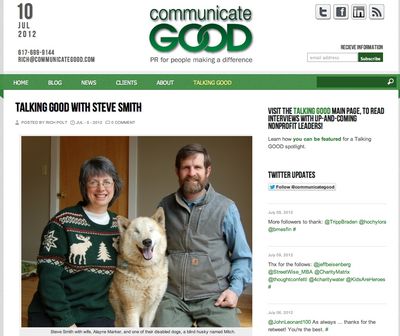
    The week before last, I did an interview for Communicate Good, a website run by a nonprofit consultant named Rich Polt. He has a regular feature called "Talking Good," in which he interviews people who run nonprofits. His questions are deliberately different and offbeat. He posted the interview with me on July 5th. You can read it here. (Bear in mind when you read my answer to the final question that this was before we had lost Pip.)

  • Pip at emergency clinic

    This July 4th was a holiday we'd like to forget. 

    The previous afternoon, about 4 p.m., we had just come inside from afternoon chores to get something to drink before heading out again. Alayne and I were in the kitchen when we heard Pip, the tyke who had only arrived in mid-May, crying out from down the hallway. Pip was always a vocal little guy, but we could tell this was a distress call. We ran down the hall and found him on the floor of the laundry room, lying on the ground, head turned at an odd angle and pressed against the floor while each of his legs went out in different directions. We realized he was having a seizure.

    We stayed with him until it was over, then put him on a bed in the dog room to monitor for a bit while we sat with him. We'd never seen him seizure before. Just a few weeks ago we had him checked out by our internal medicine specialist and he received a (mostly) clean bill of health, so we were alarmed by this development. Still, we've had plenty of dogs over the years who experienced the occasional seizure, never needed treatment and never had it get progressively worse. We hoped Pip would be one of those.

    The seizure had really knocked him for a loop, and he was very quiet and still. We finally put him in his crate in the dog room while we went back out to finish chores. When we returned, he was sitting up looking at us, but not interested in leaving the crate.

    We were having dinner around 6 p.m. when we heard Pip crying from the crate. We dashed down to the dog room and found him having another seizure. At that point our hearts sank. We knew something major had happened. I called the emergency vet clinic in Littleton, New Hampshire — they handle the after-hours calls for our primary care vet and other clinics in the area — and told them I was coming in with Pip. Before I could even leave, he had a third seizure. I put him on the front seat of the truck in a small crate and raced to Littleton, about 30 minutes from here.

    At the clinic, bloodwork immediately told us what the problem was: his glucose was 13. The bottom end of the normal range is 70 and the top end of normal is 143. The emergency vet told me that a reading of 13 "was not compatible with sustaining life." The body runs on glucose, and without enough, things go haywire. He was surprised Pip was even alive. But what was causing the glucose to disappear from his body?

    The vet gave Pip glucose via an IV, but as soon as they stopped administering it, his glucose level would plummet again. Why?

    The vet worked through some differential diagnoses and one by one, ruled them out. In the end, he found that Pip had an insulinoma, or pancreatic tumor. These are very small and often impossible to see on ultrasound (not to mention on a very tiny pancreas on a very tiny dog), which is why it wouldn't have been seen during his abdominal scan a few weeks ago. (And his glucose levels were perfectly normal on his bloodwork in mid-May!)  Essentially the tumor causes the pancreas to overproduce insulin, even when the glucose level in the blood is low. Pip's body in effect was gobbling up its own glucose, leaving nothing to run on. (This is the opposite of diabetes.)

    I left the clinic at 9:30 that night, with Pip continuing to receive glucose injections and supportive therapy. The next morning, on July 4th, I called the clinic at 7 a.m. to find out how Pip had done. The news was not good. The vet told me that he had to continue providing Pip with glucose throughout the night to keep him alive. He said the insulinoma had probably started to interfere with Pip's glucose at some point in the past week, so the descent was gradual until it reached a critical stage and then crashed — which is what we saw on Tuesday afternoon. Indeed, Pip had seemed his usual self right up until we found him on the floor having a seizure. 

    Given  the advanced nature of the insulinoma, along with Pip's age and frail condition, the vet didn't think we really had any good options. He said, "I hesitate to say anything is untreatable, but this is as close to untreatable as they come." I told the vet that Alayne and I needed to talk about it some more. He was going off-duty at 8 a.m. and I told him I'd follow up with the relief vet mid-morning. About 11 a.m. I spoke with that vet, who said Pip's condition hadn't changed at all and he concurred with his colleague's assessment. He said Pip was living from glucose injection to glucose injection.

    Alayne and I had already reviewed the veterinary literature on insulinomas, and found that even the Veterinary Society of Surgical Oncology said that "a surgical cure is not expected" and that 52%-100% of dogs have a recurrence within 60 days.  And those are for younger, healthier dogs with insulinomas not nearly as advanced as Pip's.

    We knew we were going to have to let our little guy go.

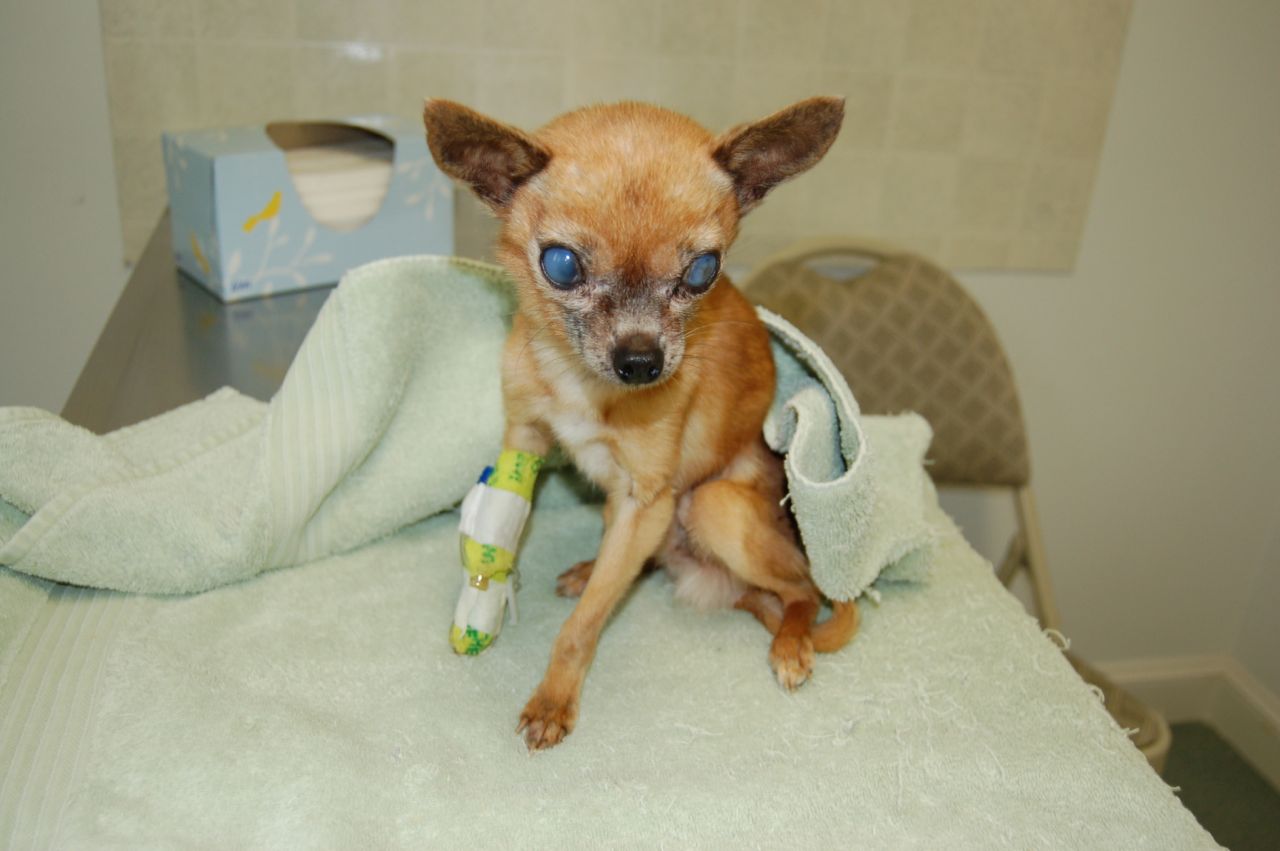
    At 1 p.m. on the 4th, I made the drive back to the clinic to be with Pip, fighting tears the entire way. By the time the vet tech ushered me into an exam room, I was crying. She brought Pip in, wrapped in a towel, and handed him to me. She put a box of Kleenex on the table behind him. She knew I'd need them. 

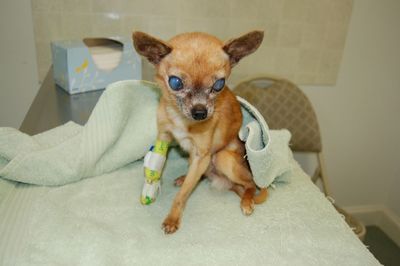
    That's when I took the photo of Pip above. You know, we only had him in our lives for not much more than six weeks, but we had so fallen in love with the little character. I was overdue on a blog post about him. I was going to tell you how he'd go through a door after we opened it for him, then turn and look up and bark at us. We weren't sure if that was a "thank you for opening the door" or "let's try to open it a bit faster next time."  

    I was going to tell you how he surprised me several days ago by wanting to roughhouse with me — he'd bark and run around in circles at my feet, trying to get me to play with him. (How do you roughhouse with a 3.5 lb dog?) So I'd get down on my knees and run my hands around him on the floor while he tried to avoid them, barking at me the entire time. He loved it.

    And I wanted to tell you how he figured out he was tiny enough not only to get through the gates at the end of the ramps, but also the doggie gate that closes off the kitchen and keeps it a dog-free zone. But not a Pip-free zone, as he proudly found out.

    In the clinic exam room I sat and held him in my arms, while he lay against my chest and settled in for a nap. He loved to be held and cuddled, and he was so relaxed and content as he lay on me. I watched his little body move up and down with every breath. We stayed like that for 15 minutes or so, until the doctor came in. He asked if I was ready. I said I was … but of course, you never are.

    Pip was gone before the vet had finished pressing the plunger on the syringe. I bent over his tiny little body and cried.

    This has been a bad year for this sort of thing. Pip was the sixth animal we've lost so far — almost one a month. Samantha, aged 14, died in her sleep in January; the same month we lost our own Libby (14) to lymphoma; in February we lost Avery to congestive heart failure; in April we lost dear old Cedar (15) to a ruptured spleen; and in May we lost our own beloved Goldie — the queen of the minion brigade — unexpectedly to complications from what was supposed to be routine surgery that turned out to be anything but routine. Goldie was the last of our personal dogs, the last of our "Seattle six-pack" who moved with us from Seattle to Montana way back in 2000, so that loss was particularly devastating. 

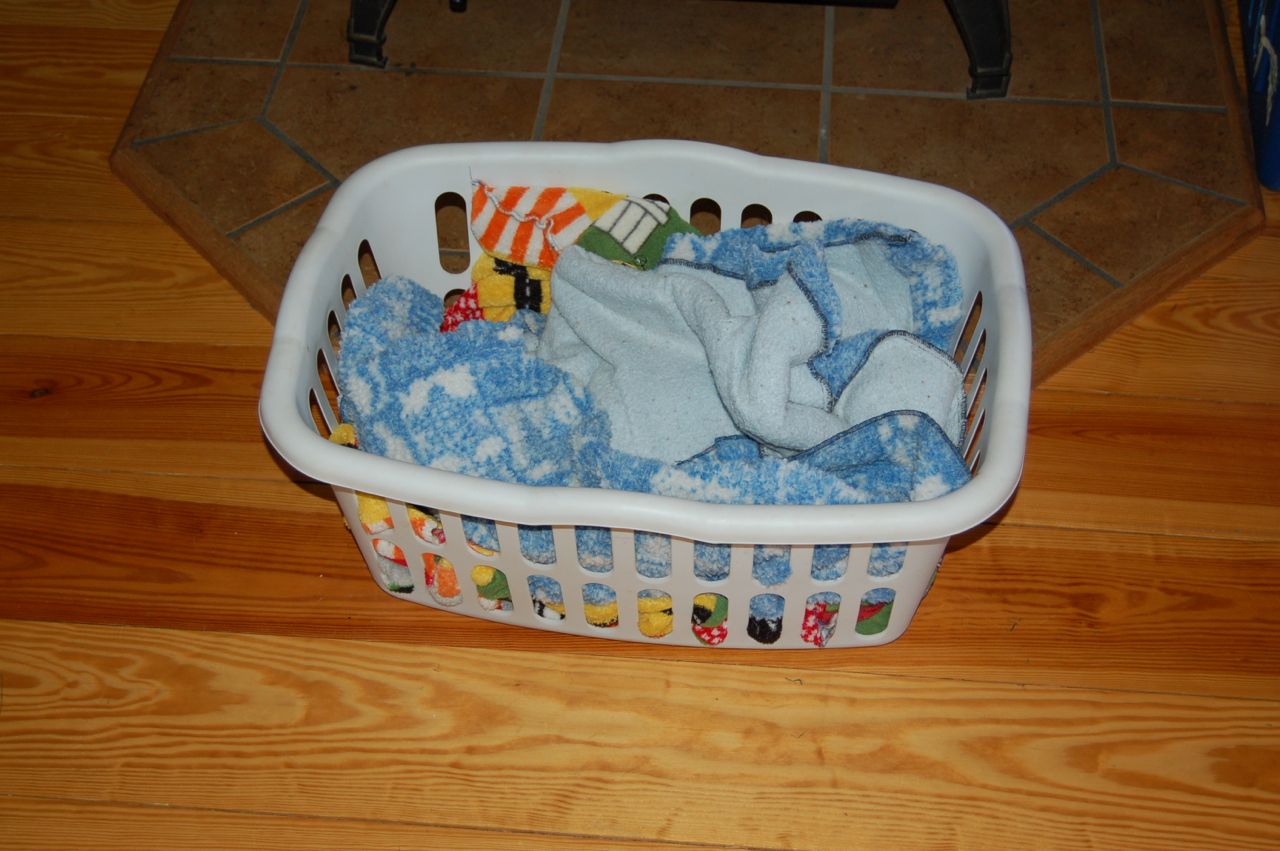
    Yesterday (Saturday), we had the first of our scheduled visitor days this summer, and hosted a wonderful group of people from Delaware, Rhode Island, New Hampshire and Vermont. As they were in the living room meeting some of the dogs who have taken over the the "people wing" — Widget, Wilbur, Madison, Dexter and Holly — I looked over and saw Pip's basket sitting there, empty. I had a lump in my throat.

    Pip's basket