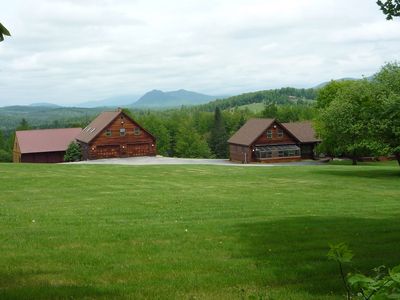
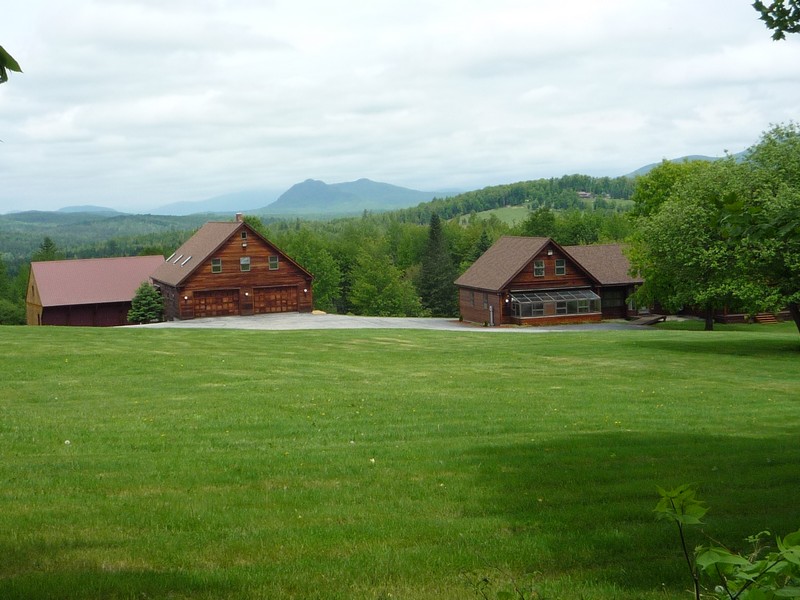
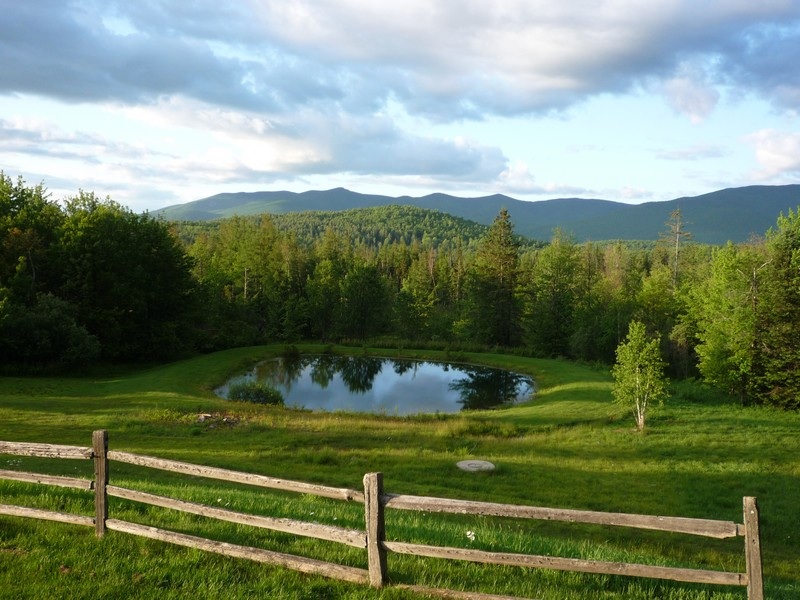
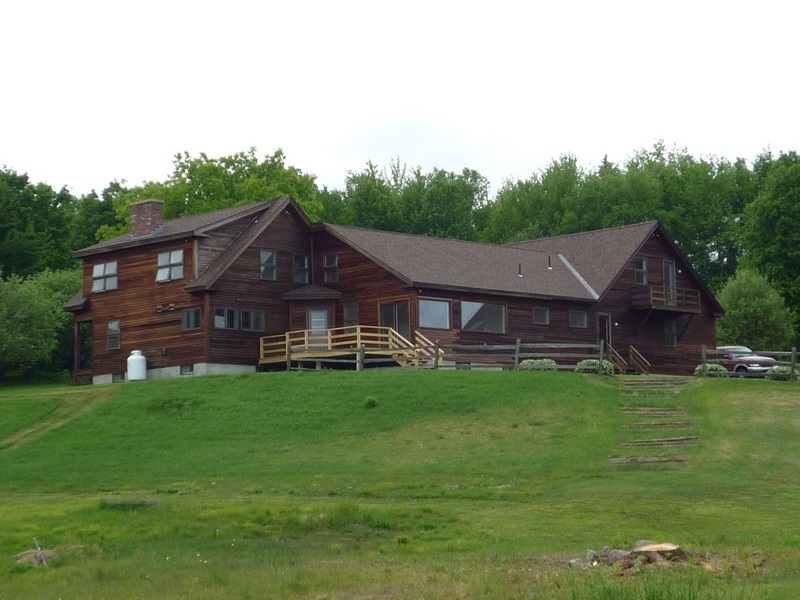
Yes, indeed. We're moving the sanctuary to New Hampshire. That's what the new place looks like above — 120 acres of forest and fields, with a pond, spring, a house big enough for both dogs and people, a huge barn, and a 5-bay equipment shed. It's located in Lancaster, in the northern part of the state that everyone there simply calls "the North Country."
You may want to pour yourself a second cup of coffee — or a second glass of wine, depending on what time of day you're reading this — because this will be a long post!
Last year was our 10th anniversary here in Ovando, and it made us start thinking about the next 10 years … and the 10 years after that. Alayne and I are in our early fifties, and we began to ask ourselves, is this where we want to be when we’re in our 60s? In our 70s? We plan to be running this wonderful sanctuary for a long time to come, but is this the right place to do it when we’re that age?
To understand some of our thinking on this, you need to know that we believe gas prices will continue to rise significantly over the next decade or two, simply due to global supply and demand dynamics. And because of our current distance from services — we’re 70 miles (112 km) from vet clinics, grocery stores, banks, etc., so it’s a 140-mile round trip to do anything — the cost to operate the sanctuary from this remote a location will escalate a lot as a result. (It’s gone up a lot already in the 10 years we’ve been here.)
Moreover, as gas prices increase in the future, people will have less discretionary income to spend on things like charitable donations, and nonprofits like ourselves can expect to see downward pressure on revenues over time. Thus from the expense side, we want to reduce our cost structure as much as possible so we can be prepared for this more challenging economic environment. (As if the current economy isn’t challenging enough!) That means moving much closer to services.
We also want to move closer to services and a larger population center for other very important reasons:
- First, it will make it easier for us to recruit and retain good employees. We will have a much larger pool of candidates to choose from, and they will be able to work for us without having to relocate. It was always a major problem for us to hire employees here, because most people did not want to move to such a remote area. And of the few who were willing to move out here, most quickly tired of living so far out. They wanted to go out to dinner, see a movie, go on dates … and that is tough to do when you’re more than an hour away from a town of any size.
- Second, being closer to a larger community like Lancaster, which has more than 3,000 people itself and many thousands more in the vicinity — will make it easier to get volunteers. We have been blessed with a dedicated team of fabulous volunteers, but because of our distance from Missoula and Helena, it’s been a pretty small group over the years.
- Third, being close to a much larger population will also give us a better opportunity to find and develop people to succeed us some day. As we get into our 60s, that succession plan will become increasingly important.
So how close are we to services in Lancaster? We’re only three miles from the center of town. Yes, even though we have a private, end-of-the-road setting, we’re that close to town. The vet clinic we're going to use is just minutes away.
Another benefit of this kind of proximity is that spending less time on the road gives us more time
back at the ranch getting other work done.
Wait, there's more!
As most long-time blog readers know, we’ve always tried so hard to provide a “home-style” environment here for the animals, so they would feel like family pets and not like they were in an institution of some sort. Because our own home was so small (1,400 square feet, or 130 square meters), that meant constructing several cottages and other buildings, like Widget’s House, to house the dogs. But that also added to our operating costs, because we had all these other separate structures to heat and maintain.
And it meant that a large group of dogs, the ones at Widget’s House, were living separate from us … something we’ve wanted to change for a long time. So as we explored the idea of a move, we thought a lot about accomplishing two objectives when it came to animal housing:
1) reduce the operating costs for animal housing, while
2) shifting from a “home-style” environment to a true “in-home” environment for all the dogs.
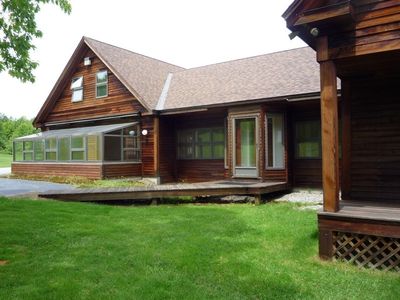
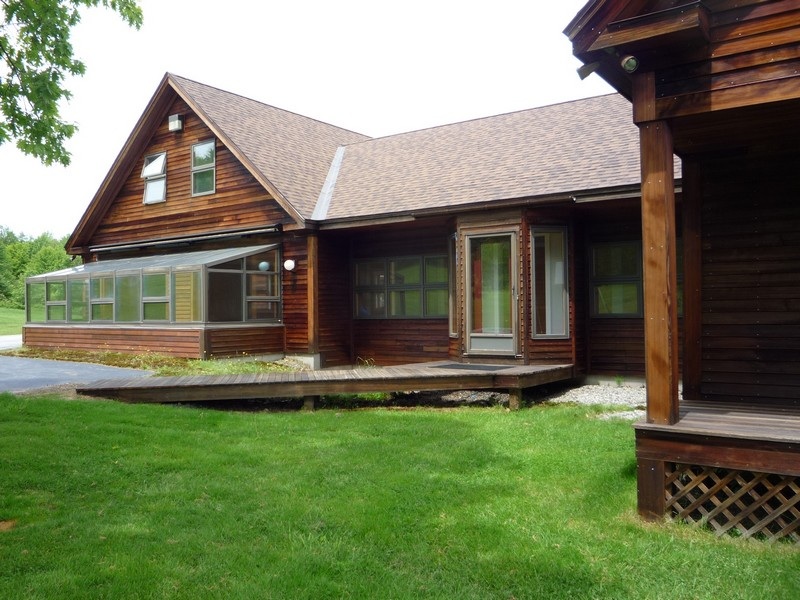
With the property in Lancaster, we managed to do just that! The house is 3,600 square feet and has two wings, one of which is large enough to house all the dogs under one roof — while the other wing is where we will live and where the sanctuary offices will be. The large dogs will go on the first floor (with their own solarium!) and the small dogs on the second floor. There’s also a large corridor (really, an interior wing) connecting the two wings that has tile floors, and that’s where the incontinent dogs will be. The corridor has south-facing windows the entire length and even a ramp coming out the door — perfect for our little Dachshunds like Bailey! This is what the dog wing looks like, and you can see the ramp in this photo:
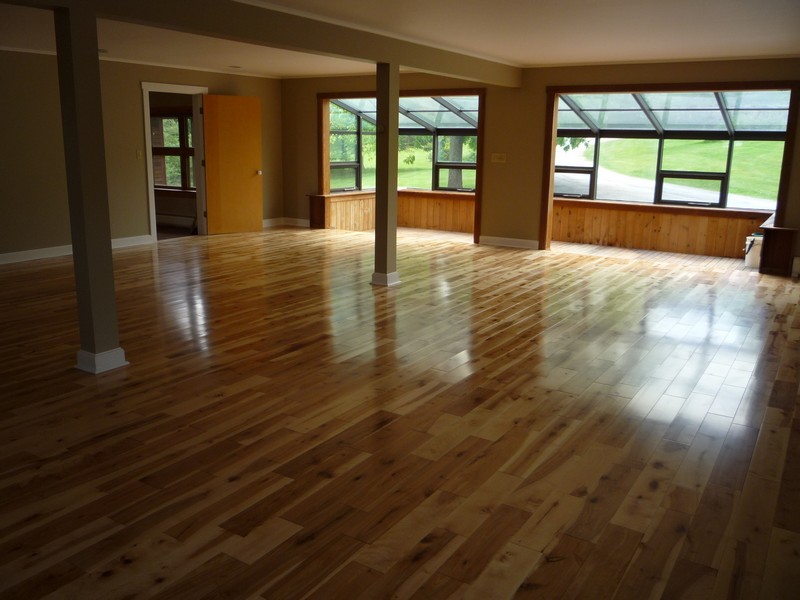
Here's the inside of the dog wing on the ground floor:
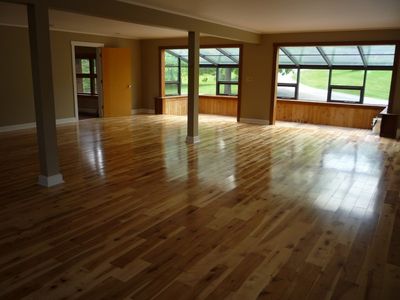
Pretty nice, eh? The amazing thing is that it is almost exactly the same size as Widget's House — actually, a tad larger!
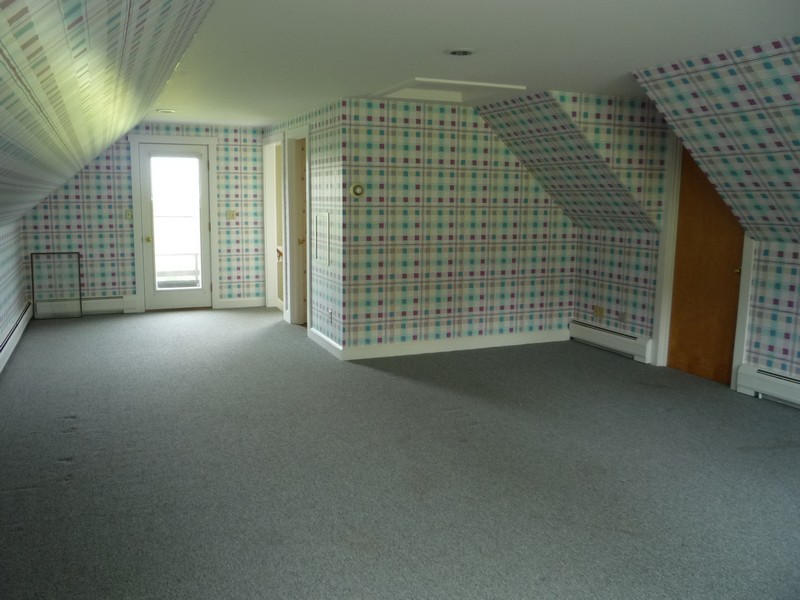
The upstairs, where the small dogs will go, has a full bathroom, so it will make it easy for bathing and grooming. This is what the "Beagle/Dachshund Annex" looks like:
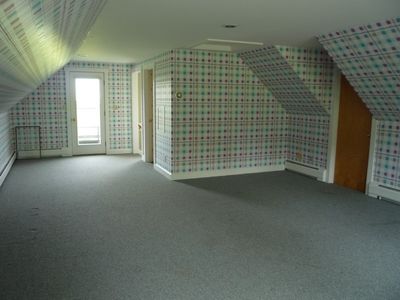
Between the ground floor and second floor in this wing, we will have more combined space than we have today with our multiple dog cottages here at the ranch.
Something else we're really looking forward to: No more trudging 75 yards (68 m) down the drive at 9 p.m. to head over to Widget’s House to let them out one last time and then put them up for the night. All we’ll have to do is go down the hall! The cats will have their own separate quarters in a heated room in the barn, with big south-facing windows of their own. (They can't be in the house because Alayne is very allergic to cats.)
Here's the outside of the people wing:
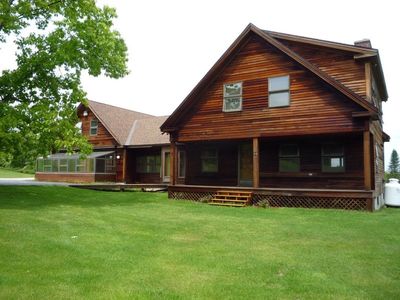
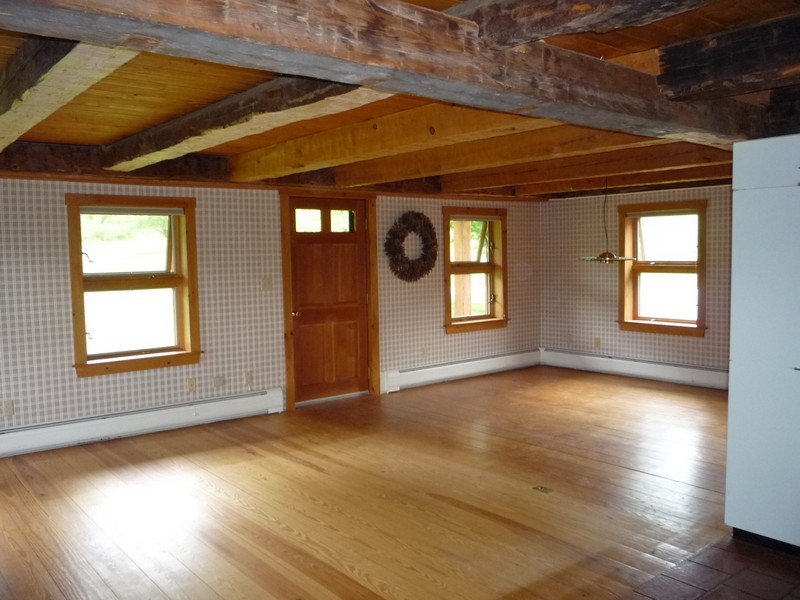
Although it looks larger in this view, it's quite a bit smaller than the dog wing, as you can see from this interior view of the living and dining area, taken from the kitchen:
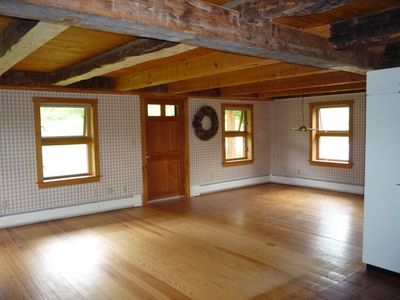
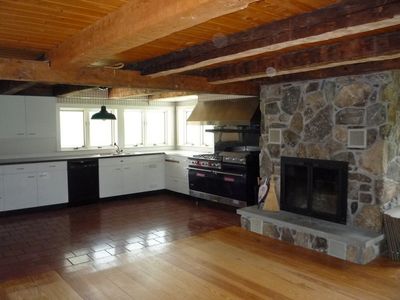
Those beams give you an idea of the history here: This was originally an 1800's farm house, completely restored in the 1980s. The dog wing was added on at that time. A lot of people like that old farm house look with the heavy beams, but it's not really our style … we're more into clean, modern design, but that's okay!
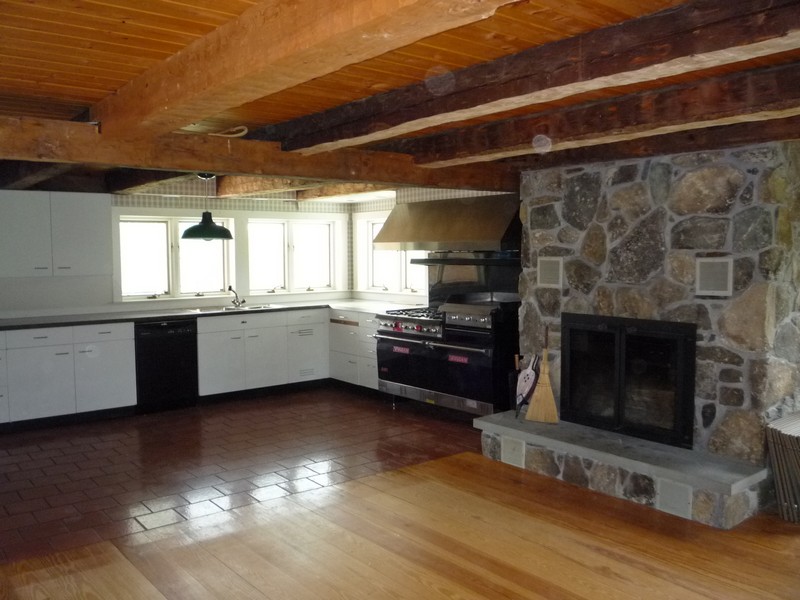
Here's the kitchen:
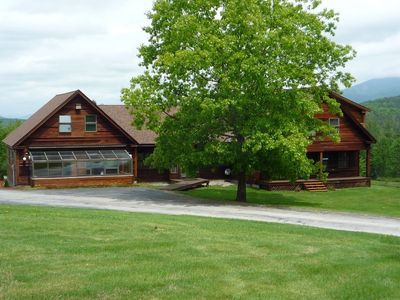
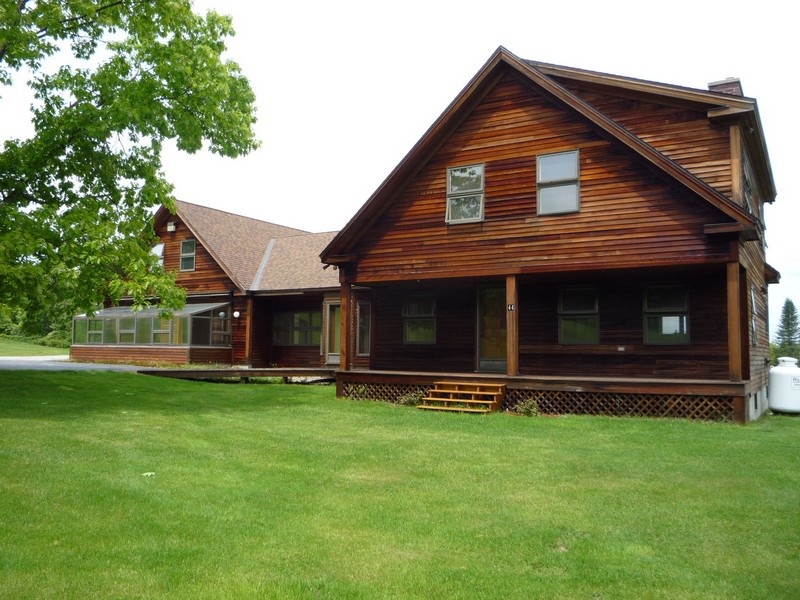
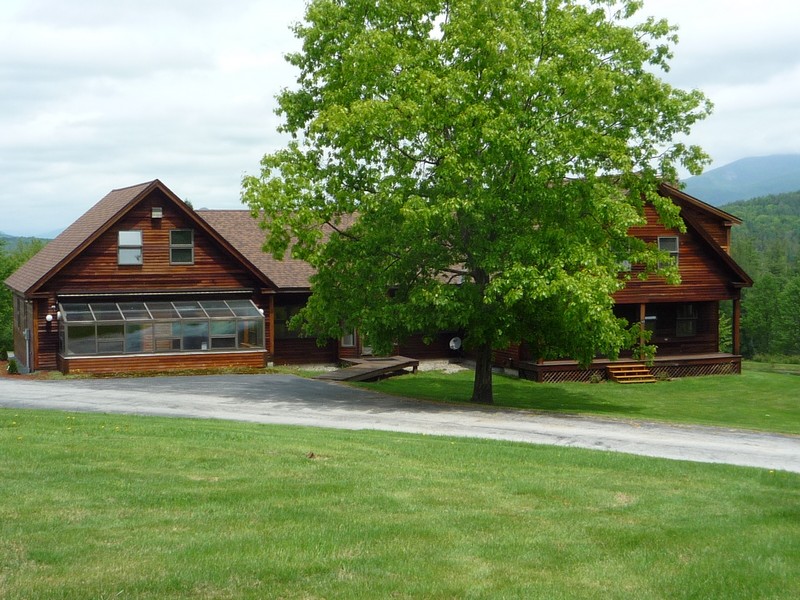
This next shot is a wide view of the entire house … that tree in front we've already named "Bailey's tree," because we can't wait for him to be able to go out and lie on the grass underneath it:
Another way we plan to reduce costs long-term is to become more self-sufficient, and this property gives us much more ability to do that. For instance, we'll be able to use the wood from our own woodlot to heat the buildings with woodstoves. We also want to be able to put up our own hay, which has become increasingly expensive to buy because of rising fuel and fertilizer costs. Out here in the West, you need both sufficient water rights and irrigation equipment to have enough water to produce a hay crop, and we have neither. In New Hampshire, there is plenty of rainfall and no irrigation is necessary. Speaking of feeding hay, grazing season begins in April in New Hampshire, while we can’t begin grazing here until June 1 because of the climate. That’s a lot less hay to feed!
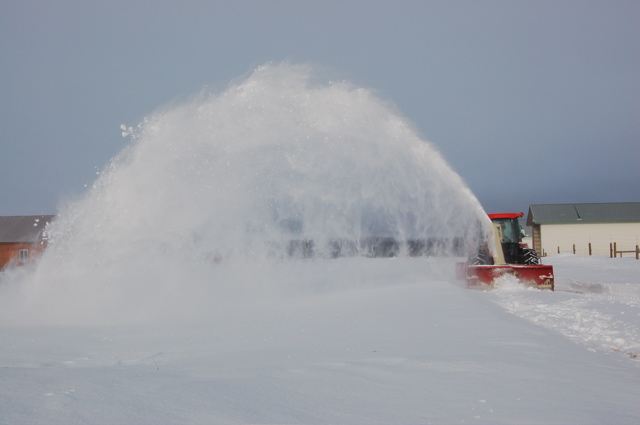
And yes, that climate in New Hampshire was definitely another attraction. Though it’s still “snow country,” it’s a much milder climate than where we are now. I think the day Alayne and I finally decided to get serious about moving, back in December, it was 22 below zero here and 24 above back there. We had just finished scooping poop that morning, our hands were frozen, and we thought, we’ve had enough of this kind of cold! As much as we’ve loved living out here, we realize that dealing with the persistent sub-zero temperatures every winter will not be something we want to do in our 60s and 70s. (We realize it can get sub-zero in New Hampshire but it's not anywhere as extreme as where we are in Montana.)
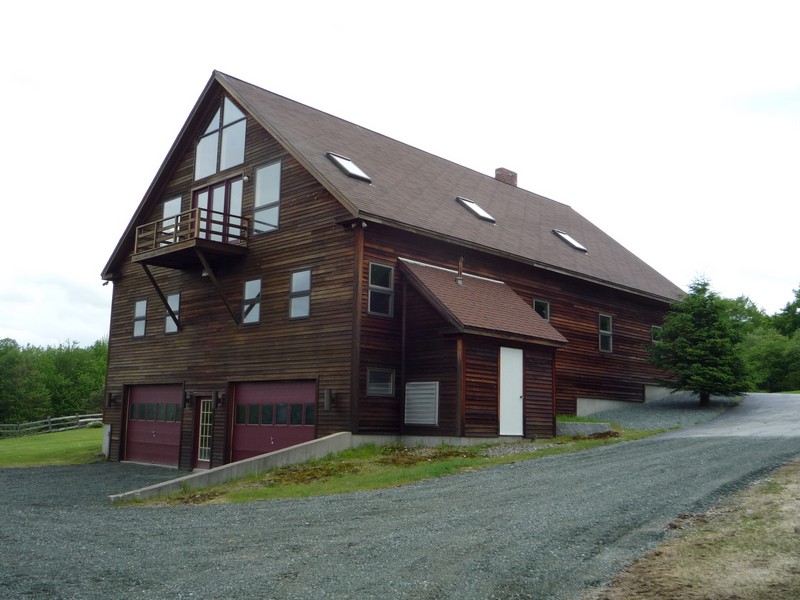
Here is a view of the 3-story barn that has 7,200 square feet (669 square meters) of space, accessible from both the north and south ends:
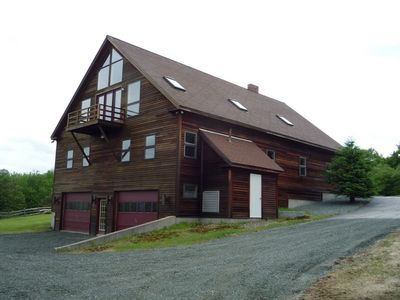
Love those garage doors for easy opening in winter! There are garage doors on the other end for the middle floor, too.
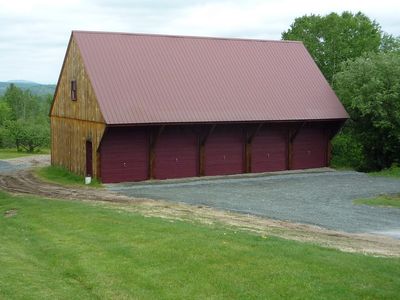
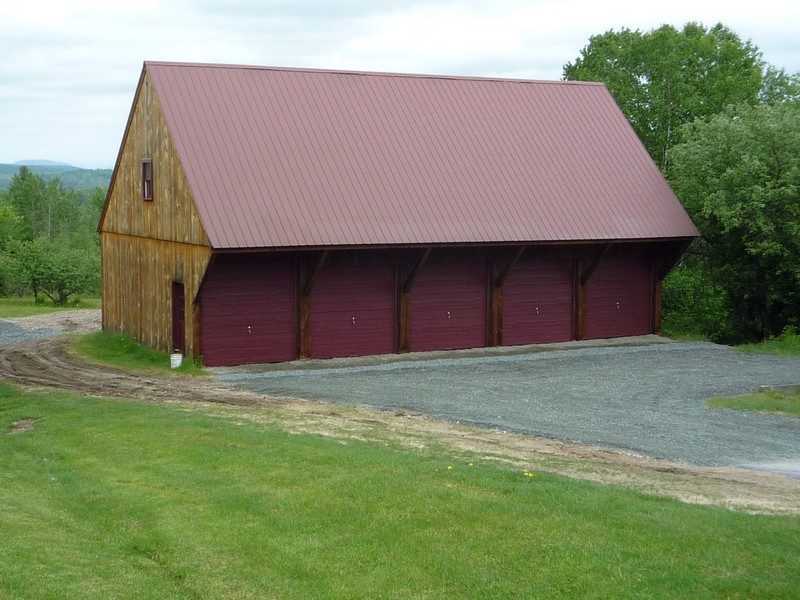
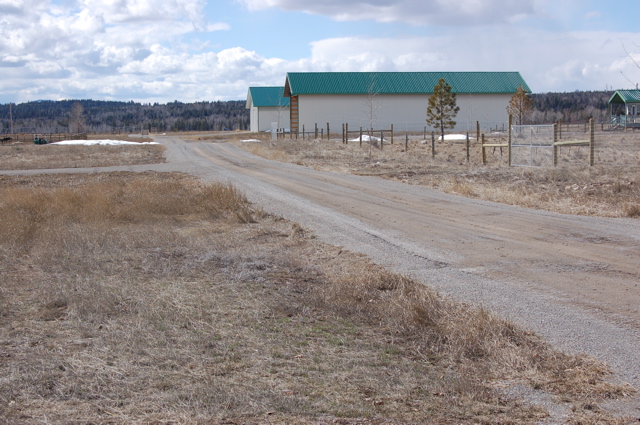
This is the equipment shed:
I mentioned a pond at the beginning of this post:
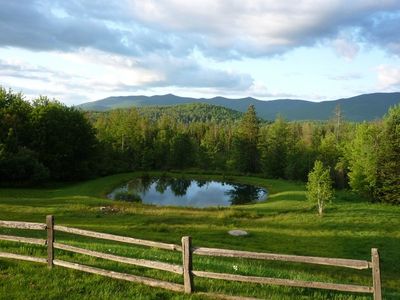
Yes, we will fence it off to make sure no blind dogs or blind horses wander into it. It's fed by a permanent spring that also provides the water to the house and barn.
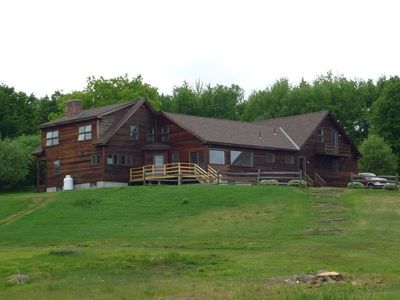
This is the view from behind the house, taken from the pond … people wing on left, dog wing on right:
So, why New Hampshire?
We did look at other places around the country — the Pacific Northwest, Virginia, and elsewhere — but the real estate prices for the kind of property we were looking for were by far the most reasonable in New Hampshire and Vermont. (Yes, we looked at many properties in Vermont, too.) This place in New Hampshire was $663,000. Here in Montana, a place like this would have run into the millions of dollars. Also, the fact that New Hampshire has no sales tax will save the sanctuary a lot of money compared to other states we looked at. No personal income tax is another benefit!
We are going as fast as we can to get out of here so we can get this place on the market as soon as possible. (No, we don't know what we're going to be asking for it yet. We're getting it appraised first.) As you can imagine, the logistics of this are daunting — animals, ranch equipment, supplies, tractors, not to mention our own household goods — all have to moved. We have lined up haulers to move almost everything, and the first shipment of equipment left last week.
The most difficult thing to plan for was how to move all the dogs and cats. We have hired an outfit that specializes in cross-country ground transportation of pets. We have contracted for their entire fleet of vans and drivers to do this. They are picking up most of the dogs and cats on May 24th. The horses will be leaving the same week. (Yes, and the goats, too.) Alayne will still be here with about 6 dogs, and I will already be back in New Hampshire by then to be on hand to receive the animals. I’ll be taking 8 of the dogs with me. Alayne will stay here for a while to help close up and get it ready to go on the market.
Now, some people will ask whether this move isn't going to be hard on the animals. No, it's not. Most of the animals have come here from distant places, so cross-country travel is not new to them. Moreover, these animals have already overcome significant hardships — abandoned at shelters and coping with disabilities like blindness or missing limbs. Traveling to New Hampshire will not be a problem for any of them! They will take it in stride, just as they have in overcoming their disabilities.
—
For the next few months … through June … our address will continue to be the same. We'll post our new address on the blog when we're officially there. If you have a recurring online donation set up, you won't need to do anything.
—
I'm leaving on Tuesday for New Hampshire with the truck and horse trailer full of stuff — dog crates, bedding, litter boxes, a few household goods, water tanks for the horses, etc. I will be meeting with a fence company so I can get them started on the dog fencing we need around the house; with the people who will be installing the Internet access; and others.
Because we are particularly swamped as a result of this entire adventure, please hold emails and phone calls if at all possible and use the comments feature on the blog instead. I'm sure there will be quite a few questions — many of them similar in nature — and it will make it easier for us to respond on the blog than by individual email or phone call. We are just out of time. I hope you will understand!
—

Please
keep voting
for the ranch in the Shelter Challenge — and you can
vote every day! We're currently in fourth place and still on
track to
win $3,000 for the animals, but every vote counts! We just slipped from
third place to fourth, so please help round up as many votes as you can
so we can stay in the running for the $3,000. Ask your family and
friends to vote for the ranch, too!
Enter "Rolling Dog Ranch" and
our state
postal code,
MT, for Montana, and it will bring up our listing.
Vote
in the Shelter Challenge here.
Last
year we won $3,000 in the first round and then won the $20,000 Grand
Prize in the second round, so your votes really do add up and
make for
a wonderful gift for the animals here.
Thank you!











 Rolling Dog Farm Blog