
One of the things we've learned about blind animals is that shedding out their winter coats doesn't always happen at the "right" time. That's because a key signal for the brain to know when to start shedding a winter coat … and when to start growing it back … is length of daylight.
You'd think temperature would be a good indicator, but this is so variable — you can have weeks of very warm weather in autumn, for example — that temperature isn't what nature wants animals to rely on to tell them when to begin preparing for the change in seasons. Daylight length is the sure thing.
Because this signal is communicated to the brain by eyesight, of course, a blind animal who can't register even light versus dark (depending on retinal function, some blind animals can get light in) isn't able to detect the change in daylight length. And then their brains don't know what to do. We've had blind horses show up here in December with summer coats on, only to grow out a winter coat in July. Oops. We've found the same thing happens with some of our dogs who are "seasonal shedders."
For instance, our blind sled dog Dusty takes longer to begin shedding in some years than other years. But when he starts to shed, look out — it's a fur festival. Last week Dusty began blowing his coat, with big tufts of white hair coming out. We had family visiting the past few days, and naturally we put them to work — with one of the tasks being to groom Dusty.
Although it looks like we had sheared a sheep in the photo at the top, it's actually where my sister-in-law, Debbie, managed to get Dusty to sit still long enough to work all that hair off of him. Dusty isn't very comfortable around people, but he "survived" the up-close-and-personal grooming session just fine. By the time she finished, I think Debbie had as much white hair all over her as there was on the ground!
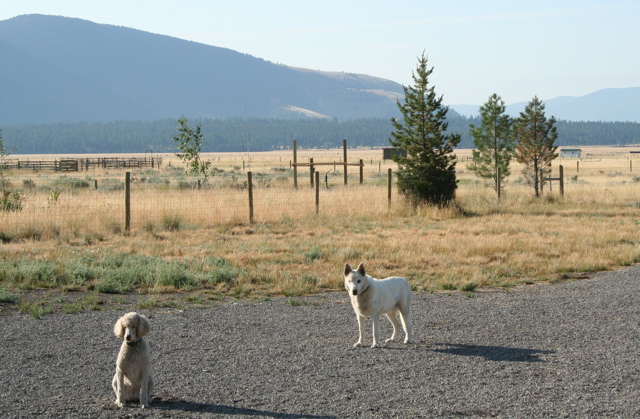
The next morning Dusty was a much sleeker looking fellow:


 Rolling Dog Farm Blog
Leave a reply to Shirley * James/Portland, OR Cancel reply