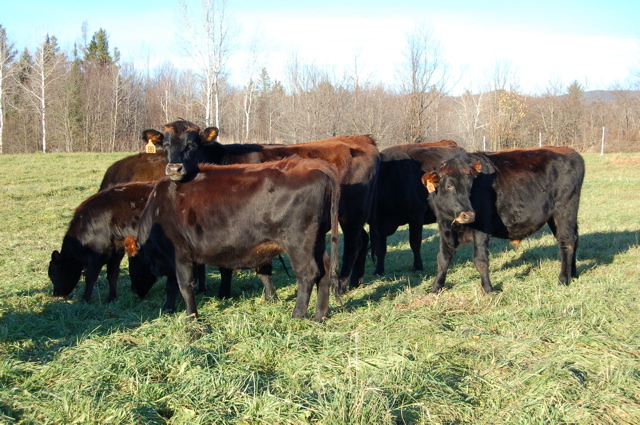
Cow herd in November

Ever since Alayne and I started this special place over 10 years ago, we have been concerned about what we feed our disabled dogs and cats.  We learned early on how to read the ingredient labels and how to distinguish low-quality food from the high-quality brands — and the only way to do that is ignore the packaging and marketing fluff and focus on the ingredients.  We even bought the AAFCO manual back in 2002 to learn what simple words like “meat” really mean in the world of pet food — and it’s not necessarily what you think.  (AAFCO is the industry group that sets the standards for pet foods.)

But as we focused on the quality of the food, we also began to think about the source of the food — about the animals who ended up in the food we were feeding our dogs and cats.  Alayne calls it “animal in a can" and “animal in a bag” — though most of us never think of it that way.  It’s a lot easier not to think about it … just open the can or bag and serve it up.

For most of the past decade — until 2009 — I was a vegan, and for several years before that, a vegetarian.  It troubled me as ethically inconsistent to be so concerned about what I ate, but not to give a second thought to what our dogs and cats ate.  For a very brief period a long time ago, we even tried a vegetarian diet for our dogs, with many unhappy results.  No matter what type of vegetarian diet we put in front of them — commercial or home-made — the dogs made it very clear they were not happy helping me work through this “ethical inconsistency.”  I’d never seen dogs walk away from food before, but this they did.  Not all, but too many of them.  I quickly abandoned the effort, much to the relief of both the dogs and Alayne.

Yet the issue remained.  Although Alayne was never a vegetarian or vegan, she always shared my concerns about the humane treatment of food animals. 

The Animal Welfare Dilemma

A couple of years ago I read “The Omnivore’s Dilemma,” Michael Pollan’s excellent book on America’s food system.  It seemed to me that those of us in the animal welfare movement face what I call the “animal welfare dilemma” — we focus so much on the welfare of the dogs and cats in our care, but what about the animals we feed them?  What about their welfare?

Best Friends, the nation’s largest animal sanctuary, has a wonderful slogan:  “A better world through kindness to animals.”  I think all of us in the animal welfare movement believe in the spirit and strength of that statement.  But does it apply to the food animals we feed our pets?  If not, why not? 

That was the central question for us.  How can we have one set of standards for the welfare of dogs and cats, and turn a blind eye to the welfare of the millions of livestock that go into our pet food?

For us, this is the animal welfare dilemma.

Now, there are plenty of dedicated nonprofit organizations focused on the treatment of farm animals; groups like Farm Sanctuary and the HSUS work hard to expose the cruelty of factory farming, where thousands of animals are crowded into filthy and stressful “confined animal feeding operations,” or CAFOs, and then slaughtered in high-speed assembly line fashion at the rate of several hundred a day.  These nonprofits also promote vegetarian and vegan lifestyles as the answer to factory farming, and believe that it is unjustified to kill and eat any animal, under any circumstance.  They do not seem to consider that “humane” farming is even possible.

But again, where does that leave our dogs and cats?  Should we really force dogs and cats to become vegetarians, because that’s what some of us want to be?  Yes, there are groups and websites that promote this very thing, though even the website Vegancats.org has, “after much soul-searching,” changed its recommendations on feeding meat to cats.  (Hello?)

The simple truth is that dogs and cats are, by their very nature, meat eaters.  To try and make them anything else is, well, downright unnatural.

Moreover, we know processed foods aren’t good for people, and what is more highly processed than pet food?  So a few years ago, we started buying cases of ground beef from Costco and began home-cooking again.  But each case was stamped with “Product of USA, Canada, Mexico, Australia & New Zealand.”  That led us back to worrying about the conditions those cattle were subjected to in the industrial food system — and how they ended up in the big tubes of ground beef we were feeding.  (Not to mention all the “food miles” involved!)

So, What Do We Do?

The question for Alayne and me became, how can we take responsibility for the entire “cycle of life” here?   How could we assure ourselves that the meat we were feeding our disabled dogs and cats came from animals who were raised as humanely as possible?

  • We realized that the best way to do that was to raise them ourselves.
  • We wanted to know exactly how they were raised, what they were fed, and most important of all, how they died.
  • We were fortunate that we had the land, facilities and skills to raise cattle on a small scale, and decided this was the right thing to do.

We began this long journey in 2008 back in Montana with several heifer (female) calves, and in 2009 we got two more heifers, along with two six-month old young steers.  Last summer here in New Hampshire our first five calves were born. 

Why Now?

The reason I’m writing about this now is because a couple of weeks ago I took our first steer, Sebastian, to slaughter.  I drove him over in our horse trailer to a very small, local, family-owned facility that processes three or four steers a day, not 400.  I was able to walk through the entire facility with the owner, stood on the kill floor, and examined their entire process for how they do the slaughtering.  It was quiet, clean, and as stress-free as any facility like that could possibly be.

When I first drove up I wasn’t sure I was even in the right place, because it looked nothing like a slaughterhouse.  It was a converted barn, tucked into a residential neighborhood.  The owner’s house was across the yard.  There were no cattle standing outside in feedlots, deep in manure, bellowing with stress.  There were, in fact, no sounds at all.

The owner, Bobby, and I unloaded Sebastian.  We watched as he walked down the outside hallway and turned to go into the stall that was waiting for him.  There, he got to touch noses with the two steers in the adjoining stall.  There were four steers total who would be processed the next morning, and Sebastian was among them.

Was it hard to do this?  You bet it was.  When I reached through his stall window to let him sniff my fingers and say goodbye, it was really tough to pull my hand away and turn to leave. 

But I knew what kind of life he’d had, and how his end would come.  And I knew we really had done everything we could to begin ensuring that the food we would be feeding our dogs and cats was raised as humanely as possible. 

It obviously takes a lot of beef to feed 35 dogs and our handful of cats, and it will be another year before we will have a large enough herd to provide a year-round supply.  So in the meantime, about half of the dogs started this week on a home-cooked diet using our own beef, while the other half will continue with their current diet and transition over as our supply increases.  Because of our move last year, we gradually transitioned the dogs back to a commercial diet until we could get everyone on our own humanely raised food.  We’ve been feeding Costco’s super-premium Kirkland brand — virtually the same quality as the Innova brand we used to feed (just compare the ingredient labels) and much less expensive. 

What else will they be eating besides the beef?  Well, we want to source as much of their food locally as possible, and this includes potatoes from Peaslee’s, a local farm just a few miles away in Vermont.  Alayne just bought 50 lbs of their potatoes to cook up with our first batch of beef.  We’re also buying carrots and other veggies that are grown locally.  This summer we will begin growing our own crops to add to the meat in their diet.  Board-certified veterinary nutritionists at DVM Consulting developed the recipes we’re using, and we’re using their Balance IT vitamin and mineral supplement.

One objection we’re no doubt going to get is this:  “But you’re a sanctuary!  How can you be doing this?!”  Yes, we are a sanctuary … for disabled animals.  And those animals need to eat.  Is it better to just keep feeding them “anonymous” food — “animals in a bag” — and not care or worry about how those animals were treated?  Or is it better to take responsibility for what we’re feeding and know it came from animals we humanely raised ourselves? 

Another objection we may get is that we gave our livestock names.  People will ask how we could give them each a name, only to turn them into pet food later.  We sure did name them.  As Alayne told me one day, "it’s important that they live a humane life with dignity and identity."  They’re individuals, so why shouldn’t they have names?

I want to be clear on one thing.  We are not saying this is what everyone should be doing, nor do we think it’s somehow “wrong” to feed commercial diets.  Clearly we have been doing that for a long, long time, and still are.  It’s just that we have a unique opportunity to address our concerns about humanely raised pet food and put our beliefs into practice — and we can do so cost-effectively for this many dogs and cats because we can raise the food animals ourselves.  Few people, and few shelters and rescue groups, have that opportunity. 

However, if you are interested in purchasing humanely raised food for your pets, one option would be to contact small farmers in your area about buying directly from them.  If you don’t have enough freezer space for a whole or a side of beef (and most people don’t), you might round up some friends with pets and do a group purchase.  Consider locally raised lamb, chicken and turkey, too.  You can find small farmers near you on Local Harvest, or go to your local farmer’s market.   Be sure to ask them about their animal welfare practices; ask if you can visit the farm to see for yourself.  Third-party certifications like Animal Welfare Approved and Certified Humane can give you some assurance of humane practices, but bear in mind that plenty of small farmers can follow these practices and not be certified.

And, if you want to do home-cooking for your pets, there are lots of books on the subject, as well as resources on the Web, that will help you get started.  There are too many to list here, but do a search on Amazon and you’ll see plenty to choose from.

A couple of other resources:

What’s Really in Pet Food by the Animal Protection Institute (now BornFree USA)

Meat: How alternative protein is going wild.  Bark Magazine, Summer 2010 Issue.

The photo at the very top of this post is part of our herd that was still out grazing in late November here in New Hampshire.  This next photo is Suzette, our queen bee and boss cow:
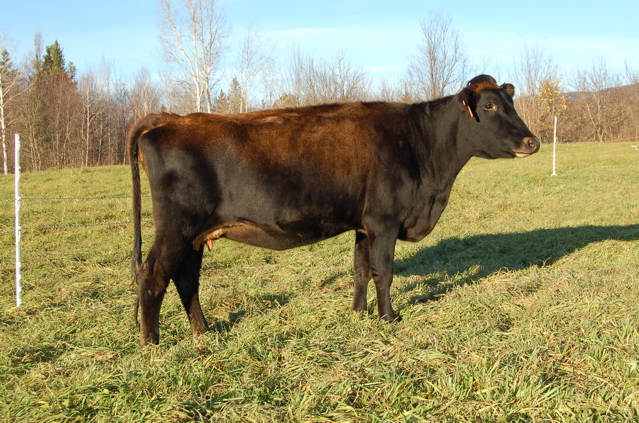
Suzette

Here's Alayne feeding a treat to some of them … that's Suzette's calf on the right, Suzanna:
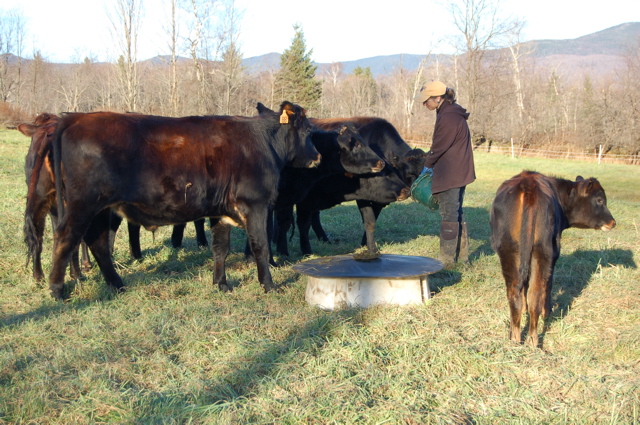
Alayne with herd

Another view, with calf Sophia on the right joining Suzanna:
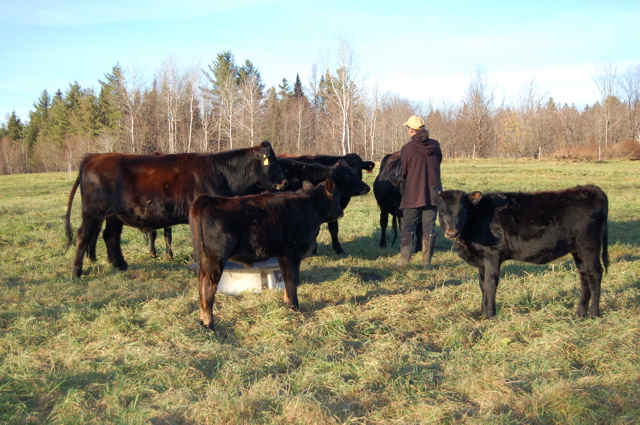
Alayne with herd 2

I will write more about our herd in future posts, but for now I thought you would like to see some photos of them. 

Posted in

67 responses to “Humanely Raised Pet Food”

  1. Lynne Parker Avatar

    “The simple truth is that dogs and cats are, by their very nature, meat eaters. To try and make them anything else is, well, downright unnatural.”
    Steve, thank you so much for writing this. Dogs are carnivores, period. Since losing 2 dogs to renal failure in 2009, I have immersed myself in reading everything I can find about natural health care for our 5 dogs. (All are rescues/adoptions, by the way). We go one step further and do not cook anything. Our dogs get raw meat and bones and their health has improved quite a bit. Everyone comments on how shiny and healthy they look. I’m convinced this switch has saved the life of our 13 year old beagle/schnauzer mix.
    A great source for articles on a carnivore’s nutritional needs is the Whole Dog
    http://www.thewholedog.org/id9.html#nutrition
    I’m so excited to find that you are raising your own cattle. Tim and Liz Young in Elberton, GA have a great farm called Nature’s Harmony. I actually discovered them through you. Tim has just written a book called The Accidental Farmers and it is an absolute treasure. For anyone who is concerned about their own health, the humane treatment of farm animals, the environmental impact of commercial agribusiness, I HIGHLY recommend this book. I could not put it down.
    http://www.amazon.com/Accidental-Farmers-Tim-Young/dp/0983271704/ref=sr_1_1?ie=UTF8&s=books&qid=1298409666&sr=1-1

    Like

  2. Moon Rani Avatar
    Moon Rani

    As well you know, there’s no pleasing everyone all the time, so some folks are sure to disagree with your choices. But I commend you two for finding a way to provide for your animals in a way which gives them what they need and which agrees with your beliefs. I’m a former vegetarian and vegan myself who went through similar journeys of thought and feeling. God bless you both.

    Like

  3. Lyn Avatar
    Lyn

    I think what you’re doing is awesome, thank you for the great consideration you give to all the animals in your care. (Also, thanks for the tip about Innova – I had no idea!)

    Like

  4. Gena Avatar
    Gena

    I expect this post was hard for you to write.
    First, you’re right that you will get some criticism and that’s never enjoyable to anticipate. If I were in your shoes, I would not even give the critics a forum by posting their comments. Call me grumpy….
    Second, it had to be heart-wrenching to take Sebastian to the slaughter house, no matter how peaceful the place seemed.
    I have been a long-time reader and this post has opened the door just a little bit more about what kind of folks you and Alayne are.
    I knew you were kind and generous with your lives in care of disabled animals. But this caring about ‘the whole life cycle’ is absolutely stunning in its beauty.
    You’ve introduced a topic that I had never really given any thought to. That changed when read what you wrote. I will be checking out your suggestions for our Roxie the Doxie. She deserves the best.
    As I am writing this, I am going between tears for you and Sebastian, pride in how you have chosen to live your lives, and a gentle feeling that there are many things I can change in my life to make it better.
    Honestly, every time I sign on here I feel like I leave the site a little more committed to a more honest and caring life.
    This is just but one of the gifts you share… compassionate care for your animals, leading through example…
    My hat, as always, is off to you and Alayne.

    Like

  5. Julien Sharp Avatar

    I think this is one of the most beautifully-written posts I have ever read. I appreciate your efforts, struggles, incredibly-thorough thought processes and efforts, and the care you put toward respecting the natural order, yet bringing such love and dignity to the entire process. I have never met you or Alayne, but I consider you both a friend.

    Like

  6. Becky Avatar
    Becky

    Sometimes it is fun not to buy the meat from the supermarket. My family had the freezer space, so we bundled up with another married couple with freezer space and bought half a steer, if that’s the right word. It was nice to just pick up the meat from the freezer, have non-processed hamburger or paying for the water in the meat some companies put in. Still, the only cattle in my country is dairy cows, I’ve always had better beef outside of my country.
    I hope you’ve looked into allergies. Dogs can be allergic to beef. Poultry or Lamb can be an alternative to that, but perhaps it is good to get the herd up before taking on other livestock.

    Like

  7. Darcie Avatar

    Bravo to you. I am currently restoring an old farm to raise at least my own food, and hay/pasture for my own blind horse and her companions. For all of the reasons you describe above. I currently feed my dogs a premium commercial food brand, and can’t wait until I can feed them myself.
    Two short weeks ago, my best friend, who raises and trains very high quality working German Sheperds, lost two dogs in 48 hours. The first she assumed died of bloat, until the 2nd passed. Both young, healthy, and active, dead in their separate kennels when she went to bring them in at night. The only thing that had changed was the food. The store was out of her usual brand. Coincidence??? Unlikely. Stool samples of the dead and living dogs showed nothing unusual, and an x-ray of the 2nd body showed he had not bloated. She would not send them for a full necropsy knowing that she would not get the body back to bury. She wrote to the food manufacturer with the lot#, etc., but hasn’t heard anything since an initial (and rapid) response.

    Like

  8. Priscilla Ward Avatar
    Priscilla Ward

    We can always count on a thoughtful post examining the more difficult questions in life. This is so very well said. I imagine this is an ongoing dilemma for all of us-the need to balance what we can do and what (in a perfect world) is possible. Thanks again.

    Like

  9. Linda Murphy Avatar
    Linda Murphy

    Everyone is right on….you all are bridging the final gap in the circle of life – you are facing the difficult questions and offering your own best solutions. When I read that you named the animals, I thought to myself – how wonderful, but how hard. (So now if any of the calves are handicapped, you are going to have a big problem you know!!) You are amazing, AMAZING people.

    Like

  10. Nancy Avatar
    Nancy

    Congratulations, you are doing the right thing. I have thought the same thing many times. I have many cats and have concerns about the quality of food, quality of life for the animals in the food, and the environmental impact of the cans. I think that the only ethical way to feed them is to raise my own chickens/rabbits, but I am not there yet.
    Nancy

    Like

  11. Kathleen Rivard Avatar
    Kathleen Rivard

    Sebastian would have died of old age if I had to drive him. I continue to have problems with my love of meat and knowing that an animal must die to provide it. I’ve always said I’m a hypocrite but I believe passionately that animals in life and in their death should and can be treated humanely. My Father was a hunter who taught me you never left a wounded animal in the woods nor shot one that you didn’t eat. Hunting wasn’t a sport so much as a way to put protein on the table. Thank you, Steve.

    Like

  12. David Berg Avatar

    I’m also applauding your choice. Many years ago I started getting concerned about what my dogs were eating so after researching the alternatives started feeding them a Bones And Raw Food (BARF) diet. My pets have never seemed healthier and vet visits for everything but checkups & vaccinations are almost non-existent.
    Because I want as little processing as possible as many food sources as I can find are local. This way I have a good idea how they were raised and treated. I’ve thought about raising some or all of it myself, but not sure I would be able to do “it” when the time came. Good for you for demonstrating that everything about the animals in your care is taken into consideration.

    Like

  13. Robin Kent Avatar
    Robin Kent

    How deep and full your life experiences are. The poignant description of life and death in all its forms at your ranch is touched with grace. This just being another example. I so admire your strength and kindness.

    Like

  14. Kelly Avatar
    Kelly

    Good Lord! How do you not drop from exhaustion? Kudos to you and Alayne for your hard work and dedication.

    Like

  15. Billie Avatar
    Billie

    This was difficult to read, but thank you for writing it and sharing with us. I think that if I had to raise my own meat, I would end up a vegetarian. As you say, though, that would not be right for the dogs. I think I’m going to save what you’ve written so that I can think about this more for when I get my own dog.

    Like

  16. Cathy Silvestro Avatar
    Cathy Silvestro

    Wow, this blog blew me away. The most informative and touching one to date. It’s so great that you and Alayne have the means, knowledge and compassion to pursue this avenue. Being a retired cruelty investigator with the SPCA I have witnessed firsthand the atrocities associated with slaughterhouses and it still haunts me to this day. Can’t say thank you enough for thinking outside of the box. I sincerely hope people can follow your example and learn from your words.

    Like

  17. Carole Vail Avatar
    Carole Vail

    I have the greatest respect for all you do for the animals, but I simply cannot understand how you could take Sebastion to be slaughtered. I cried when I read how you left him there to be killed. I have been a vegetarian for many years and have also had dogs, cats, rabbits, guinea pigs – all rescues – and I could never willingly end any of their lives. I wish you had not written this post. I am grieving for Sebastion.

    Like

  18. Mcappy Avatar
    Mcappy

    wow. I commend you for your dedication and resolve. Good luck in your endeavor. As you become more comfortable with home cooked diets, I would recommend that you don’t rely 100% on BalanceIt supplements. It’s a great starting point. You should be able to provide all of the vitamins and minerals all the animals need over time.

    Like

  19. Shelli Smith Avatar
    Shelli Smith

    Thank you Steve for writing this post. I appreciate your balanced view.

    Like

  20. Shirley * James/Portland, OR Avatar

    I can’t improve on the thoughtful blog and comments that have already been made—I have been a vegetarian for 20 years and my Vet was one too but said our pets must have meat. Our upmost respect and you and Alayne!

    Like

  21. Lindsay Tompkins Avatar

    “it’s important that they live a humane life with dignity and identity.”
    Exactly. I just bought a calf from a local organic dairy to process for my dogs, to supplement what they get from my chickens and quail (which are also for the dogs). It was the first large mammal I have butchered and it didn’t help that he was terribly cute with soft fur and big brown eyes.
    It took hours to make the first cut (the farmer dispatched it) and was as daunting as a blank canvas. I experience a tremendous personal conflict whenever it comes to taking an animals life for food, which sometimes lasts for weeks before I commit to following thru with the slaughter, followed by intermittent periods of intense guilt and hand wringing later.
    It’s easier for me to go thru with it knowing that it is for my loved meat eating dogs, and that in the animals short life, it was well cared for. This is what I have to remind myself of during the whole process. It’s a far better solution than buying an anonymous “animal in a bag” from the store and I end up appreciating every food animal that comes to me, before and after death.

    Like

  22. Ann Avatar
    Ann

    I agree with all the posts here and everything I would have said has been said already, so I’ll keep it short and sweet. Thank you for the very insightful and thoughtful post on a subject that the majority of people are unaware of. I’m always amazed at how much you and Alayne undertake at the ranch.
    Thank you for doing the best for the RDR crew!

    Like

  23. Joseph Sackett Avatar
    Joseph Sackett

    Humans are Fruitivores and Dogs are Carnivores,the correct ways of living are essential!
    All we can do is the best we can with the resources we have available.
    I hope you and Alayne find the inspiration to become full time Vegans.
    It would benefit you and the animals.

    Like

  24. Linda P. Avatar
    Linda P.

    Reading of Sebastian’s death did prove sad, but I think of it in terms, not of sacrificing Sebastian and the other cattle in your care, but of saving other cattle from terrible lives and fear-filled deaths. I’m a vegan who feeds my carnivorous dogs meat. I’ll do what I personally can to lower the number of cattle that are slaughtered, but dogs aren’t human and require different diets than we do.

    Like

  25. Cindy Avatar
    Cindy

    I want to thank you for your post and especially for your suggestions for those of us who do not live on farms. Having lived with cats, who must have an amino acid that can only be found in meat to survive, I’ve never been uncomfortable with the fact that there’s a food chain or that people are part of that food chain. But like you, I’ve always believed we have a moral obligation to our food animals to give them happy and healthy lives and to kill them humanely. It’s not only the moral thing to do, it produces much healthier food for us and for our pets. And I like that you name your food animals. It shows respect. Thank you again!

    Like

  26. Glenda Avatar
    Glenda

    I applaud you! I have been dealing with the same issues on a smaller level, for my pets.
    So many hours of searching for humanly developed pet food.
    I currently have mine on Innova, also. (dogs and cats)
    Bless you, for doing what is really a humane, and the right thing, for our living creatures!

    Like

  27. jan eaker Avatar
    jan eaker

    I thank you for this article. I made the personal decision to only buy locally raised, humanely processed meat last year,but until this morning, when I read this, I never thought about where the dry food comes from that I feed to my dogs. What an eye-opener. Though I’ve recently been trying to remember what we fed the dogs we had when I was little, long before dry dog food became big business. I can’t remember exactly, but my grandmother got all our meat from the local butcher shop, so I’m assuming the dog’s food came from there as well. I’m now going to explore alternatives to commercial products for my dogs.
    I do know my dogs have digestive/allergy problems with some of the dry food I feed, all of which disappear when I feed them ground beef, chicken and rice. My dogs love to eat carrots, green beans and apples that I add to their food, but I don’t think they’d take too kindly to an all vegetable diet either.take care and thanks for all that you share.

    Like

  28. Suzanne Avatar
    Suzanne

    Thanks for this post. It’s a difficult thing to do and as a Vegan, I figured if I can’t kill it to eat or wear, then I don’t eat it or wear it. However, for my cats and dogs it’s a different story. We too have tried the vegetarian diet for them, but they did not do well on it. As a Buddhist friend of mine said, “It’s a dilemma in compassion”. Compassion for the animals that are killed, and compassion for those animals that live with me and I love. This is quite a struggle for me and I have dwelt on it a lot. I haven’t had anything killed yet for them, but I have boiled organic chickens and veggies and for now, buy the best commercial food I can afford for them. In my heart, there just isn’t a good alternative, so I have to do what is best for the animals I live with and move on.

    Like

  29. Susan Britt Avatar
    Susan Britt

    I commend you Steve for visiting the slaughterhouse first hand. It’s been said that if slaughterhouses had glass walls we’d all be vegans. Thank you for doing what most of us will never be able to do – take the final step to ensure your beloved cattle have a humane death with dignity.

    Like

  30. Betty Avatar
    Betty

    That was super difficult to read, but I agree with (almost) everything you said.
    I do think there’s also a lot of data showing that dogs don’t need meat to be healthy, but that doesn’t matter. You’re the wonderful caretaker for all of these wonderful disabled doggies, and you’re doing what you think is best- and if you’re going to feed them meat, you’re doing it in the best possible way.
    These dogs are all lucky to have found their way to your sanctuary!!

    Like

  31. Anne in FL Avatar
    Anne in FL

    Before I read everyone else’s opinions I want to say to you Steve and Alayne, Bravo. You put thought and time and education into everything you do. Yes feeding home grown beef to your animals has to be so hard, but what are you going to do? The beef has to come from somewhere and how better than to gently raise it yourself. You are both so thoughtful, kind, and considerate of all the creatures on this planet. Yes, you may get some negative comments but you will never please everyone (like the comments about Margaret and her sister..we love Margaret!). Keep up the good work. No animal, be it cat, dog, horse, donkey, skunk, cow….could have a better life. Thank you for your kindness and consideration. Now I can read what everyone else wrote. Anne

    Like

  32. the Heartbeats Avatar

    Fascinating. My grandfather owned and operated a slaughterhouse here in SC for years. He was also an animal-lover, horsetrainer and raised Austrailian Shepherds. When he closed his doors, he said he’d killed his last animal. My brother briefly took up hunting and my grandfather refused to accompany him. Turns out my brother is a terrible hunter- never killed anything. He didn’t have the heart to pull the trigger. I have a terrible time being “OK” with eating meat or eggs. I drink almond milk and rarely eat cheese. I absolutely couldn’t have taken Sebastian but what you are doing is admirable. Dogs and cats were definitely meant to eat meat but I still choose not to feed them lamb. I just can’t be okay with that. Fortunately, we live in an area that has many local farmers who believe in organic and free-range methods. Their farms are actually open to the public for tours. This really is a fascinating topic. HOpe you post more!

    Like

  33. Ashley Williams Avatar

    What a thoughtful post. I’m an omnivore, but after reading “The Omnivore’s Dilemma” and watching films like “Food, Inc” I’ve become a much more educated consumer. I buy organic, local and sustainable as much as I can,including meats. I applaud what you are doing for your animals. To be honest, I hadn’t thought about it from the perspective of what I feed my cats. Now, I have something to consider. Thanks again for the post.

    Like

  34. Jan in Winnipeg, Manitoba Avatar
    Jan in Winnipeg, Manitoba

    Thanks, Steve and Alayne, for your honesty–having relatives who farmed, I had some exposure in childhood to the end of life for animals on a small family farm. I have a fondness for cows but would not deny my three dogs the meat that they need. The important points for me are that Sebastian had a life and a death that the majority of cows and steers don’t have anymore. As humans, we should be eating meat of a quality equal to the RDR crew–the use of staggering amounts of chemicals and drugs on our food source animals is a concern. We found this out the hard way when one of our children reacted to beef from an animal that had been fed antibiotics to which she is allergic.

    Like

  35. Rhonda Avatar
    Rhonda

    The world would be a MUCH better place if more folks were like you two. Thank you so much for everything you do for the animals, and for our planet.

    Like

  36. Kathy Huffman Avatar
    Kathy Huffman

    Oh my gosh, a subject near & dear to my heart, altho I hadn’t gotten into the whole pet food problem yet. I watched the DVD Food Inc. last year after seeing Michael Pollan on Oprah. Eye opening to say the least & stomach turning. We purchase a buffalo every year locally so that is what we eat, plus have been trying to find local chickens to purchase. We do try to feed the dogs the best commercial dog food we could find, I give them Blue Buffalo brand, dry & canned mixed. Terrible expensive tho, I am thinking it wouldn’t be any more expensive to feed them real meat. Thanks so much for this post, another eye opener. I wish you would post the recipe you use as I know it would benefit alot of us.
    I know the buffalo we get is raise as well as any animal could be & it is so much better for you than beef. I like it much better too so that is a plus. I have never had a more tender steak & the roasts are wonderful. Anyone having the opportunity to try some really should.
    Glad you are doing well in NH, we do miss you here in Montana tho!

    Like

  37. Katy Avatar
    Katy

    Great article – I totally agree with you that the issue of humanely raising animals for food is so important and I have stopped buying any meat that is not local here in Upstate NY and found there were quite a lot of options. Thanks for helping educate people once again – you guys are amazing – and I’m glad you kept Fuzzy too!

    Like

  38. Diane Borden, Chehalis, WA Avatar
    Diane Borden, Chehalis, WA

    Europeans are ahead of us in many aspects of feeding their animals quality foods. 30 Yrs ago, living in Germany with our two large mutts, one became ill in her prime with chronic pancreatitis. Needing to limit her fat and re-establish beneficial gut bacteria to keep her healthy, our German vet had us feeding a dry food called Hundeflocken, literally, dog flakes, that was mostly oats and rice, cooked and pressed into flakes. This was available even at the large discount stores, because it was so widely used. Most Germans mixed it with meat drippings and trimmings for a complete meal. We fed our dog the dry flakes mixed with plain non-fat yogurt and boiled hamburger. She lived to almost 16, and had the most beautiful coat, and it kept her chronic illness under control.
    So, bravo to you for getting off the commercial foods and letting your ethical standards be your guide. It isn’t convenient or in any way easy to do so, but our world is much better for it. And thanks for all the links to more info.

    Like

  39. Glenn Avatar
    Glenn

    This is just awesome awesome awesome! I don’t know how you find the time to keep it all together and now raising your own livestock and making all the food. I am a nutritionist and have been making homemade food for my pets for years and I’m so happy to hear you’re doing that plus more! You inspire me to do more all the time with your values and ideas.

    Like

  40. Habibi Tagati Avatar
    Habibi Tagati

    Thank you so much for sharing. I seldom eat meat myself as I hate to think of what an animal goes through in a commercial slaughterhouse. But, I do have to admit that I didn’t take it a step further and think about what goes into commercial pet foods. Seems hypocritical of me to have one criteria for myself and a different one for my animal companions. What an eye opener!
    I’ll definitely look into alternatives for pet foods. Since I’m retired now and live in an area that abounds with organic farms, I’m sure to find a local source of protein for my four-legged carnivores.
    Thank you so much for sharing and opening my eyes!

    Like

  41. Miranda Avatar
    Miranda

    I’m sorry, but that was just one of the most pitiful stories you’ve ever written! I was crying by the end of it. On one level, I’m in total agreement about the care and manner of death that food animals receive and it’s vitally important to care. However, in this story you are hand raising, hand feeding, naming, befriending, and giving treats to animals who obviously come to know you. Then on purpose you load up an animal who trusts you and you drive it to its death. Not because it is sick or in pain like the disabled animals in your fur family. You stick your hand in so it can sniff you, and it ripped my heart out. Frankly, I don’t feel the loving cycle of life for Sebastian that you are trying to convey. If it (the raising of animals for slaughter) happens, I guess it happens but to describe it here where we love the animals and applaud the wonderful care (and efforts to maintain their lives) this story feels harsh and cruel. To read about purposefully killing an animal you’ve named and feed treats is almost too much to bear. I really wish you had not wanted to share this particular story.

    Like

  42. Tonya Avatar
    Tonya

    Thank you for sharing this. Your solution seems very well thought out and indeed as humane as possible. I commend and admire your efforts and your dedication. It’s going to be both difficult and rewarding. I wish you well in this new adventure.
    On a lighter note, I heard you shouldn’t feed dogs potatoes because it gives them gas. But I’m sure if this were the case you’d become aware of it quickly, LOL.

    Like

  43. Deana Smith Avatar
    Deana Smith

    Wow, I just happened upon your website when voting for shelters. I’ve now spent 2 hours just looking and reading and wow…AMAZING..
    Even when I read about Sebastian my heart ached for a moment until you said you knew he had a wonderful life. That is what matters. I love ya’ll! I’m so thankful for everything you all do and I learned alot just today by reading. I’m a new fan!

    Like

  44. Michelle (in Edmonton, Canada) Avatar
    Michelle (in Edmonton, Canada)

    Wow. This post is one of your best and it was very timely: I’ve often wondered what you feed your army and I guess it should come as no surprise that you spend as much time and care feeding your residents as you do looking after their other needs.
    I have always had ongoing issues with what to feed my 2 dogs: We’ve done the raw food, the ‘no grain/carb’, canned, bagged, but always high quality, human-grade brands.
    There are so many options and it can get overwhelming, but I finally learned this: Don’t beat yourself up! Provide the best food that you can afford and in the end your dog will eat what he likes and there may only be one or two types/methods of food that they can eat due to food allergies, sensitivities, weight control, etc.. We are lucky here in Edmonton to live so close to Champion Petfoods(http://www.championpetfoods.com/)
    and now rely on their Acana food for our dogs. They are the most natural, local food that luckily our dogs love and thrive on.
    You are all so lucky at RDR to be able to feed and care for each other so well.

    Like

  45. Ev Avatar
    Ev

    Wow…as was said before…I was going to stop with that and post but I have decided to weigh in on this. While it was very hard to read that you have hand raised your cattle…….and then to be slaughtered…I must say that I continue to be in amazed and in awe of all that you 2 do to follow your passion of rescuing disabled horses, dogs and in the past, cats. Truly your deep concern for your charges, their welfare is center to all of your decisions. Thank you for sharing some of your thought process(es) in reaching the decision to raise, take to slaughter and use your well fed and humanely treated cattle for feed. I commend your decision to do what is best for them. To share this with we, the animal loving supporters of RDR shows how much integrity you both have. Like many of us, I grew up in the suburbs with grocery store food. Not the healthiest I am sure. I continue to live that way. That being said, both of my folks grew up in rural communities. They lived thru the depression and WWII(my dad in a coal mining town in the USA and my mom in Europe)…never going hungry because their parents had subsistence farms…including livestock. They had healthy diets and were able to help others with their crops…including meat while others wondered where their next meal would come from. How incredibly far most of us have gone from that era. Bless you both for all that you do, for you honesty and heartfelt blogs. You are amazing.

    Like

  46. FELICIA Avatar
    FELICIA

    I THINK WHAT YOU ARE DOING FOR YOUR ANIMALS IS ABOVE & BEYOND HUMANE. IT WOULD BE GREAT IF WE ALL COULD RAISE OUR OWN ANIMALS TO EAT. MY PROBLEM WOULD BE, THEY WOULD ALL BECOME PETS, I WOULD NEVER BE ABLE TO EAT THEM. THANKS STEVE & ALAYNE FOR BEING HONEST WITH US. I THINK ITS THE BEST WAY TO DO WHAT YOUR DOING.

    Like

  47. Beth Scagnelli-Morey Avatar

    I think this is awesome. As much as we would like to stop killing any animal for food, that’s not reality. However, just because we do slaughter animals for food doesn’t mean we shouldn’t treat them humanely. I love that you are raising your own stock, naming them, and personally taking them to their gentle ends. I think that’s as humane and loving as anyone could hope to be. Thank you for being such an excellent example. 🙂
    Have you heard of Temple Grandin? I recently watched a movie made of her life, and it’s an amazing story. She is autistic, and her way of seeing things made her able to renovate slaughterhouses to make them as humane as possible. Unfortunately there are still too many non-humane slaughterhouses, but Grandin’s work and life are amazing and inspiring to me. You should check the movie out if you and Alayne are looking for a chillax night in with the pups. 🙂

    Like

  48. Beth Scagnelli-Morey Avatar

    Oops I was going to post a link to Temple Grandin’s site on livestock behavior, slaughterhouses, and humane options: http://www.grandin.com/

    Like

  49. Lisa K. - San Diego Avatar
    Lisa K. – San Diego

    I appreciate your choices and honesty in sharing what you knew would be controversial with your readers. I have very mixed feelings about it. So glad Sebastian had a good life, so heart broken to read about his trusting last ride to slaughter. No easy solutions for our meat-eating doggies! Something has to die. It’s just extra tough reading about him, tamed and named, trusting and such. Take care. We know there are hard jobs out there to be done and most of us just don’t happen to be the ones who have to face doing them.

    Like

  50. Lynn (in Louisiana) Avatar
    Lynn (in Louisiana)

    I get everything you’ve said here except one thing. Why subject yourselves to the emotional stress of slaughtering an animal you’ve come to know and care about? Surely you could locate someone who raises cattle in line with your philosphy and purchase the beef without having known the individual animal. Wouldn’t that meet your philosophical needs and yet spare you some sorrow?
    After over 60 years my mom still talks about a pig she loved on the farm she grew up on and how terribly, terribly sad she was when he was slaughtered.
    I need a “middle man” with aligned views of humane and healthy animal care. Otherwise, as someone else said, I’d already be a vegetarian.

    Like

Leave a reply to Shirley * James/Portland, OR Cancel reply