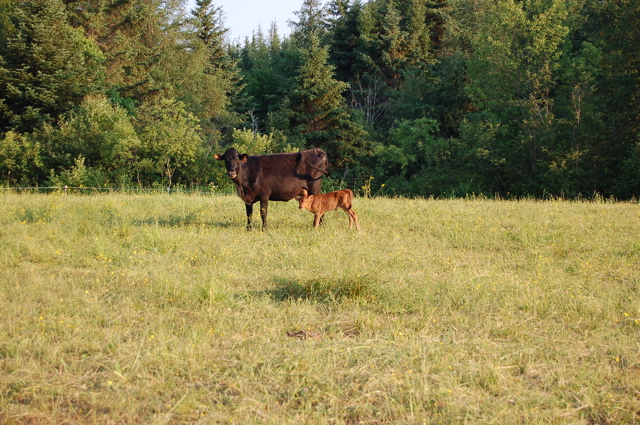
Our first calf of the season was born on Thursday to Sage, a first-time momma cow. Kate was the first person to see her, so she won "naming rights" and decided to call her Annabelle. I took these photos Thursday afternoon, just a few hours after she was born. (For background, see our post from February on humanely raised pet food.)
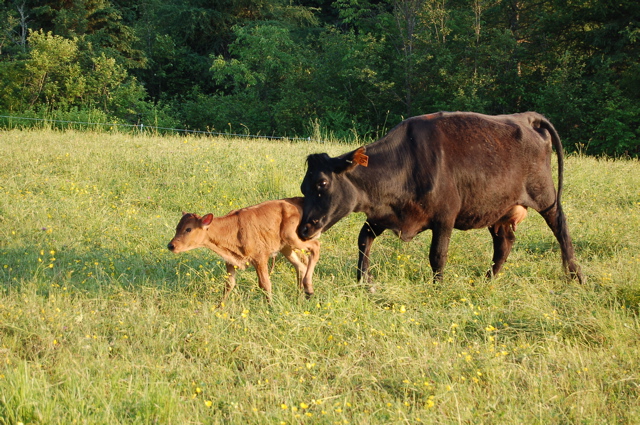
Here's Sage, nudging her along on the way back to the herd … she was communicating to Annabelle with a low, quiet moo as they slowly moved forward:
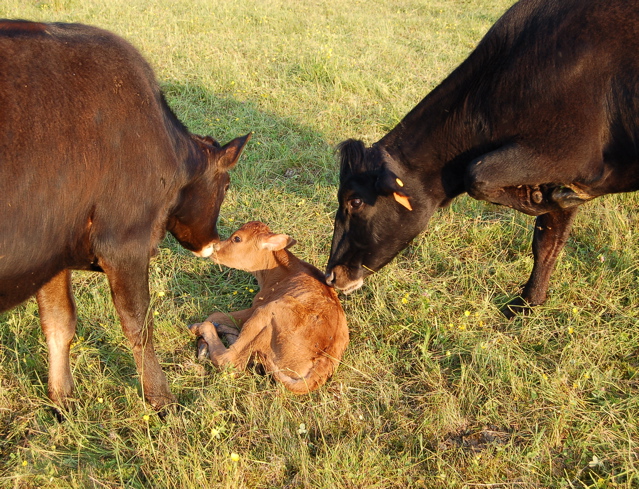
This is Susanna on the left, who was born last year, greeting the new-born little girl:
We have three more cows due to deliver — two any day now, and the third one in August. We had a couple of cows not get pregnant last fall, so to make up for the shortfall, we are now also raising four Holstein male calves we got from a local dairy down the road from us when they were a week old.
Typically male dairy calves get shipped off to veal "farms" (really, factories) a few days after birth, where they spend a short, miserable several months confined in veal crates and on restricted diets before being slaughtered. This is the "dark side" to the dairy industry that many people, even many well intentioned vegetarians, don't know about. But if you're drinking milk — or eating cheese, yoghurt or other milk products — it's because a calf didn't get that milk. Instead of going to a veal farm, our Holstein steers (now about three months old) will have a natural life outdoors.
—
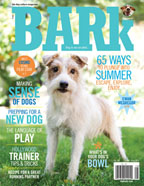 Speaking of humanely raised pet food, the newest issue of Bark magazine has a feature article by me on that subject. It's in the June/July/August issue — this is the cover — but they also just posted it online. You can read it on the Bark website here.
The article is adapted from, and expands on, the blog post I wrote back in February.


 Rolling Dog Farm Blog
Leave a reply to Ev Cancel reply