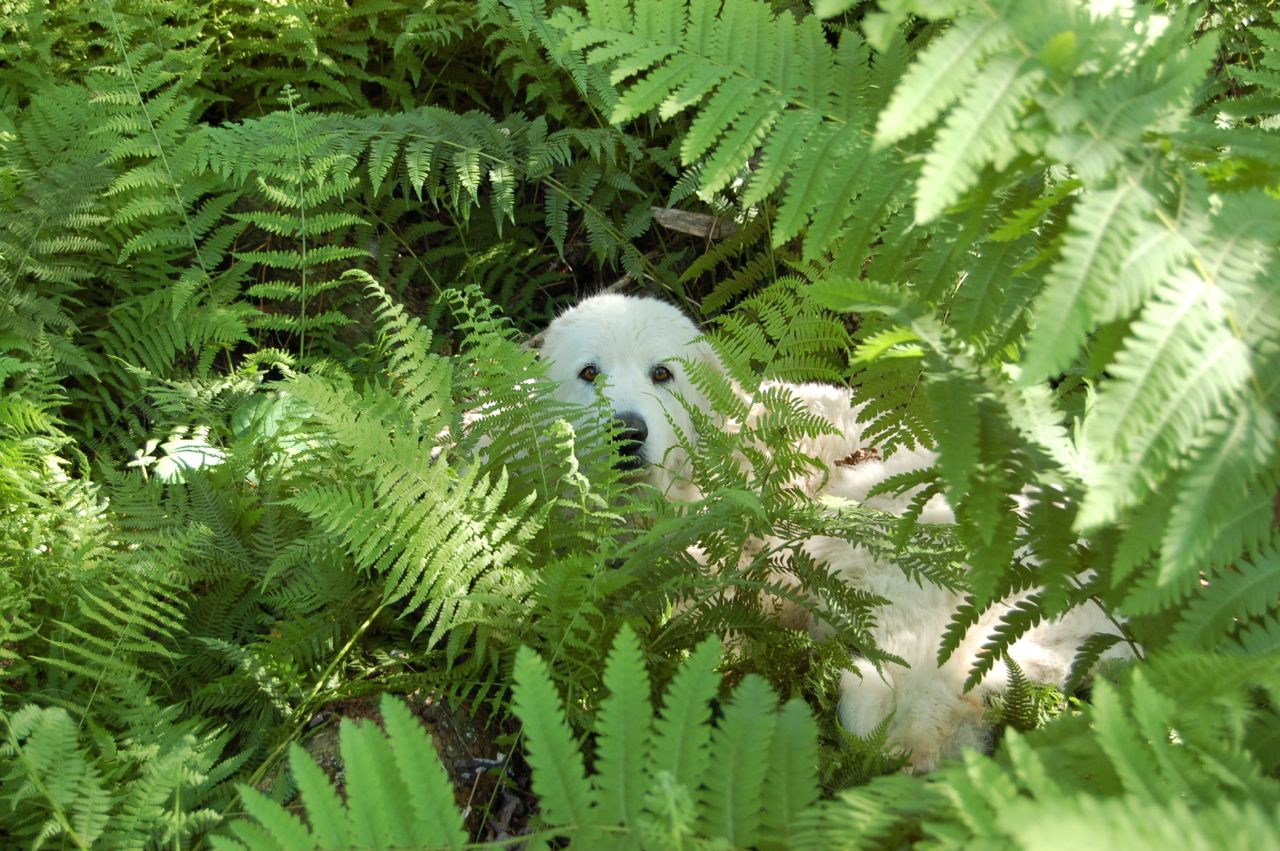
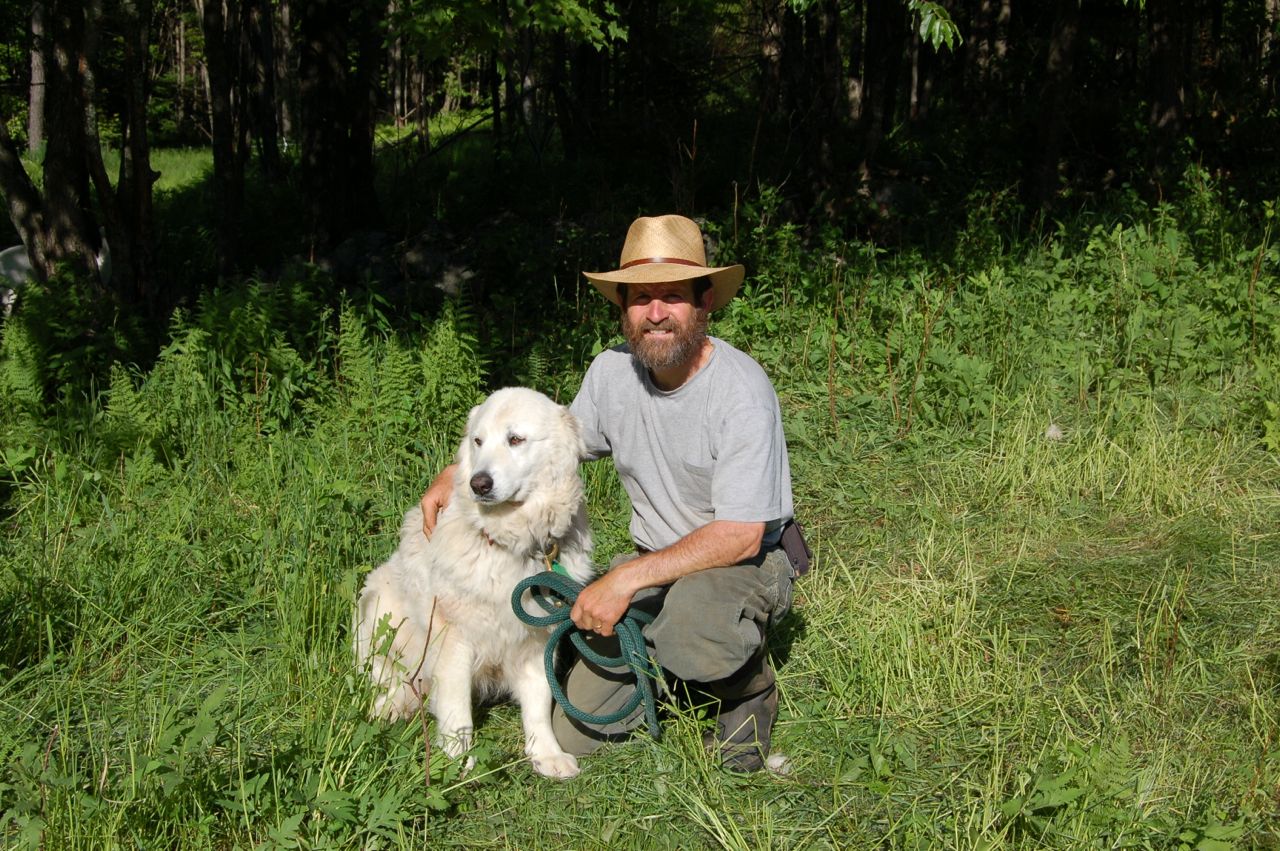
The beautiful girl framed by ferns is Gena. She was actually "on the job" when I took her photo this afternoon. Gena is a livestock guardian dog — a Maremma, one of several breeds developed in Europe over the centuries for protecting livestock from predators. Gena had spent her life guarding goats and producing puppies for a Maremma breeder in Vermont, and when she became too old (at the age of 7) to have any more litters, we picked her up and brought her to the farm last fall.
We had established a small meat goat herd last year and wanted to have an experienced livestock guardian dog to protect them as they wandered our fields and forests. Ironically, we have more predator pressure here than we did at the ranch in Montana, with coyotes making themselves at home in our woods. (The first summer we were here, Alayne chased a coyote in broad daylight as it darted out of the woods to grab one of chickens — right in front of her!)
Why meat goats? Well, it's part of our humanely raised pet food initiative. We have some dogs who need "alternative protein" diets, and rather than continue to buy the (very expensive and highly processed) commercial products, we wanted to be able to produce our own, right here on the farm. Here's the herd of Boer goats in one of their paddocks today:
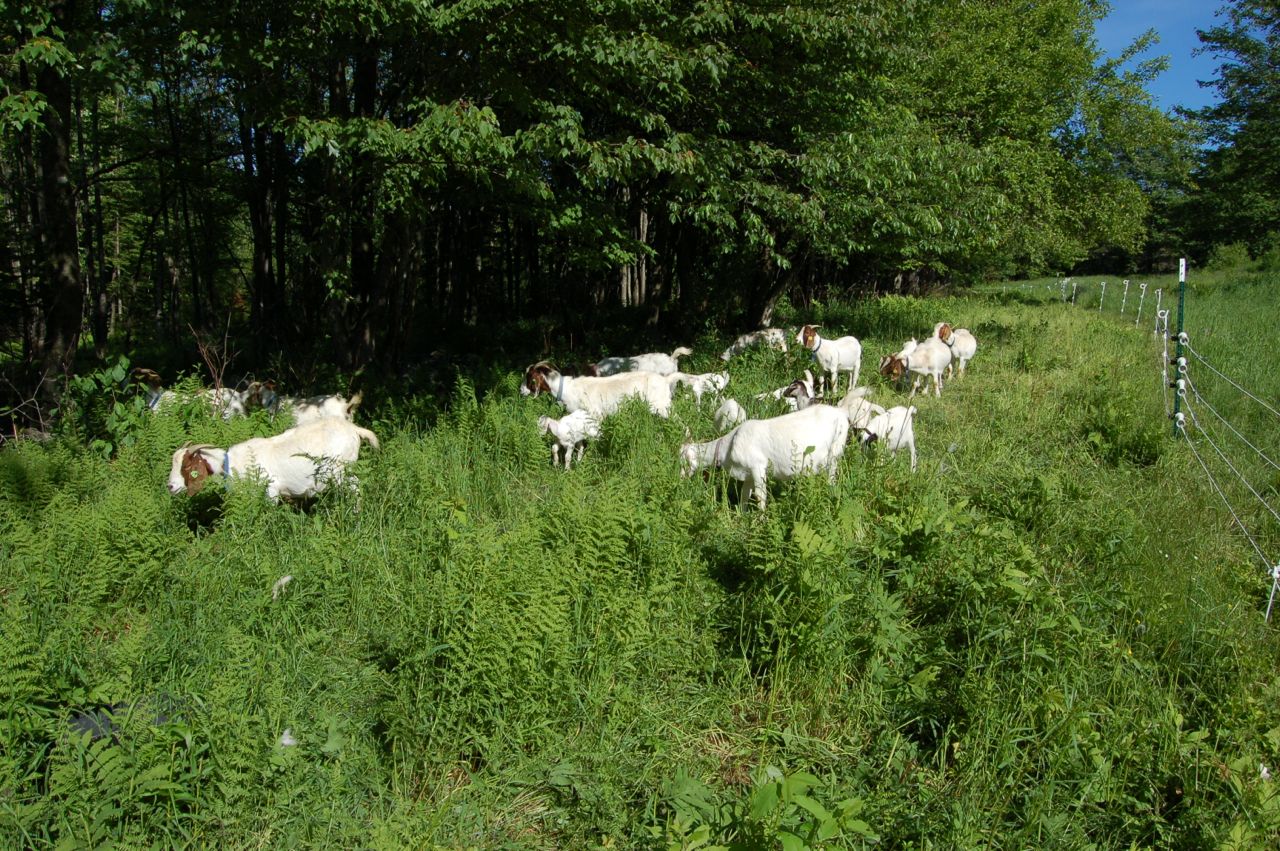
Having meat goats also is a perfect fit for managing the land, because a lot of what we have is woods. Goats are browsers rather than grazers — they eat a variety of plants, including leaves, blackberry brambles, weeds, ferns, and shrubs, in addition to grass. They actually prefer eating all that "other stuff," which makes them an ideal livestock for much of the habitat on the farm that would otherwise not be productively used. Because of their browsing, goats help keep woodlands opened up, which is healthier for the trees.
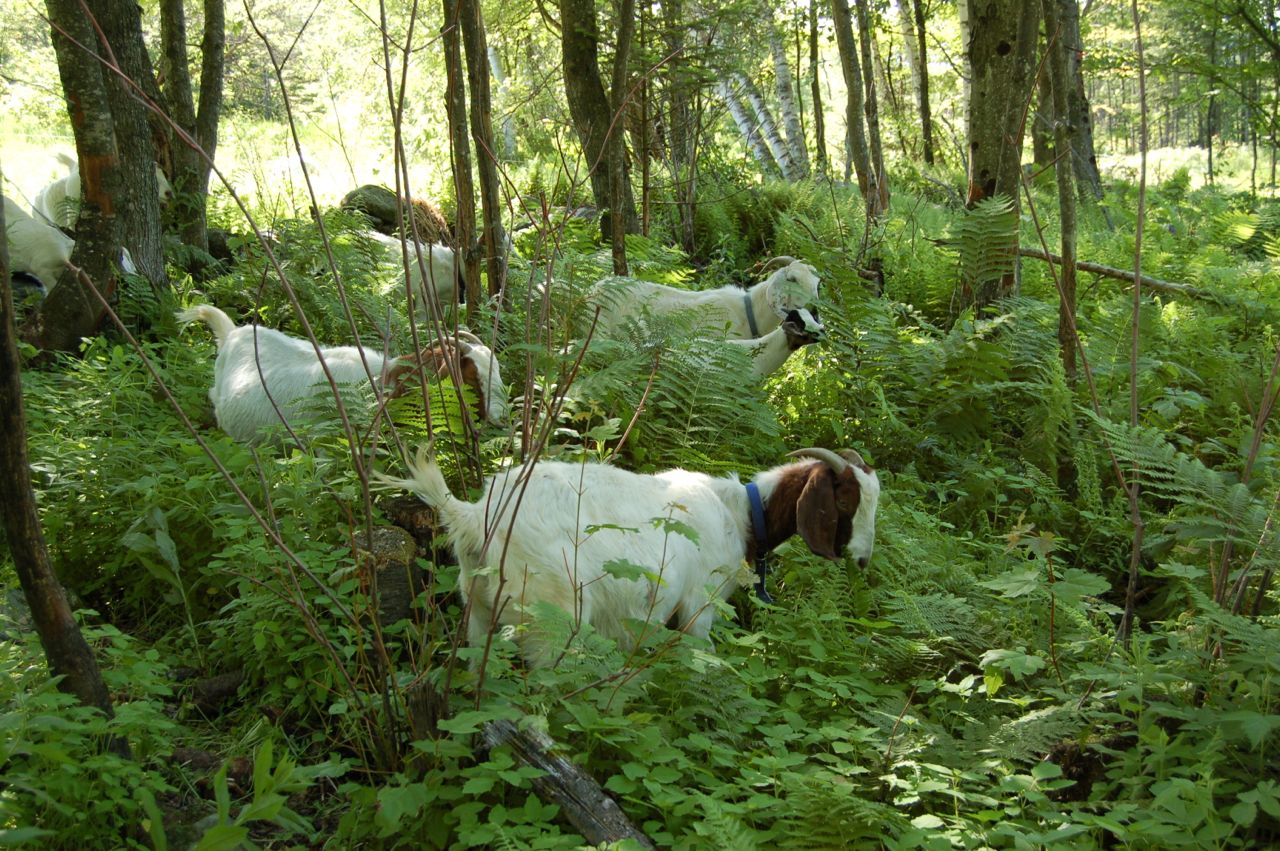
You can see how dense the undergrowth is — and this is goat heaven, with so many different plants to browse:
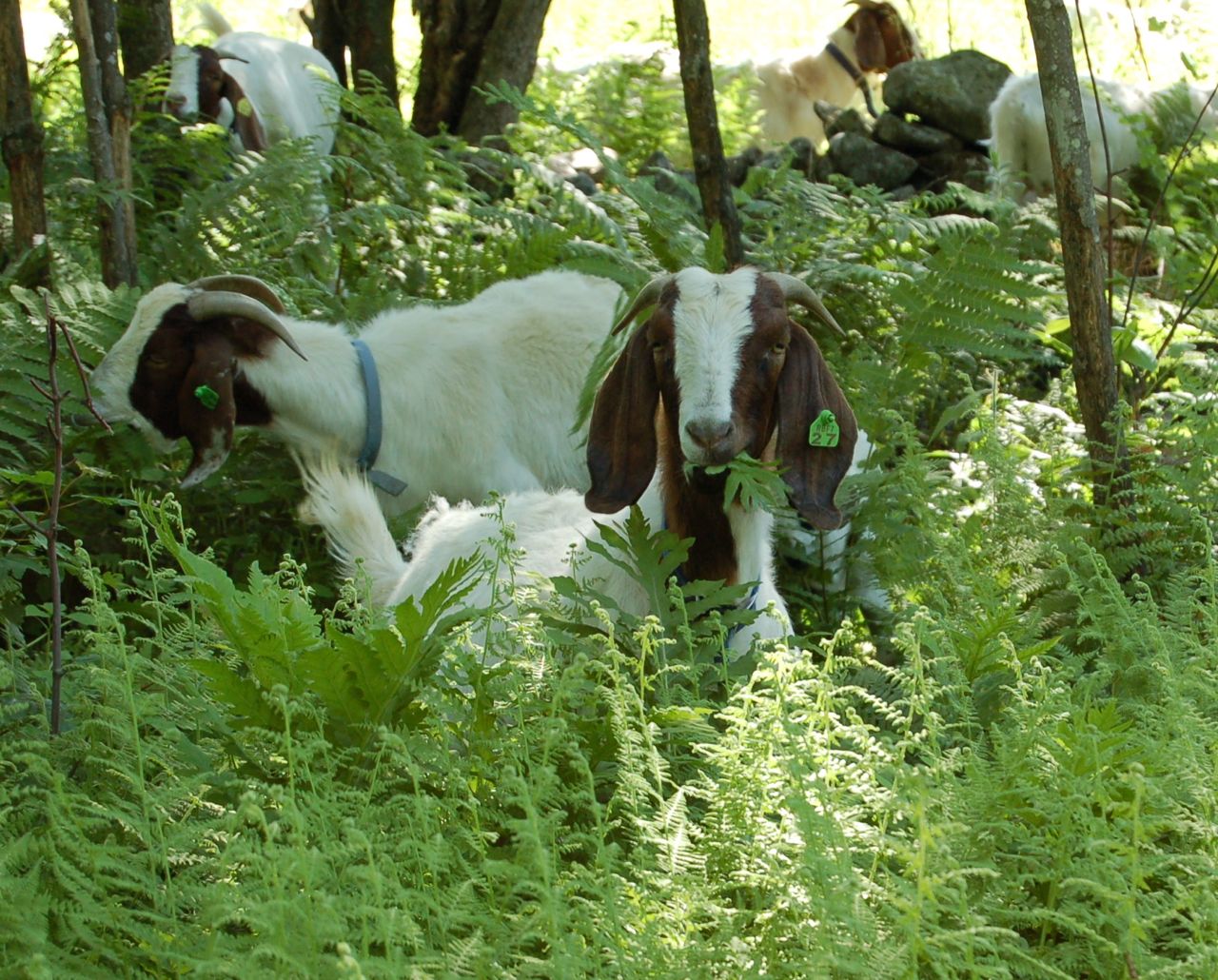
This is Sage, happily stuffing ferns into her mouth:
In that kind of terrain, you can see how vulnerable they might be to coyotes. Rather than trying to shoot, trap or poison coyotes, the humane and far more effective method is to have a livestock guardian dog on duty. The simple presence of a large dog — one who has been bred for exactly this kind of work — deters most predators. So generally what Gena has to do is hang out with the goats and enjoy the scenery.
We take the herd out to their browsing paddock every morning and return them to their pen at night, and Gena never leaves their side.
Alayne took this shot of Gena and me this afternoon, just before we led the herd back to their pen for the evening:
—
Longtime blog readers will ask about Margaret and Daisy, our two Nigerian Dwarf goats who really didn't want to be goats but household pets. They were adopted in 2010 by a wonderful couple here in New Hampshire, who were recommended to us by our vet.
—
Please Vote for the Farm!
The new Shelter Challenge started Monday, April 9 and ends at midnight on June 17. Grand prize in this round is $5,000, plus $1,000 for weekly winners and $1,000 for state winners. There are also other categories … please see the Shelter Challenge website for details.
*** We are now LISTED UNDER OUR NEW NAME, ROLLING DOG FARM. State is still NH for New Hampshire. ***
Please remember, you can vote every day … consider bookmarking the voting page to make it easy.
We just won $1,000 as a weekly winner for Week 4 of the last contest, and thousands more in the previous contests. The Shelter Challenge really does bring in a lot of money for the animals here!
You can vote in the Shelter Challenge here.
Thank you for your votes!


 Rolling Dog Farm Blog
Leave a reply to Mickey Boutiette Cancel reply